
Two outdoor fixtures can look identical on a spec sheet and perform very differently after two years on a building facade. One holds its brightness and color. The other fogs up, corrodes at the screws, or fails after the first lightning season.
The difference is rarely visible in a product photo. It shows up in testing. This guide explains how LED light fixtures are tested, what each piece of lab equipment actually measures, and which test results you should ask for before you approve a supplier for your project.
Why LED Fixture Testing Matters for Your Project
For a project buyer, a lighting contractor or a specifier, a failed fixture costs far more than the fixture itself. You pay for lifts, labor, downtime and, often, your reputation with the owner.
Testing answers three questions before the fixtures ever leave the factory:
• Does it perform as stated? Real lumen output, color temperature, CRI and beam angle.
• Will it survive the site? Rain, dust, salt air, heat, cold and humidity.
• Is it electrically safe and reliable? Surge protection, insulation strength and early-failure screening.
LED Fixture Tests at a Glance
|
Test |
Equipment |
What it proves |
Common standard |
What to ask your supplier for |
|---|---|---|---|---|
|
Total light output & color |
Integrating sphere + spectroradiometer |
Real lumens, CCT, CRI, efficacy (lm/W) |
IES LM-79 |
Photometric/color test data for your exact model |
|
Light distribution |
Goniophotometer |
Beam angle, intensity distribution, IES file |
IES LM-79, IES LM-63 (file format) |
IES file + polar curve |
|
Corrosion resistance |
Salt spray chamber |
Housing, coating and hardware resistance to salt air |
ASTM B117, IEC 60068-2-11 |
Test hours, before/after photos, report number |
|
Temperature & humidity endurance |
Climatic (thermal cycling / damp heat) chamber |
Seals, solder joints and optics survive temperature swings and moisture |
IEC 60068-2-14, IEC 60068-2-30 |
Test conditions, cycles, post-test function check |
|
Waterproof & dustproof |
IP jet nozzles, immersion tank, dust chamber |
The stated IP rating is real |
IEC 60529 |
IP test result for the rating claimed |
|
Early failure screening |
Burn-in / aging rack |
Weak LEDs, drivers or connections are caught before shipment |
Factory procedure |
Burn-in duration and pass criteria |
|
Electrical safety |
Surge generator, hipot tester |
Surge protection level and insulation strength |
IEC 61000-4-5, ANSI C136.2, IEC 60598-1, UL 1598 |
Surge rating (kV) and hipot pass record |
Photometric Testing: Is the Light What the Spec Sheet Says?
Integrating Sphere
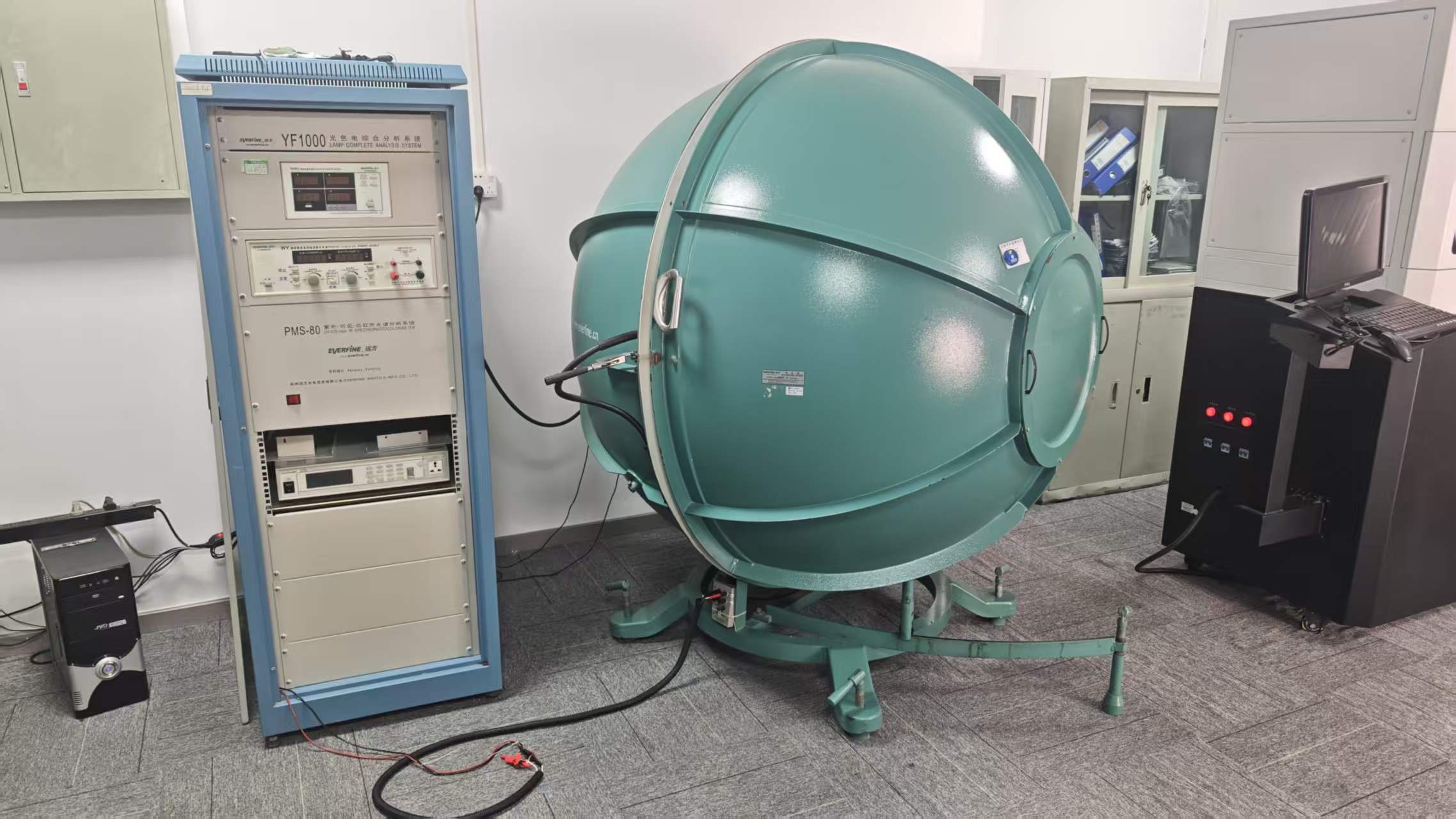
An integrating sphere (right) with its measurement cabinet: power supplies, power meter and spectroradiometer.
An integrating sphere is a large hollow sphere coated inside with a highly reflective, matte white material. The fixture is placed inside and powered at its rated voltage. Its light bounces around the wall until it is evenly mixed, so a detector at one point can measure the total light the fixture emits in every direction.
Paired with a spectroradiometer and a power meter, the sphere measures luminous flux (lumens), color temperature (CCT), color rendering (CRI), color tolerance (SDCM), power and power factor — which together give the fixture's true efficacy in lumens per watt. For RGB and RGBW fixtures it also measures the wavelength of each color channel. It is the fastest way to check whether a fixture really delivers the brightness and color on its datasheet.
Read more: What Is an Integrating Sphere? How LED Light Output Is Measured
Goniophotometer and IES Files
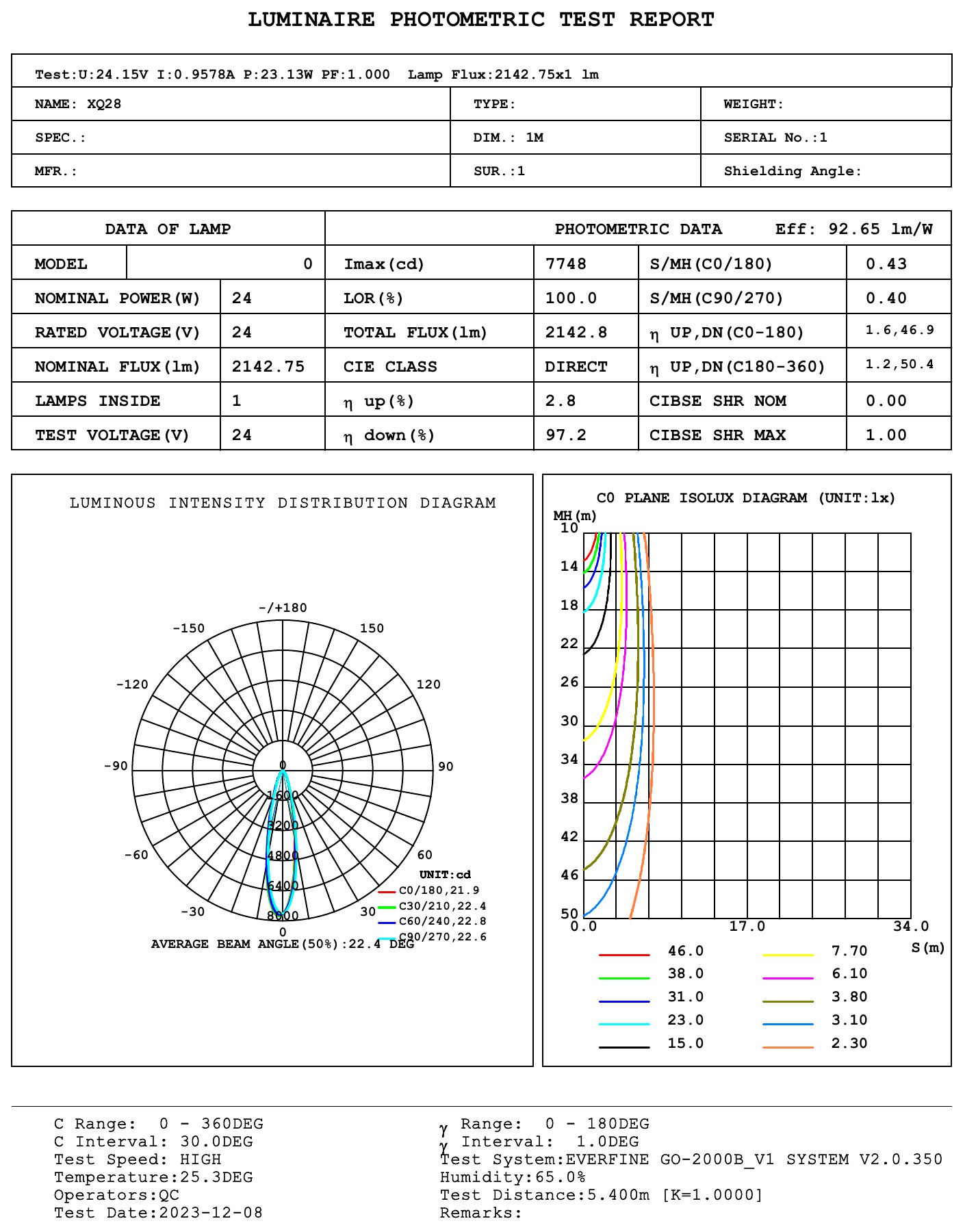
Example of goniophotometer output: photometric data, polar curve and isolux diagram from a fixture test report.
A goniophotometer measures how a fixture distributes its light. It rotates the fixture — or a mirror or detector around it — through hundreds of horizontal and vertical angles and records the light intensity in candela at each one. The result is a full 3D map of the light distribution.
From that map the software calculates the beam angle, field angle, peak intensity, zonal lumens and glare data, and exports an IES file. Lighting designers load the IES file into software such as DIALux or AGi32 to check light levels, uniformity and spill on a facade or landscape before a single fixture is ordered.
Read more: Goniophotometer and IES Files Explained: What LM-79 Data Tells You
Environmental Testing: Will It Survive the Site?
Salt Spray Testing
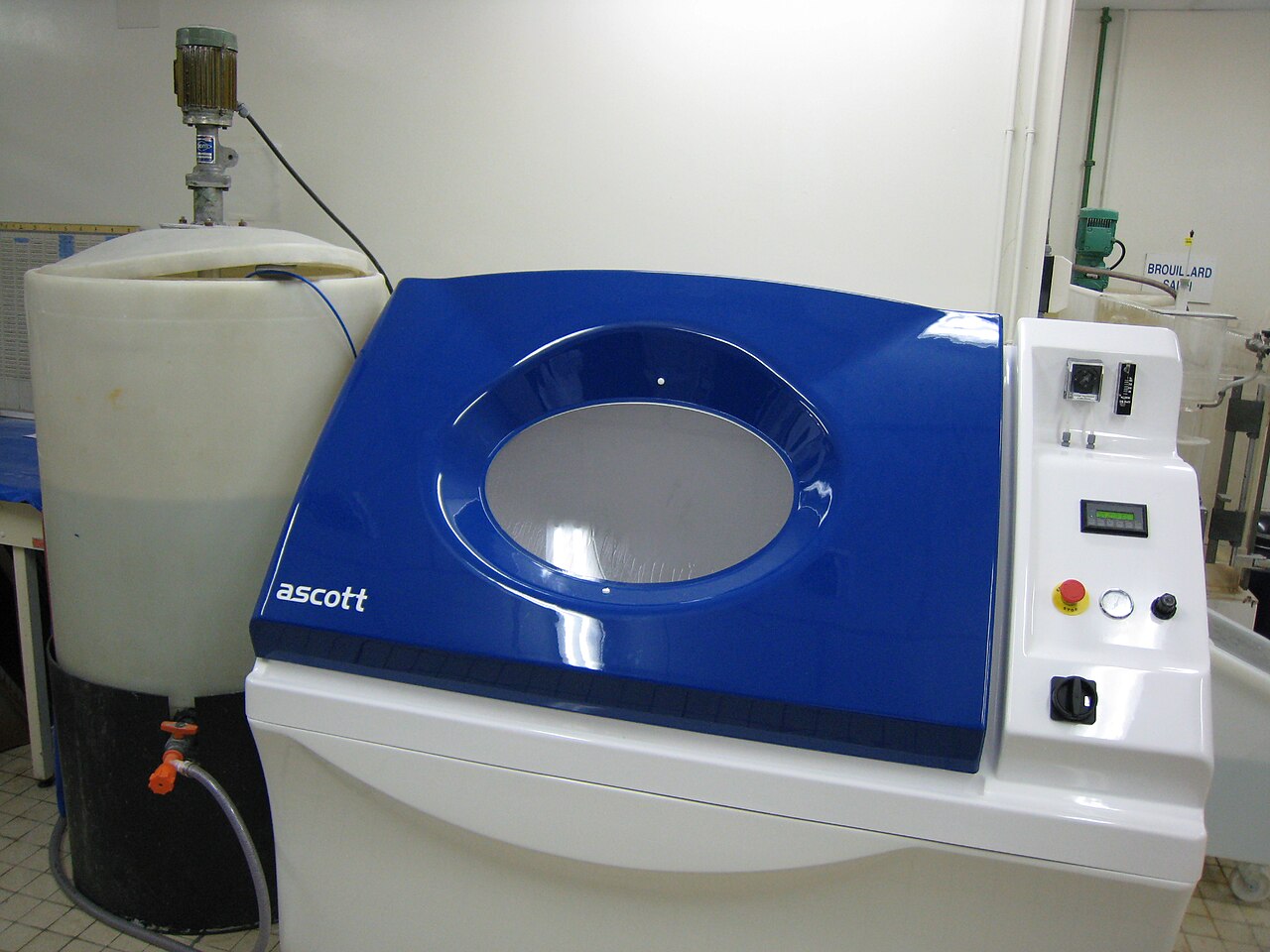
A neutral salt spray (salt fog) test chamber.
Photo: Salt spray chamber by Cjp24, CC BY-SA 3.0, via Wikimedia Commons.
A salt spray chamber fills with a fine, continuous mist of 5% salt solution at 35 °C. Housings, coatings, screws and brackets are exposed for a set number of hours — commonly 240, 500 or 1,000 — and then inspected for rust, blistering and coating loss.
It is the standard way to compare the corrosion resistance of materials and finishes, and it matters most for coastal, marine, pool and de-icing-salt environments. The hours are a comparison tool rather than a lifespan, so the most useful reports include before-and-after photos of the housing and the hardware.
Read more: Salt Spray Test for LED Lights: What It Is and When You Need It
Thermal Cycling and Damp Heat
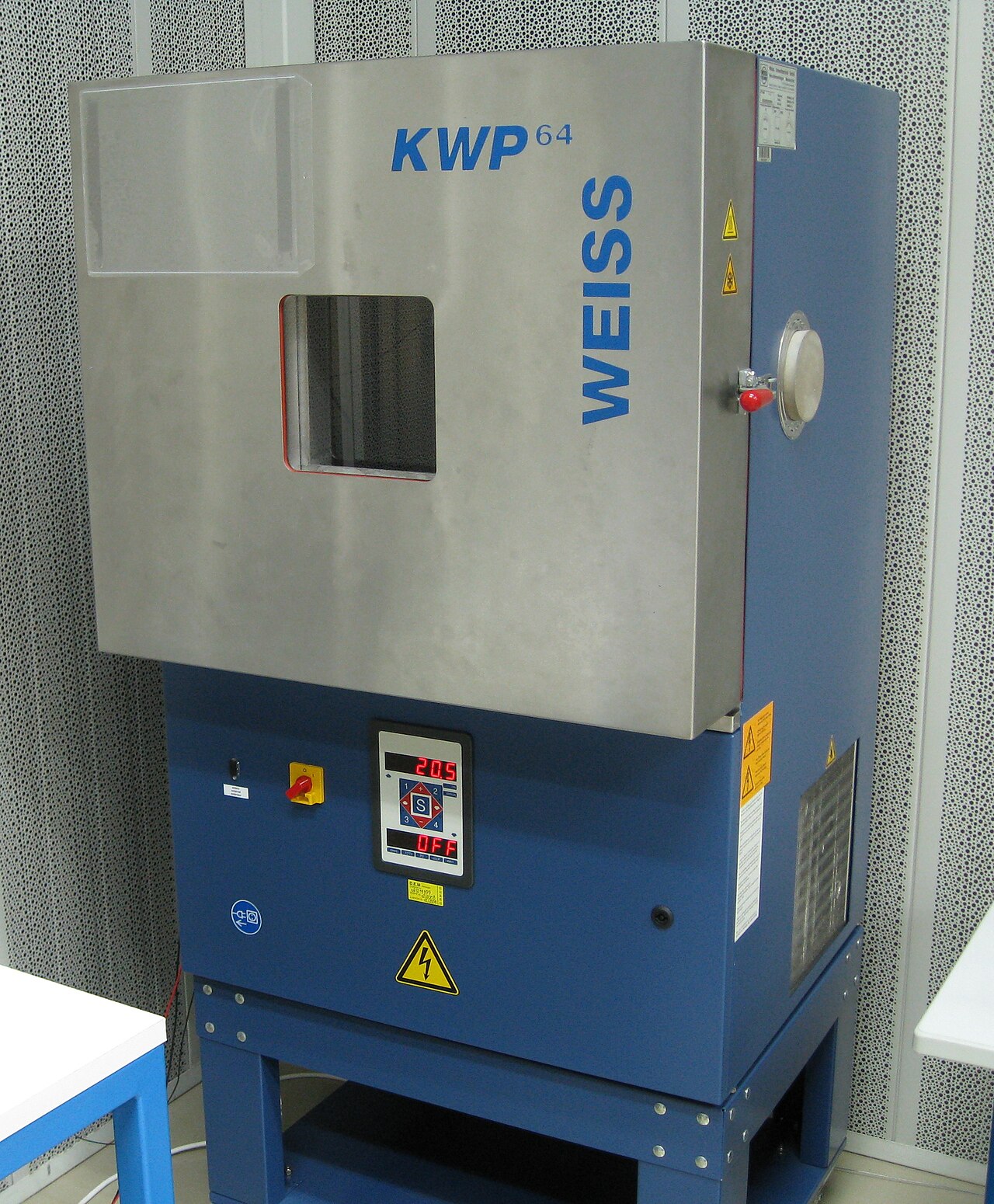
A climatic test chamber used for temperature cycling and humidity testing.
Photo: Climatic test chamber by Cjp24, CC BY-SA 3.0, via Wikimedia Commons.
Outdoor fixtures heat up every night and cool down every morning. A climatic chamber speeds this up. In thermal cycling it moves the fixture repeatedly between low and high temperatures, for example −40 °C and +60 °C. In damp heat testing it holds or cycles the fixture at high temperature and high humidity, so moisture condenses on and inside it.
These tests expose weak gaskets, cracked solder joints, failing adhesives and condensation inside the lens — the faults behind many "foggy lens" and "dead section" complaints on outdoor projects.
Read more: Thermal Cycling and Damp Heat Testing for LED Fixtures
IP Waterproof and Dustproof Testing
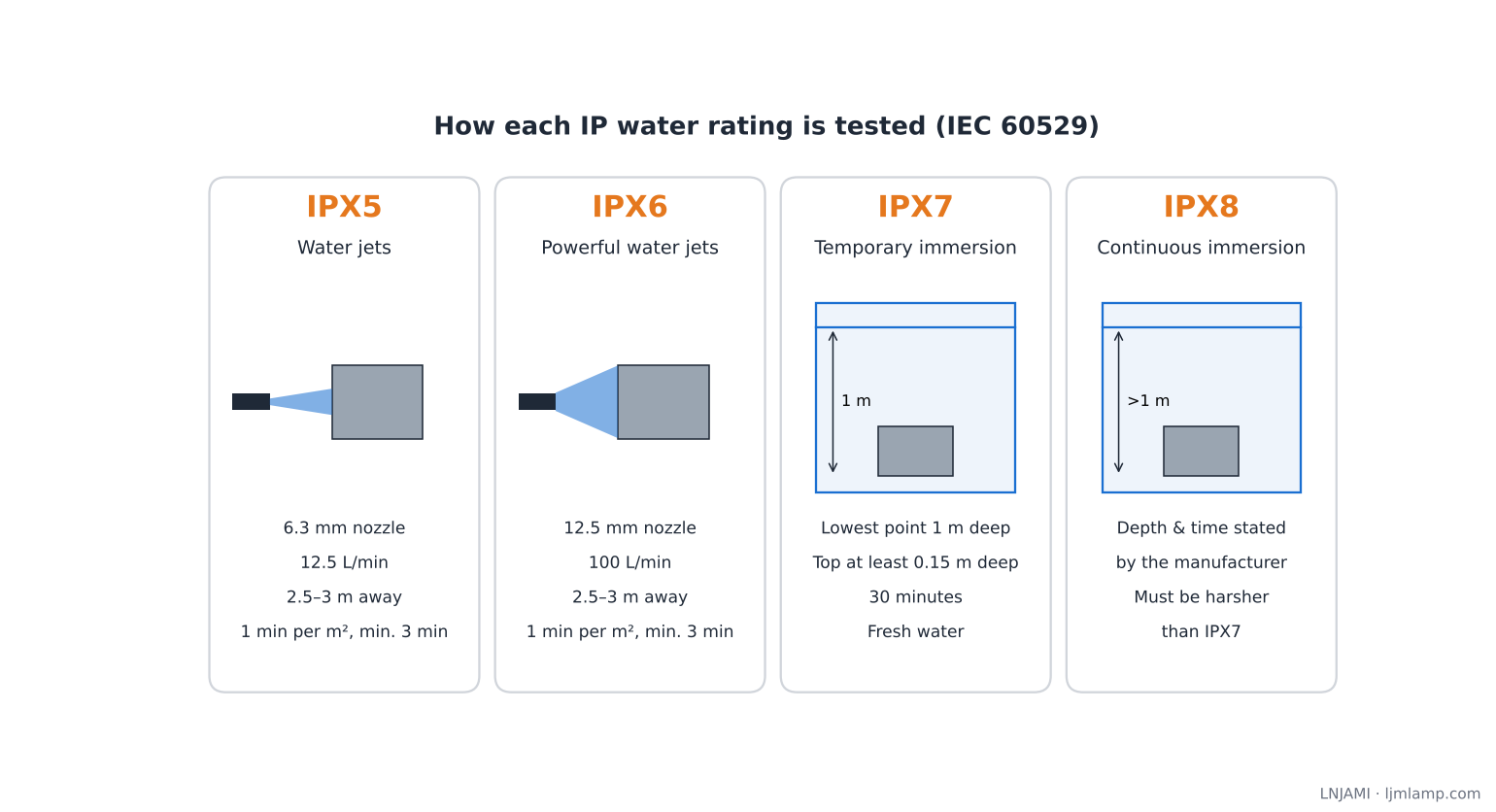
How the IP water ratings are tested under IEC 60529.
An IP rating such as IP65, IP66, IP67 or IP68 is only meaningful if the fixture has been tested to it. Water tests use calibrated nozzles for jets (IPX5 at 12.5 L/min, IPX6 at 100 L/min) and immersion tanks for submersion (IPX7 at 1 m for 30 minutes, IPX8 deeper and longer). Dust tests place the fixture in a chamber of circulating fine talcum powder. After each test, the fixture is opened and checked for any water or dust inside.
Read more: How IP Ratings Are Tested: IEC 60529 Waterproof and Dustproof Test Methods
Reliability and Electrical Safety Testing
Burn-in (Aging) Testing
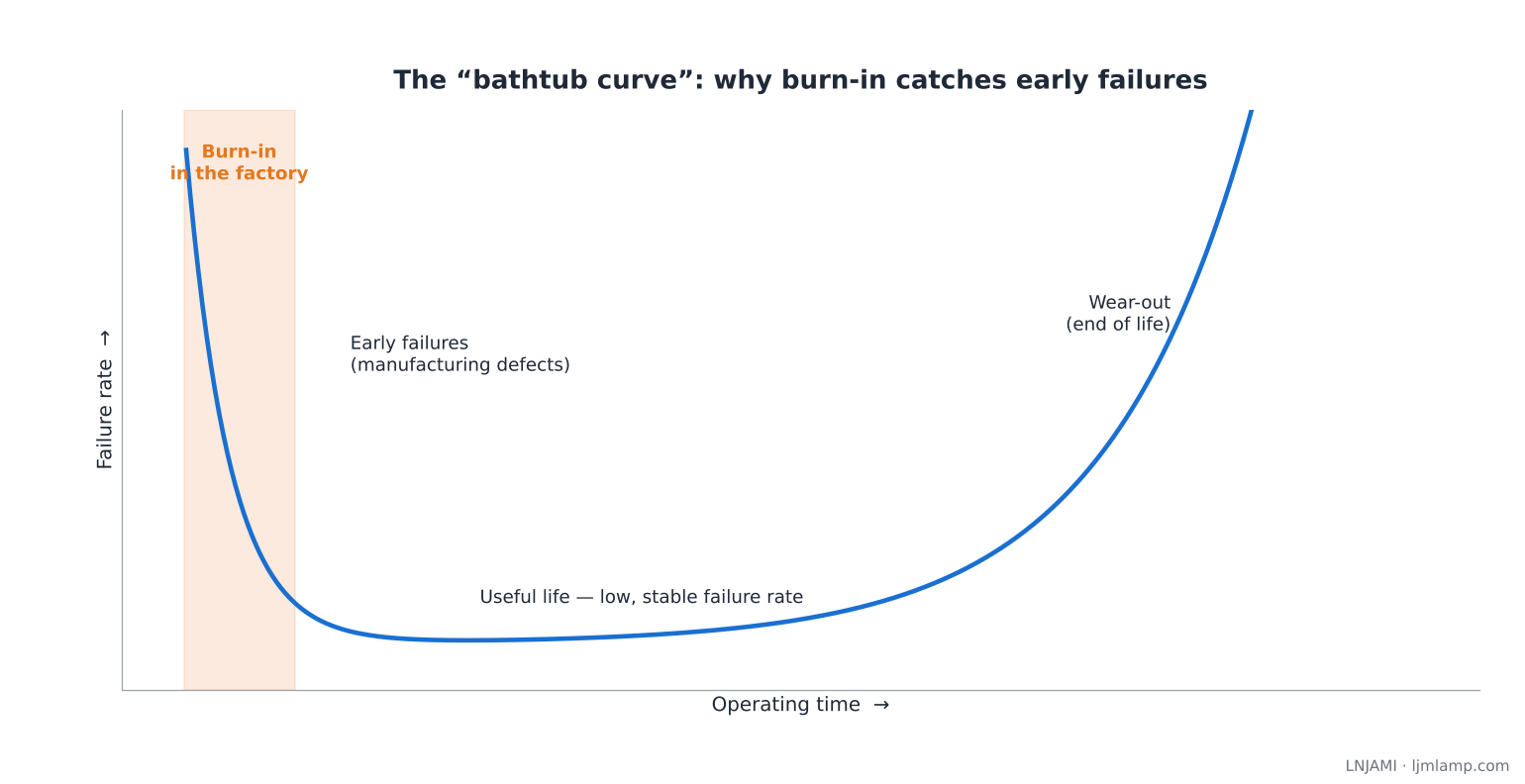
The bathtub curve: most early failures happen in the first hours, which burn-in moves into the factory.
Burn-in means running every finished fixture at its rated voltage and full output on an aging rack for a set time, typically 24 to 48 hours, before it is packed. Most early failures — a weak LED, a cold solder joint, a loose connector, a faulty driver component — appear in these first hours. Fixtures that flicker, dim or fail are pulled out, repaired and tested again, so the defects are caught in the factory rather than on your site.
Read more: LED Burn-in Test: Why Aging Before Shipment Matters
Surge and Hipot Testing
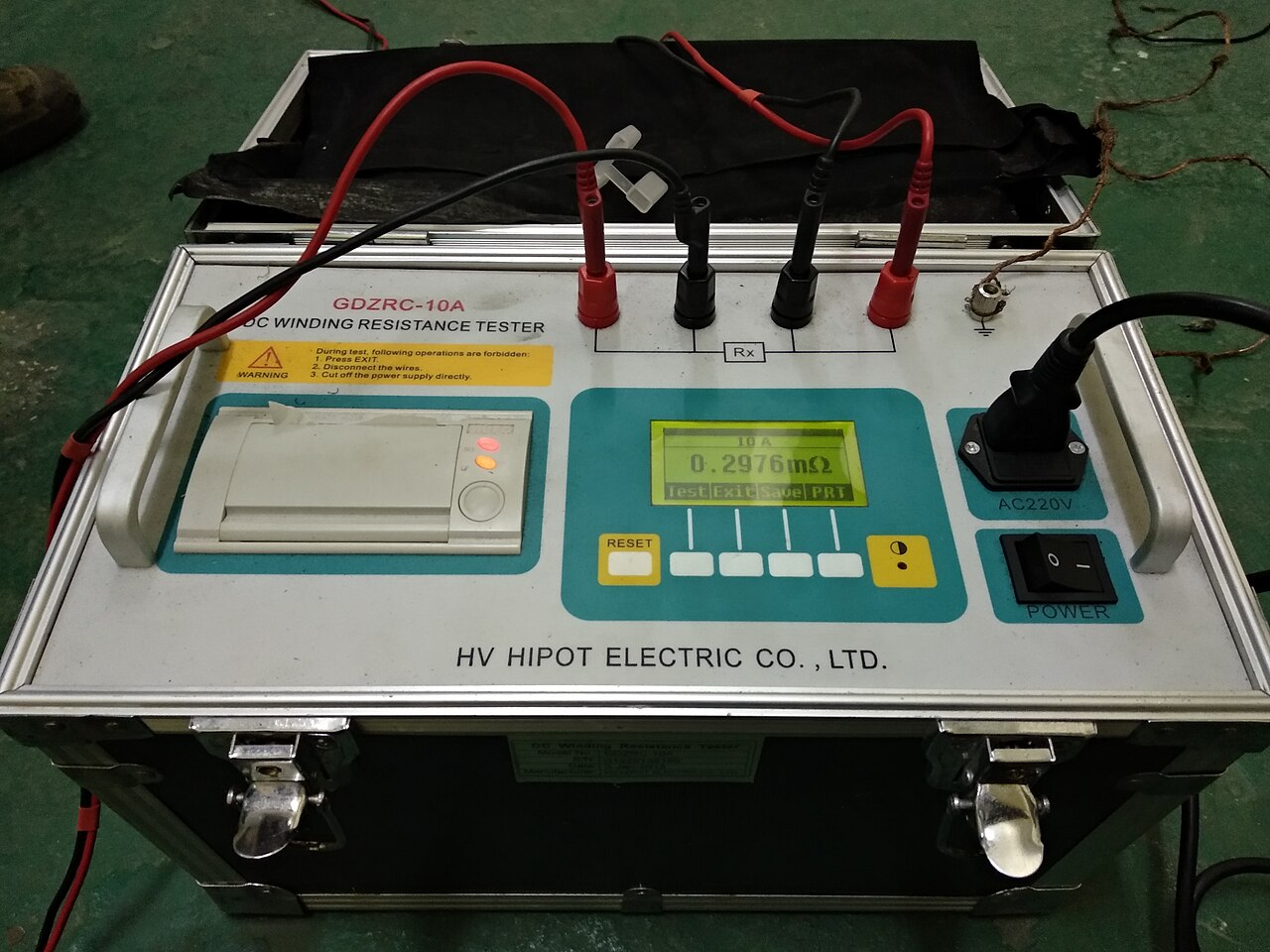
A hipot (dielectric strength) tester.
Photo: Hipot tester by Dr Lotus Black, CC BY-SA 4.0, via Wikimedia Commons.
A surge generator sends short, high-energy pulses — the standard 1.2/50 µs voltage and 8/20 µs current waveform — into the fixture's power input, simulating nearby lightning and grid switching. The result is a surge rating in kV, tested both between the power wires and between the wires and earth.
A hipot (dielectric strength) tester applies a high voltage, well above normal operating voltage, between the live parts and the metal housing. If the insulation is sound, almost no current flows; any weak point causes a breakdown. Together, the two tests show whether a fixture can survive a lightning season and is safe to touch.
Read more: Surge and Hipot Testing for LED Fixtures: Protecting Against Lightning and Shock
What to Check When a Supplier Sends You a Test Report
• The model matches. The report should cover the exact model, wattage and optic you are buying, not a similar product.
• Conditions are stated. Hours, temperatures, number of cycles, voltage levels or water pressure should be written down, not just "passed".
• Results are measured, not claimed. Look for numbers, photos and a report or record number.
• The test fits your site. A coastal project needs salt spray data; a project in a lightning-prone area needs a surge rating.
FAQ
Which tests matter most for outdoor architectural lighting?
IP rating, surge protection and thermal cycling apply to almost every outdoor project. Add salt spray testing for coastal or marine sites, and photometric data (IES files) whenever a lighting design is involved.
Is an IP rating on a datasheet enough?
No. Ask whether the fixture was actually tested to that rating and under which standard.
Does every project need every test?
No. Choose the tests that match your site and specification. A dry, covered installation needs far less environmental testing than a seafront facade.
Testing for Your Project
LNJAMI carries out integrating sphere, goniophotometer (IES file), temperature and humidity, and burn-in testing on our fixtures, and can share the results for your project. For salt spray, IP and surge or electrical safety verification, testing can be arranged according to your project's requirements. Tell us your site conditions and specification, and we will recommend the tests your fixtures should have. Contact us for a free project consultation.


