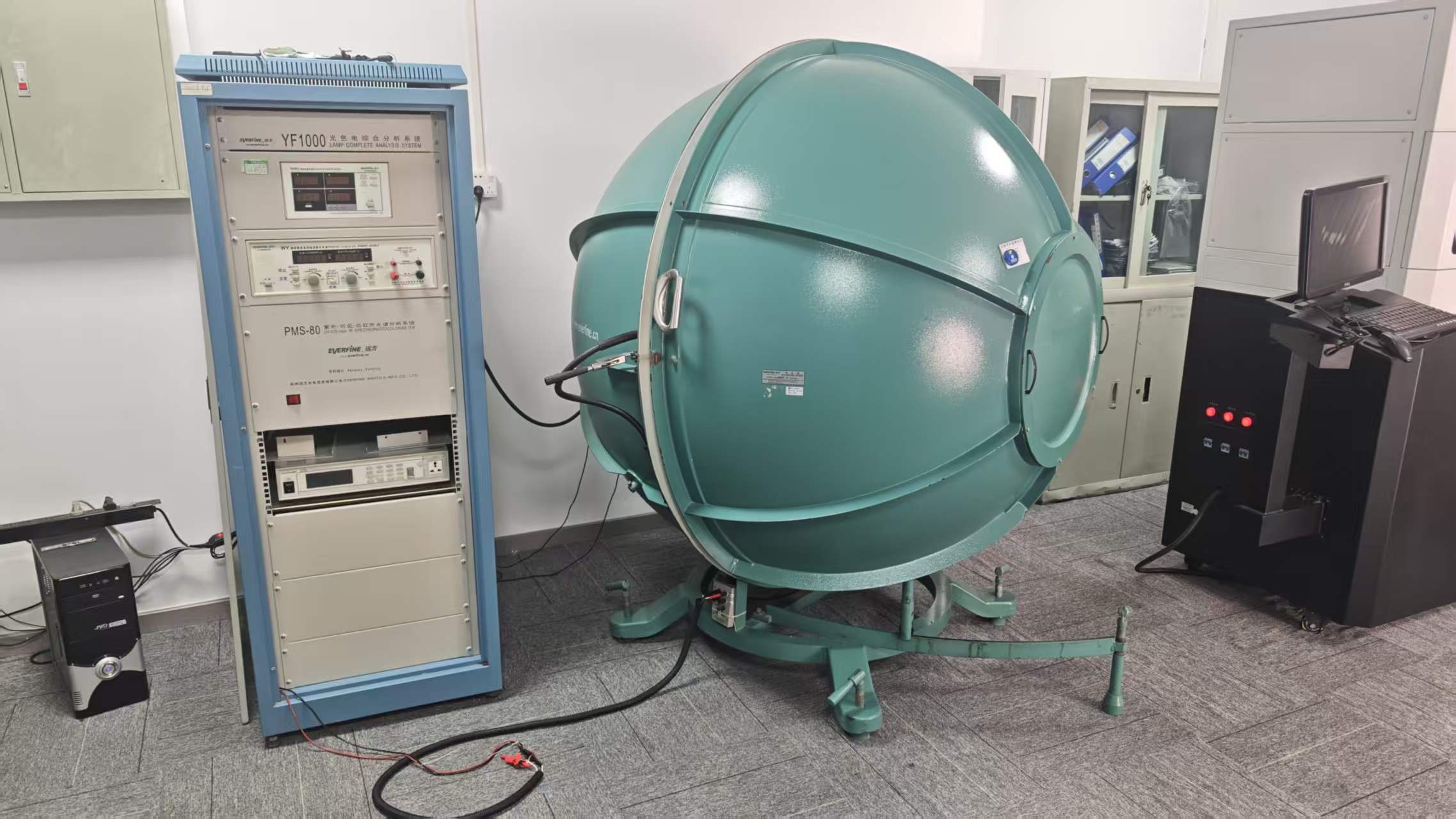
Most LED fixtures that fail early do so in their first hours of operation. A weak LED, a cold solder joint, a loose connector or a faulty driver component usually shows itself quickly. A burn-in test, also called an aging test, runs every finished fixture long enough to find these problems in the factory instead of on your site.
This article is part of our guide to LED Light Fixture Testing.
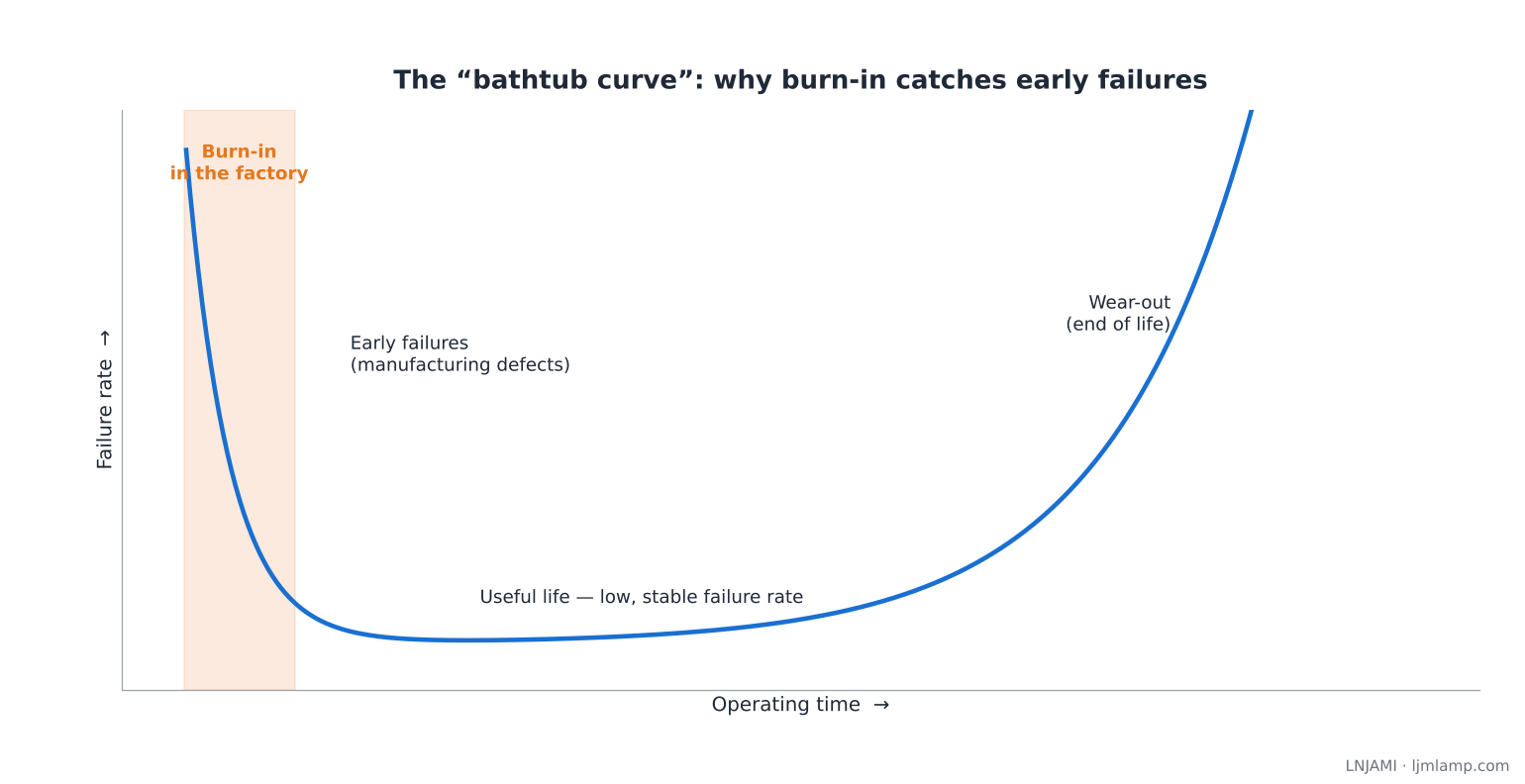
The bathtub curve: failures are most likely at the very start of a product's life. Burn-in moves that period into the factory.
What Is a Burn-in Test?
A burn-in test means powering finished fixtures at their rated voltage and full output for a set period before they are packed. The fixtures are mounted on aging racks or in an aging room, and operators check them during and after the run. Any fixture that flickers, dims, shows dead LEDs or shuts off is pulled out, repaired and tested again.
Why Early Failures Happen
Electronic products follow what engineers call the "bathtub curve":
1. Early failures — a higher failure rate at the start, caused by manufacturing defects.
2. Useful life — a long, low and stable failure rate.
3. Wear-out — failures rise again as components reach the end of their life.
Burn-in targets the first stage. By running the fixture through those early hours in the factory, the defective units are removed before they ever reach a job site.
What Does Burn-in Catch?
• LEDs that fail or dim soon after start-up
• Driver faults and components that overheat
• Poor solder joints and loose connectors that open up when warm
• Flicker and unstable output
• Wiring mistakes and connection errors
• Control issues on dimmable or DMX fixtures
How Long Should Burn-in Run?
There is no single standard duration for every product. Many manufacturers run burn-in for 24 to 48 hours, and longer for samples, new designs or critical projects. Some processes also switch the fixture on and off during the run, because the heat-up and cool-down moments put extra stress on components.
What matters more than the number is that every fixture is tested, the run is long enough to reach a stable operating temperature, and failures are recorded.
Burn-in Is Not a Lifetime Test
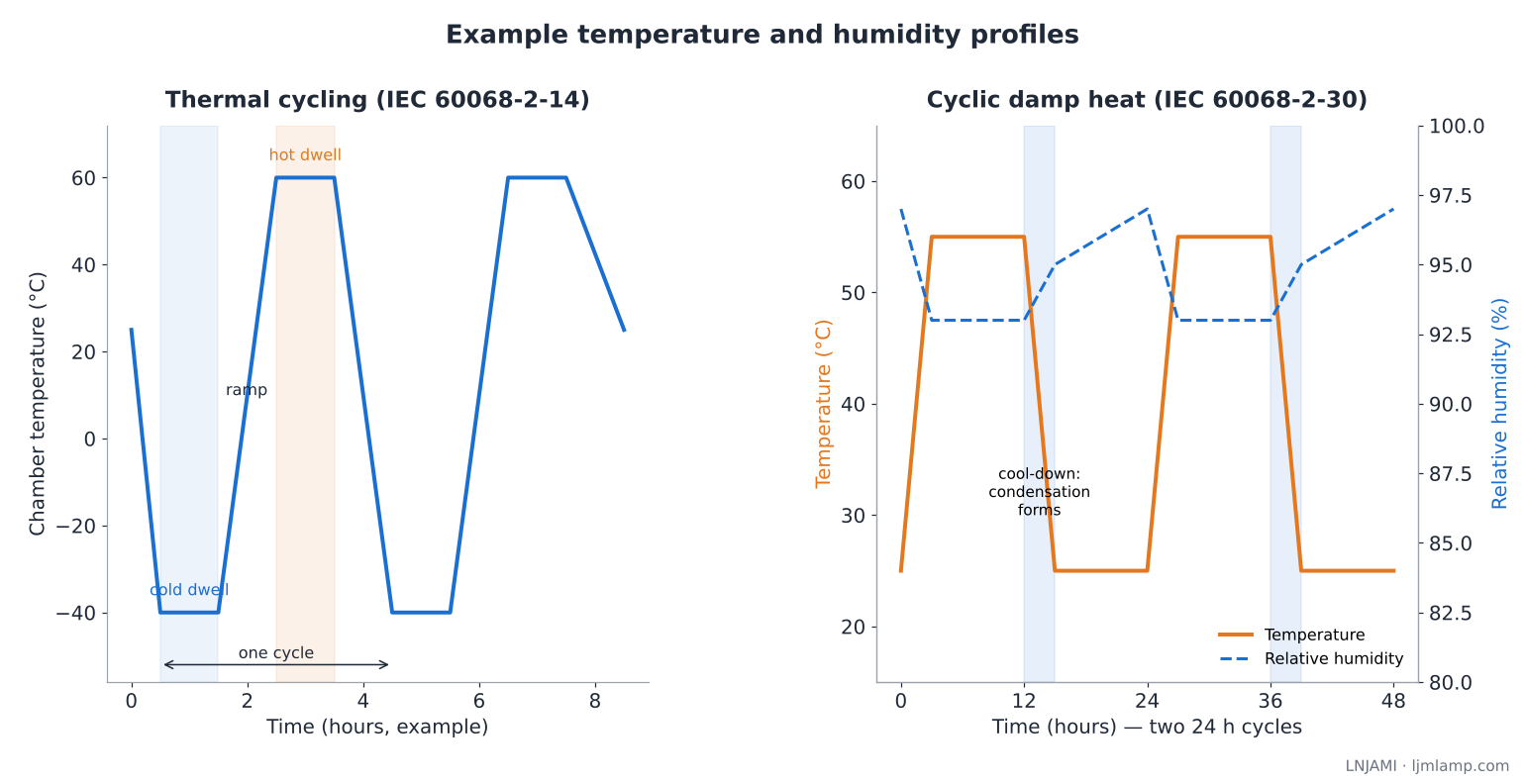
Burn-in screens out defects. It does not predict how long the LEDs will last. Long-term lumen maintenance is measured with IES LM-80 testing of the LED package and projected with TM-21. Long-term durability under weather is covered by thermal cycling and damp heat tests.
See also: Thermal Cycling and Damp Heat Testing for LED Fixtures
What to Ask Your Supplier
• Is every fixture burned in, or only a sample?
• How many hours, and is the fixture at full power?
• What is checked during and after the run?
• What happens to fixtures that fail?
How LNJAMI Handles Burn-in
Every LNJAMI production order goes through burn-in before shipment, typically 24 to 48 hours, and samples can run longer. We use MEAN WELL drivers in our fixtures. If your project requires a longer burn-in or a specific procedure, we can run it for you and share the record for your order.
FAQ
Does burn-in shorten the life of the fixture?
No. A 24–48 hour run is a very small part of an LED fixture's rated life.
Is burn-in needed if the driver is from a good brand?
Yes. A good driver reduces risk, but burn-in also checks the LEDs, the wiring and the assembly of each fixture.
Can I ask for a longer burn-in for my project?
Yes. Tell us your requirement when you place the order.
Want Fewer Failures on Site?
Tell us about your project and quality requirements. Contact us for a free project consultation.
Back to the full guide: LED Light Fixture Testing: The Equipment and Reports That Prove Quality