How to Choose a Floodlight Beam Angle for a Tall Façade
LNJAMI manufactures LED floodlights and LED spotlights for architectural façades, and this guide reflects the questions our engineers review when a tall building needs long-throw lighting. It is written for lighting designers, consultants and contractors comparing optics before ordering.
Quick checklist for façade floodlight beam selection
Measure the throw from each mounting point to the centre of its target, along the aiming line.
Estimate the beam width at that distance: 2 × throw × tan(beam angle ÷ 2).
Compare candela in the aiming direction, not only total lumens.
Request the IES or LDT file for the exact optic and shield, and plot it on the section.
Record mounting point, target, optic and bracket setting in an aiming schedule.
1. Measure the throw to the feature you want to light
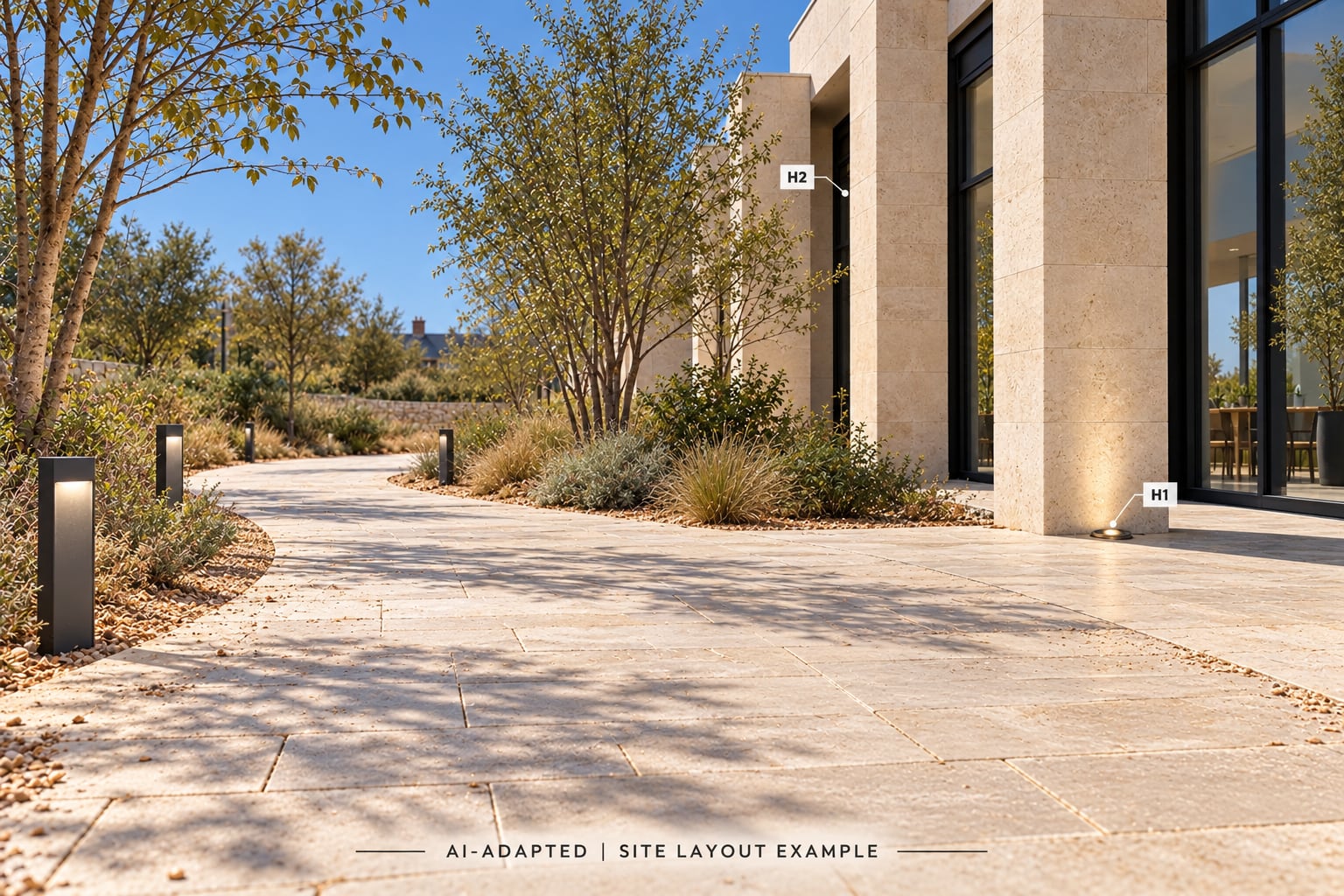
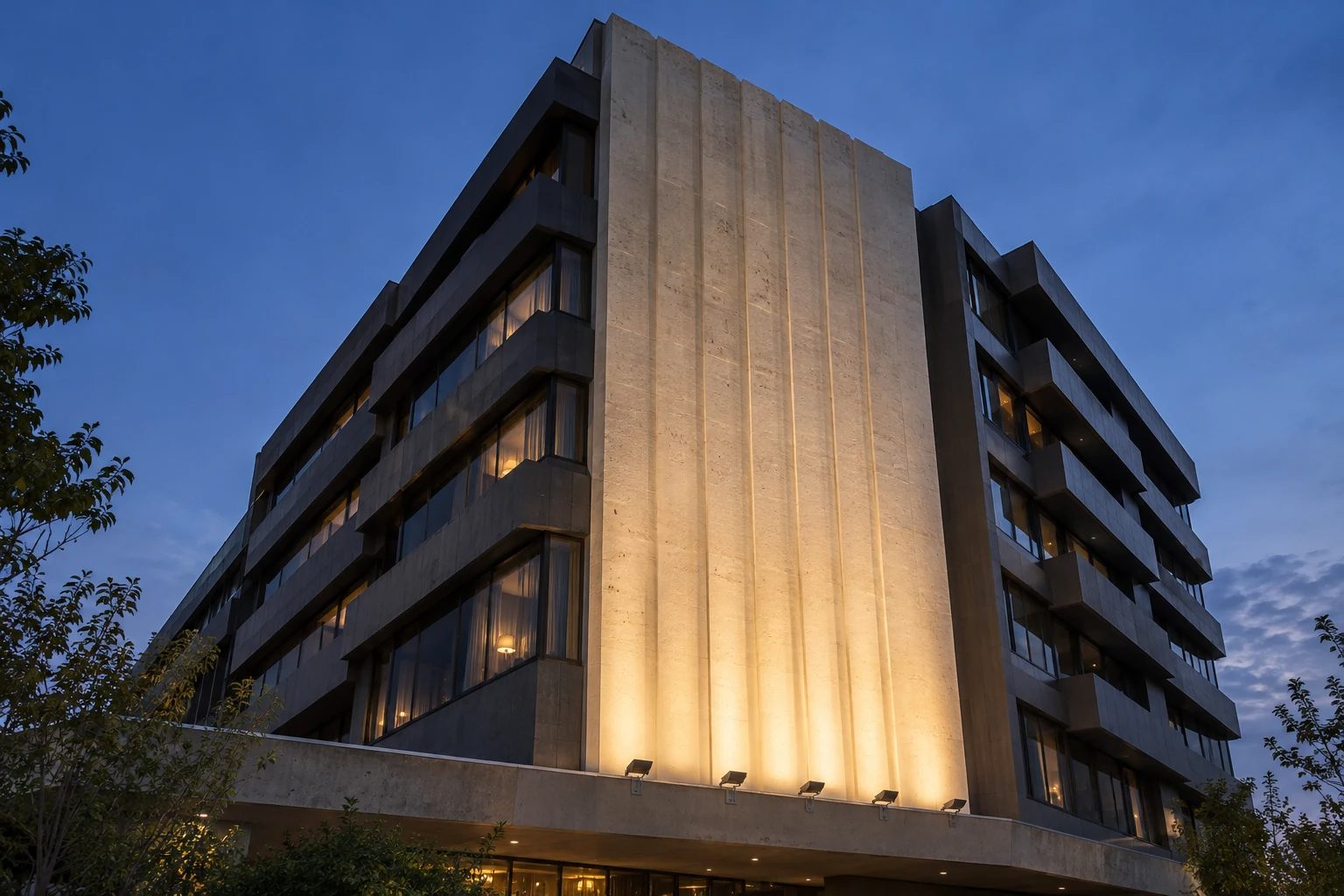
A floodlight aimed at a tower can land beautifully on a stone pier and still leave the next bay dark. Start with the feature you want people to see. A pier, a parapet and a broad panel each need a different beam footprint. Mark the fixture position, target centre and approximate target dimensions on a section of the building.
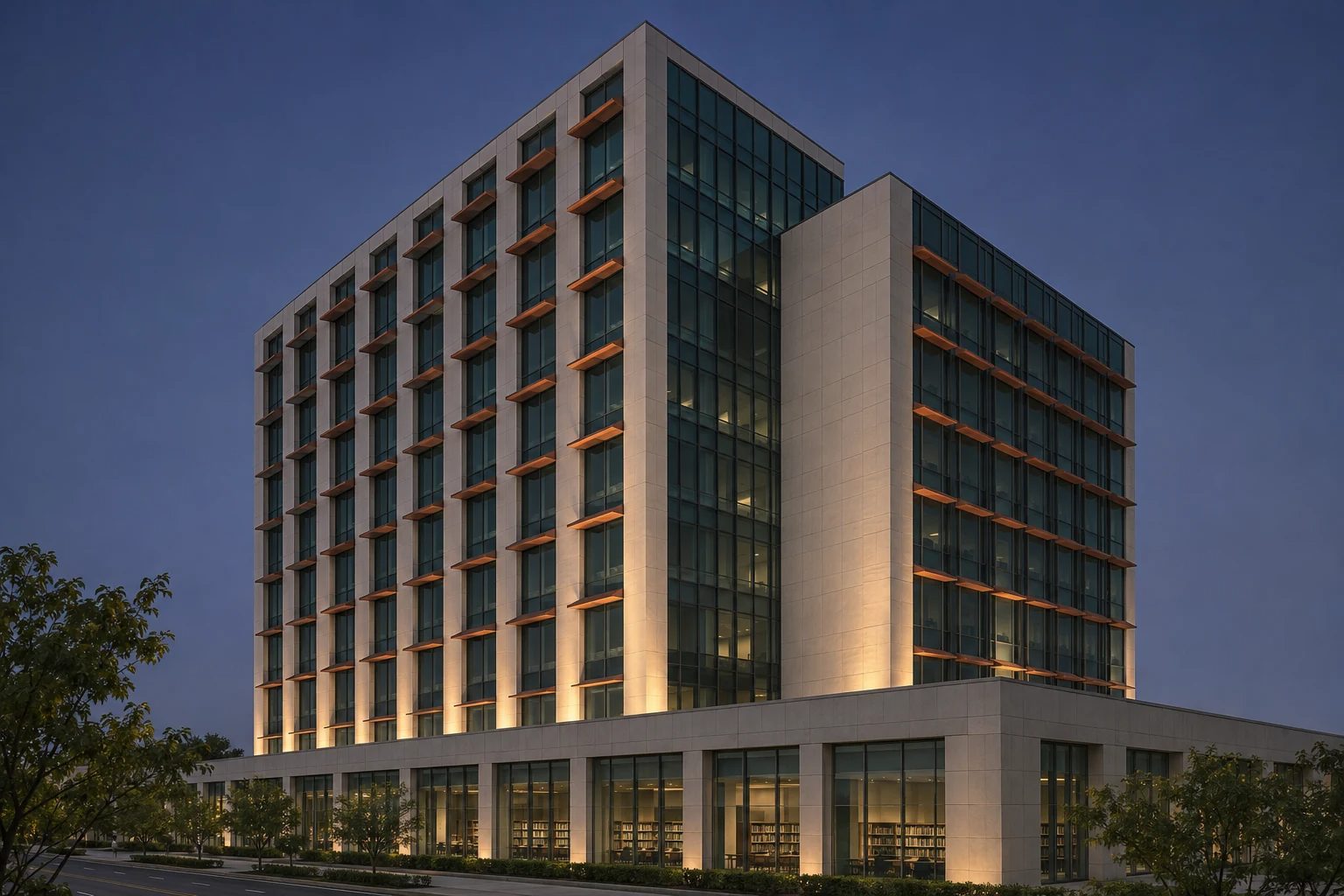
Measure from the luminaire to the centre of that feature along the aiming line. That is the throw used for a first optical check. A building height on the elevation tells you little about the real throw when the fixture is across a plaza, on an adjacent roof or tucked under a ledge. Each option needs its own section.
2. Compare two beams at the same distance
For a rough check on a plane perpendicular to the beam, multiply twice the throw by the tangent of half the beam angle. At 25 m, a nominal 10° beam spans about 4.4 m at the stated beam boundary. A 20° beam spans about 8.8 m. If the target is a 2 m pier, either optic can spill onto adjacent material unless the beam shape, aiming or shielding is refined.
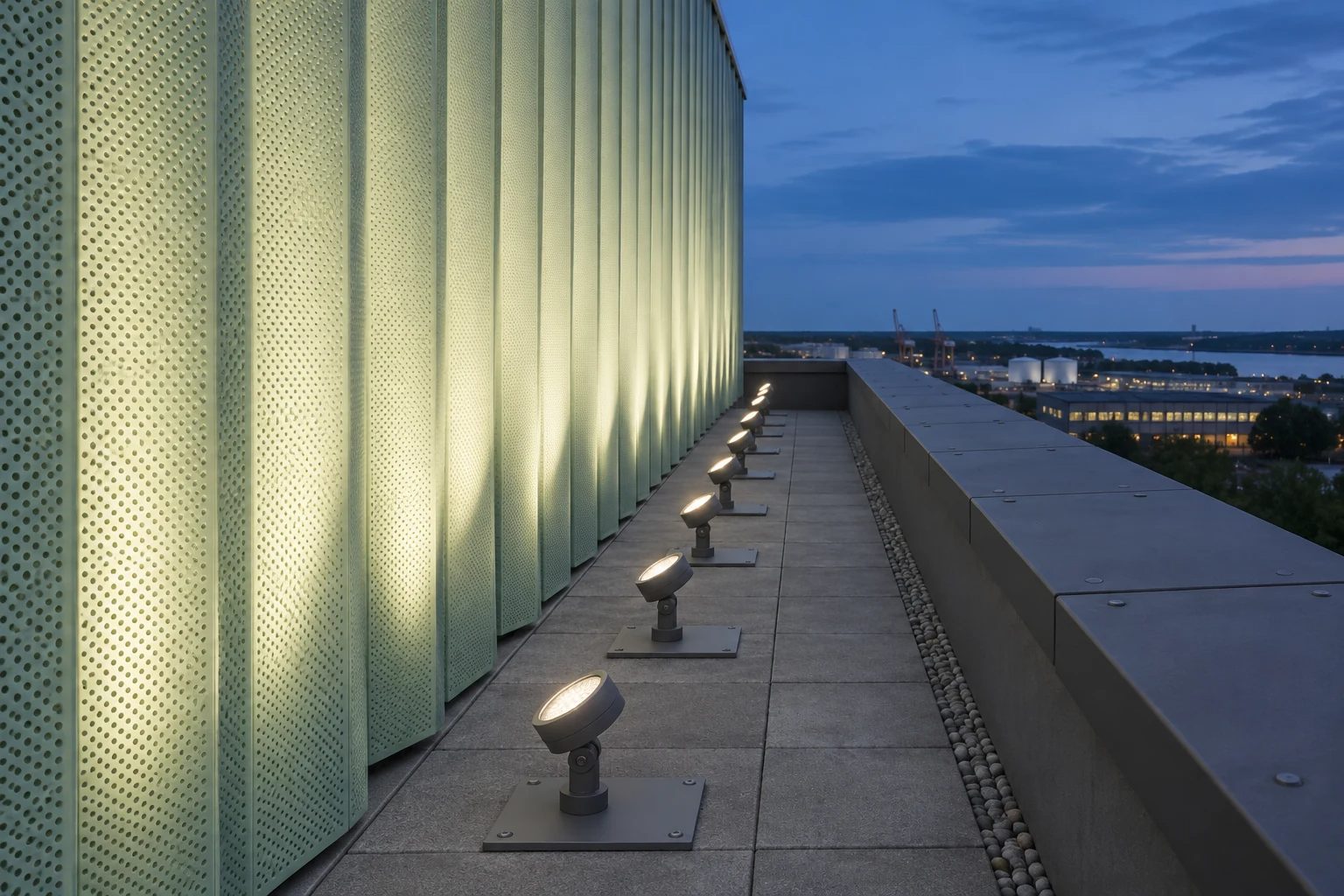
The number is a starting point. A common beam angle convention uses the points at half the centre-beam intensity. There can still be light outside that angle. On a tall wall hit at a steep angle, the footprint stretches, and projecting ledges can block part of it. Ask for the actual IES or LDT file for each optic, including any specified shield, and plot the result on the building section.
Not sure which optic suits your throw distance? Send your section for a free project consultation →
3. Check intensity at the aiming angle
Consider two floodlights with similar lumen output. The narrower optic may deliver more candela in the direction of the target because it concentrates the light. As a simple calculation, 50,000 cd in the direction of a target 25 m away gives 80 lx of illuminance on a plane normal to that ray. When the ray makes a 60° angle with the wall normal, the wall receives about 40 lx at that point under the same simplified assumptions. The real façade needs a grid of points and the full intensity distribution.
Also check the surface finish. Dark stone and pale render can look very different under similar calculated illuminance. Glossy cladding can send a reflection towards a driver or into a nearby window. Take material samples to the night trial if the finishes have not been installed yet.
4. Write an aiming schedule the installer can use
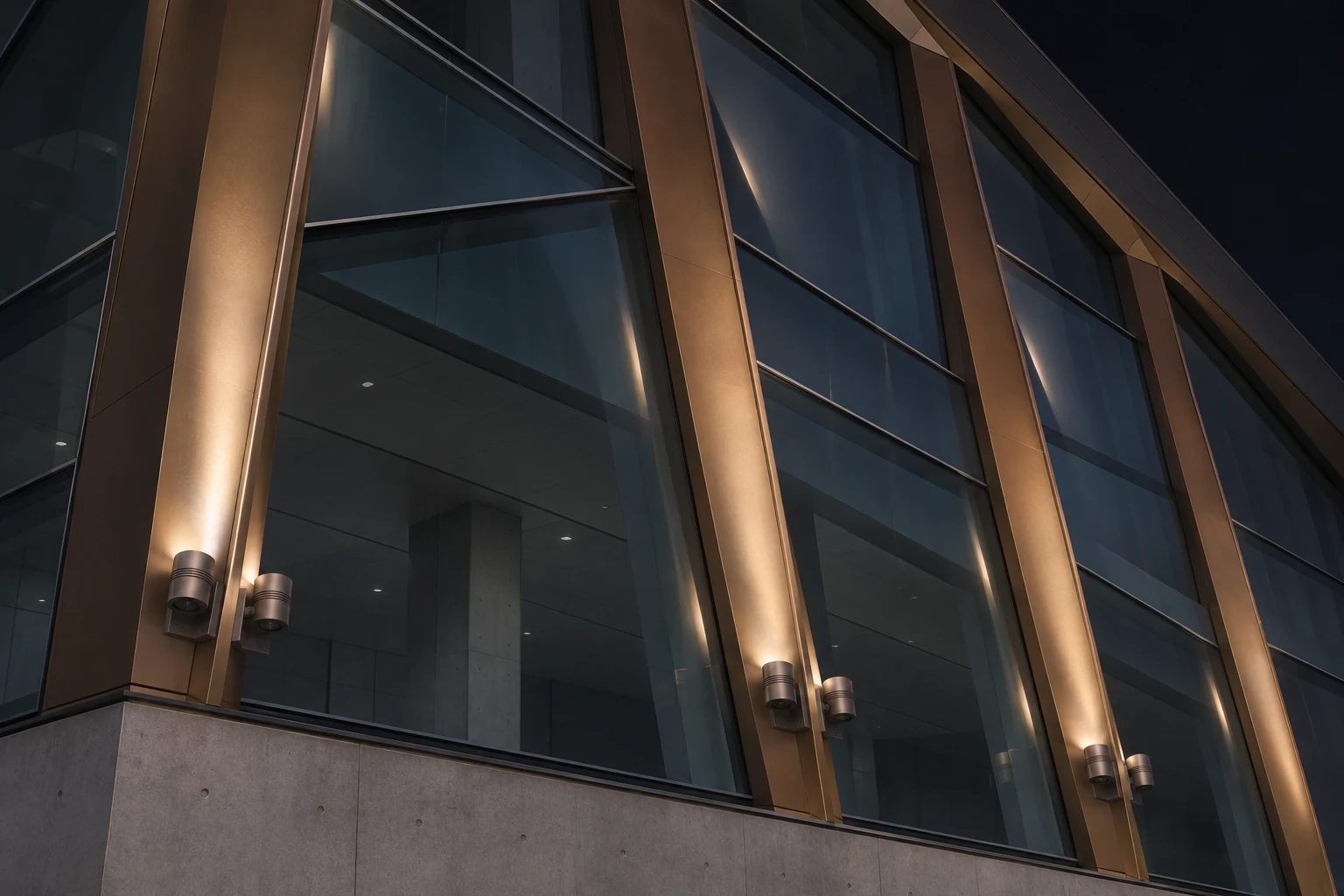
For each floodlight, record the mounting point, target point, optic, shield and bracket orientation. Verify the beam from the main viewing position, then walk the nearest footpath and check nearby windows or roads from agreed observation points. Photograph the approved result with a fixed exposure and mark the bracket setting so the crew can reproduce it.
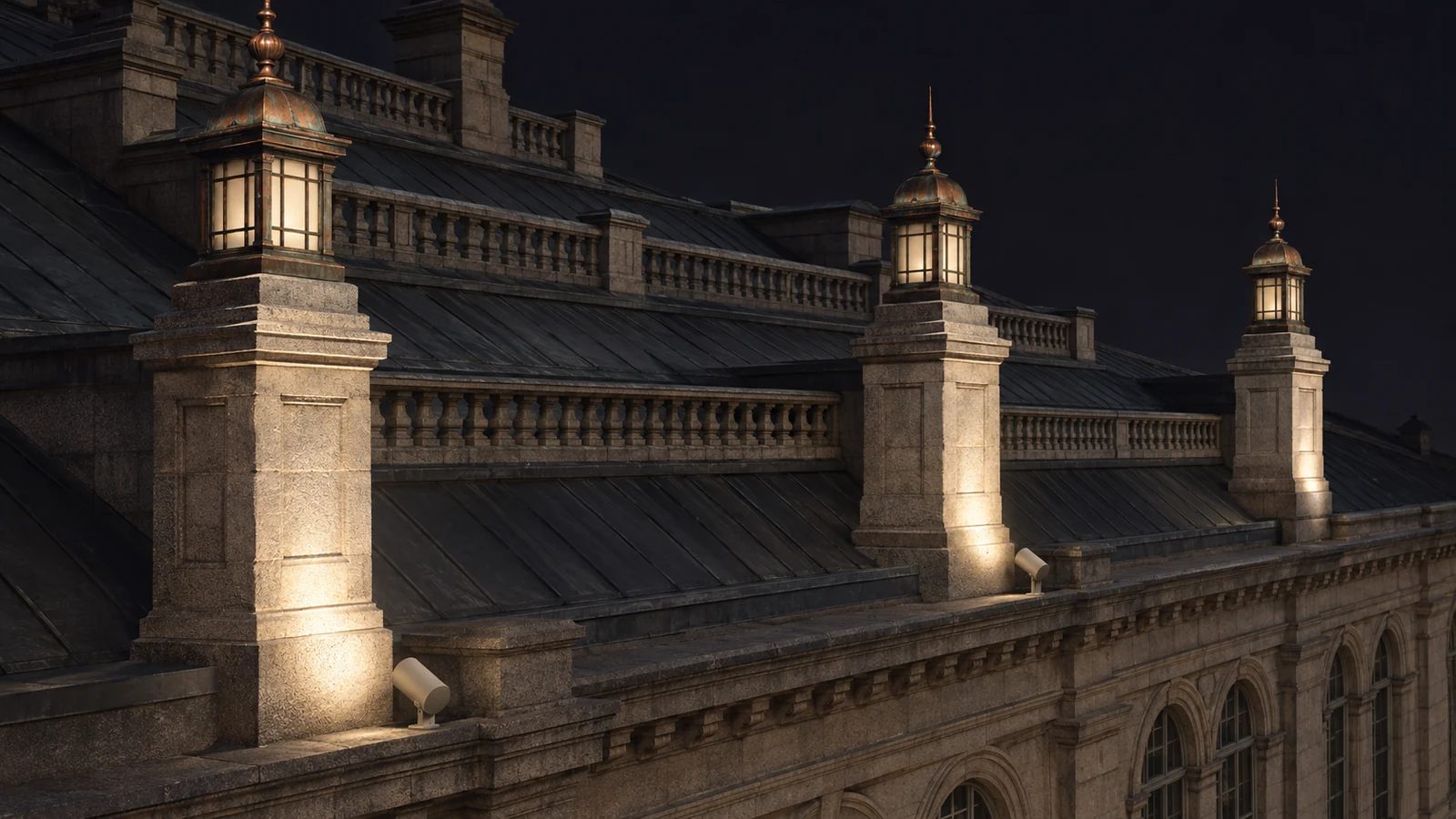
LNJAMI lists a 10° option for the TG150-1C LED floodlight, alongside other optics for that family. Compare the order code and photometric file for the exact lens you intend to use. For a comparison, share a scaled section, proposed mounting points, the target material and any windows or traffic routes that need protection. Request the photometry and bracket drawing for the actual configuration before making the purchase decision.
For the bigger picture, see our guide to beam angle in lighting.
Frequently asked questions
What beam angle do I need for a floodlight 25 m from a façade?
It depends on the size of the target. At 25 m, a 10° beam is about 4.4 m wide and a 20° beam about 8.8 m wide at the beam edge. Choose the optic whose footprint matches the feature, then confirm it with the IES or LDT file.
Is a narrow-beam floodlight always brighter?
Not in total output. A narrower optic concentrates similar lumens into a smaller angle, so it can deliver more candela, and more lux, at the target.
Why does the beam look longer on the wall than the calculation?
The quick formula assumes the wall faces the light. When light reaches a tall wall at a steep angle, the footprint stretches and the illuminance at each point drops.
What should I send for a floodlight comparison?
A scaled section with mounting points, target sizes and materials, plus any windows, roads or footpaths that need protection from glare.
Why choose LNJAMI for façade floodlighting projects
Multiple optics. Narrow to wide beam options, with photometric files for the exact optic you order.
Customized fixtures. Custom lengths, wattages, beam angles and color temperatures. See our custom wall washer and linear light solutions.
Burn-in before shipment. Fixtures are burned in before they leave the factory, typically for 24–48 hours, so early failures are caught before installation.
MEAN WELL drivers. Integral or remote driver configurations, with MEAN WELL drivers available.
Standard or custom brackets. Standard mounting hardware, or custom brackets and fasteners designed for the project.
Project engineering support. Free project consultations on drawings, fixture schedules and installation details before purchase.
Get a free project consultation for your façade floodlighting
Send LNJAMI your scaled section, proposed mounting points and target materials. Our engineers will reply with:
suggested optics and beam angles for each mounting position
the photometric files and bracket drawings for those configurations
a list of open aiming and glare questions to resolve before purchase
Book a Free Project Consultation → · Explore LED Floodlights · Explore LED Spotlights