How to Find Voltage Drop in a 24 V LED Facade Run
LNJAMI manufactures LED linear façade lights and LED wall washers for architectural projects, and this guide reflects the questions our engineers review when a 24 V run looks dim at the far end. It is written for contractors, electrical engineers and lighting designers checking a branch before or after installation.
Quick checklist for a dim 24 V façade run
Measure loaded voltage at the driver, the first fixture and the last fixture.
Record the active scene; test RGBW runs at the highest permitted load.
Low at the first fixture: check the feed cable and its terminations.
Drop mainly between first and last fixtures: check through-wiring and joints.
Compare cable size, run length and feed points before ordering a bigger driver.
1. Why a 24 V façade run gets dim at the far end
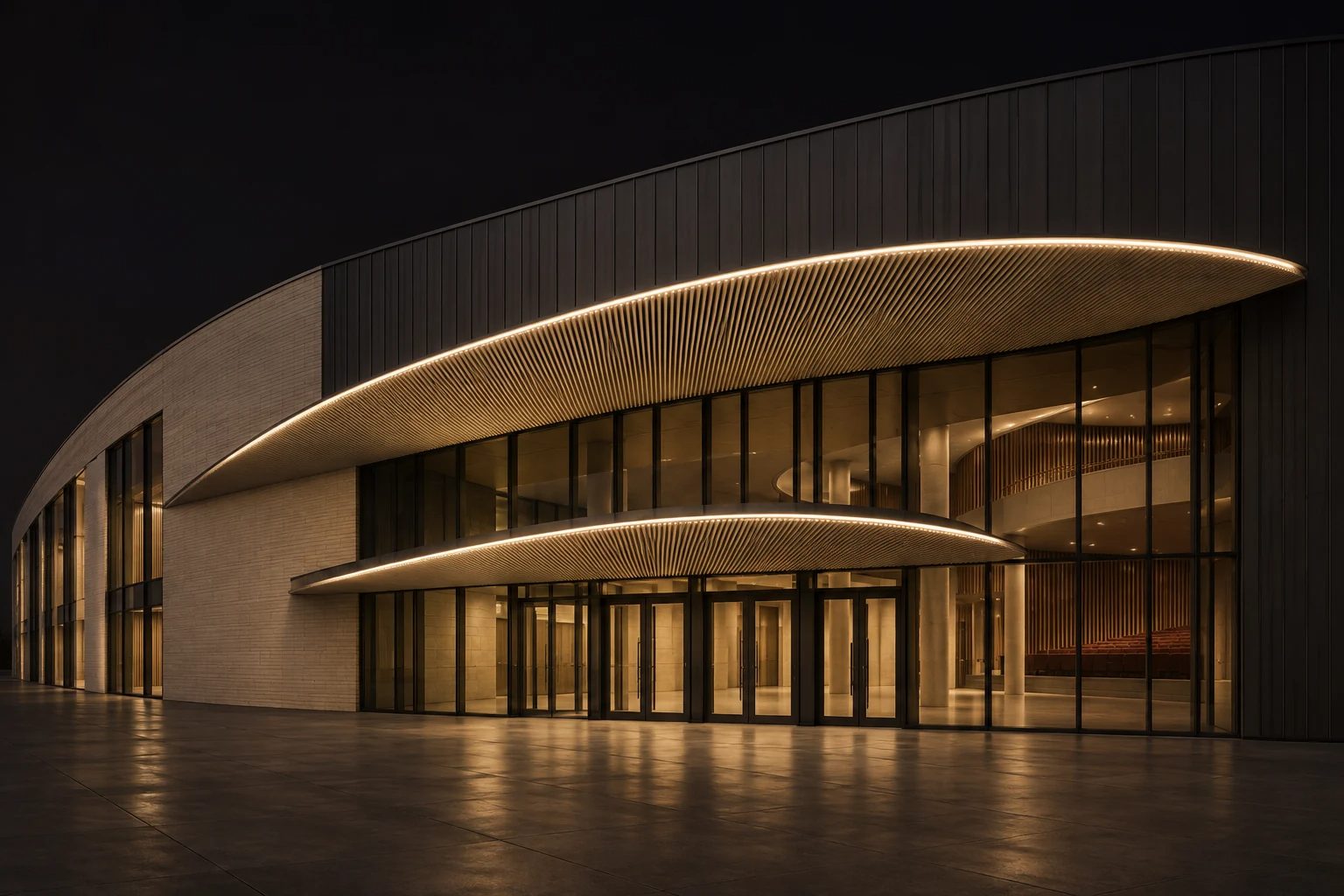
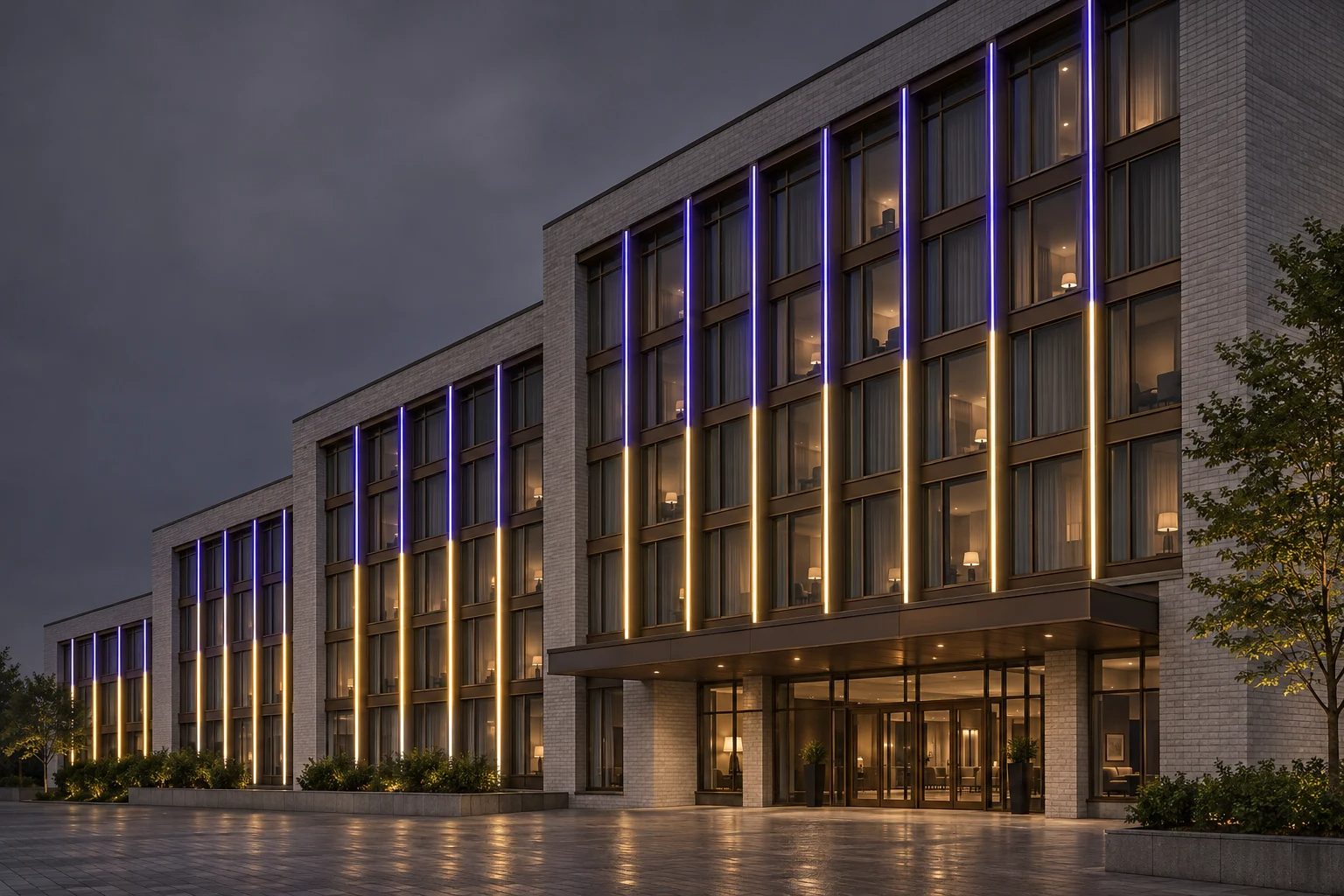
The first three linear lights above the entrance look fine. The line grows weaker as it turns along the side of the building. Before anyone orders a larger power supply or replaces the last fixture, find out where the voltage went. A long feed cable, a bad connection and the wiring through the fixtures can each produce a similar night-time picture.
An LED voltage drop calculation helps when it follows the wiring on the drawing. Mark the run from the driver to the first luminaire, then mark the path through the luminaires. A feed cable carrying the whole branch load loses voltage differently from a chain where each successive fixture takes some current off the line.
2. Take readings while the fault is visible
Ask the qualified electrical team to measure the loaded DC output and the voltage at the first and last luminaire using the approved test points. Record the active scene and which fixtures are lit. With RGBW, use the highest-load scene permitted by the project configuration. A measurement during a quiet dimmed scene can miss the problem entirely.
If the driver output is steady and the first fixture already reads low, check the feeder and its terminations. If voltage falls mostly between the first and last lights, check the through-wiring and individual joints before changing the branch design. A steep drop across one joint points the investigation toward that joint. If the voltage stays within the model’s limits and the line still looks uneven, compare the optical orientation, diffuser, brightness settings and control data.
3. Work through one branch before approving the cable schedule
Take an illustrative 24 V constant-voltage branch with 120 W of connected load. At nominal voltage it draws about 5 A. Assume a one-way feed of 20 m and 2.5 mm² copper conductors. The current travels through 40 m of copper on the way out and back. At an assumed copper resistivity of 0.0175 Ω·mm²/m near 20 °C, the estimated feed resistance is 0.28 Ω, and the drop at 5 A is 1.40 V. If the supply is actually at 24.0 V under that load, the first luminaire sees about 22.6 V before any connector losses. The last fixture can see less.
Run the same arithmetic for alternatives. On paper, increasing that feed to 4 mm² gives about 0.88 V of feed drop. Shortening the original 2.5 mm² feed to 8 m gives about 0.56 V. Those figures compare cable options at the assumed load. Many projects set a design target of about 3% at the last fixture, which is roughly 0.7 V on a 24 V branch. For the actual order, check the selected model’s input range and run limit, the driver’s operating conditions, cable current rating, connector rating and protection design. Cable temperature and connector resistance change what you see on site.
Already installed and dim at the end? Send your first and last readings for a free project consultation →
4. Put the feed points on the façade drawing
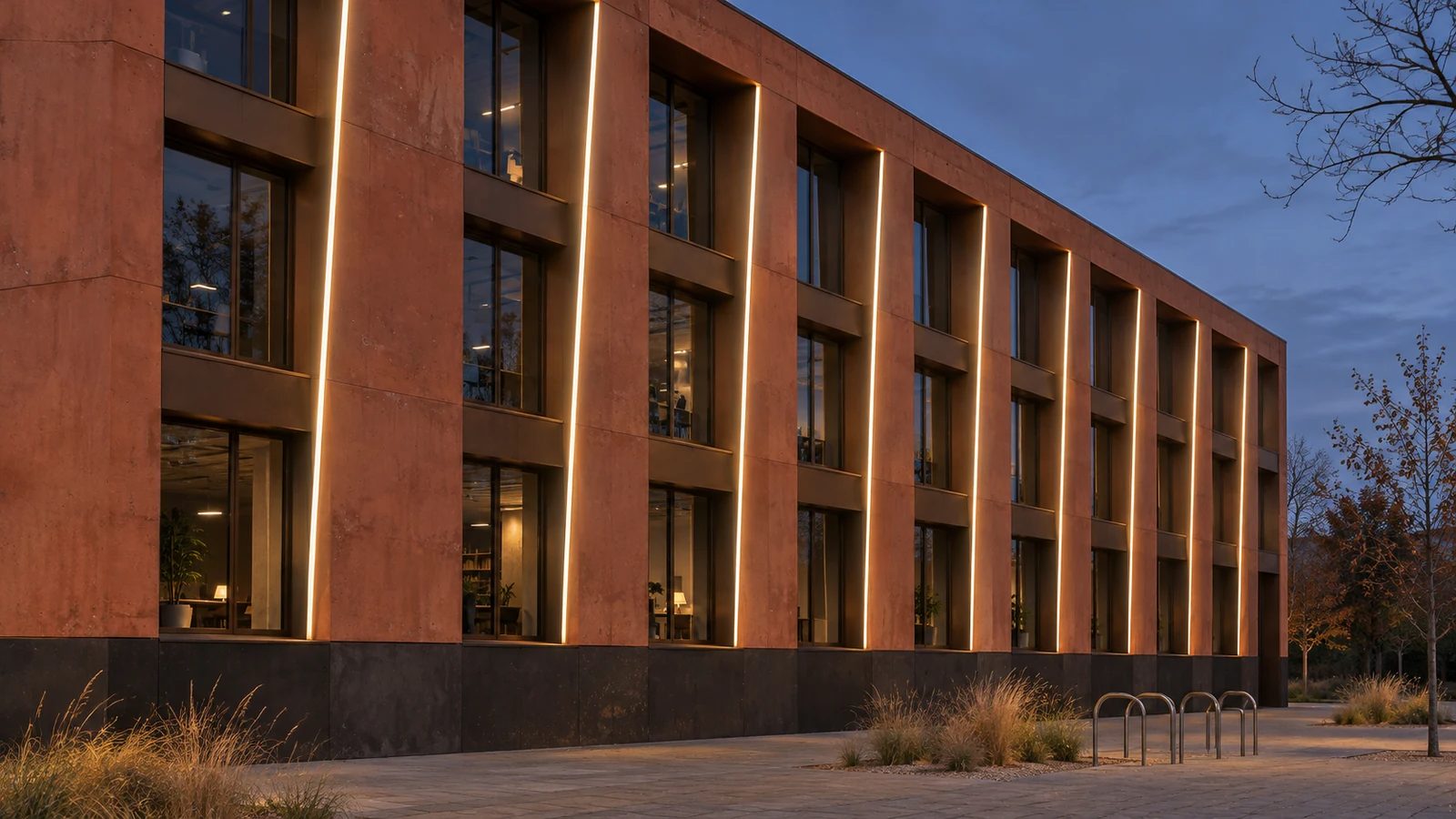
A longer line can read as one continuous feature while its electrical feeds are split into shorter branches. Label each driver and branch on the same elevation that shows the fixtures. Note which connector is accessible after the cladding goes on. If the selected system supports centre or multiple-point feeding, use its approved wiring arrangement and protection. Independently powered sections need the separation specified by the system designer and manufacturer.
The LNJAMI linear façade range lists DC 24 V options, including white and RGB/RGBW configurations. For a free project consultation, send the elevation, selected light, quantity per branch, one-way cable lengths and maximum operating scene to LNJAMI. If a run is already installed, add the first and last loaded readings and a photo showing where the brightness changes. That is enough to start a useful conversation about the feed layout.
For the bigger picture, see our outdoor lighting power supply guide.
Frequently asked questions
Why are the last fixtures on a 24 V run dimmer?
Current flowing through the feed cable, connectors and through-wiring loses voltage along the way, so fixtures at the far end receive less than the driver output.
Will a bigger power supply fix the dimming?
Usually not. A larger driver does not reduce the resistance of the cable. Shorter feeds, larger conductors or extra feed points address the drop itself.
How much voltage drop is acceptable on a 24 V run?
Many projects aim for about 3% at the last fixture, roughly 0.7 V on 24 V, but the selected model’s input range is what decides.
Where should I measure the voltage?
At the driver output, the first fixture and the last fixture, under load, with the active scene recorded.
Why choose LNJAMI for linear façade lighting projects
DC 24 V linear options. White and RGB/RGBW linear façade lights for long architectural runs.
Customized fixtures. Custom lengths, wattages, beam angles and color temperatures. See our custom wall washer and linear light solutions.
Burn-in before shipment. Fixtures are burned in before they leave the factory, typically for 24–48 hours, so early failures are caught before installation.
MEAN WELL drivers. Integral or remote driver configurations, with MEAN WELL drivers available.
Standard or custom brackets. Standard mounting hardware, or custom brackets and fasteners designed for the project.
Project engineering support. Free project consultations on drawings, fixture schedules and installation details before purchase.
Get a free project consultation for your 24 V façade runs
Send LNJAMI your elevation, selected light, quantity per branch, one-way cable lengths and maximum operating scene. Our engineers will reply with:
a feed layout and cable size check for each branch
suggested feed points or branch splits where the drop is too high
a list of open wiring questions to resolve before purchase
Book a Free Project Consultation → · Explore LED Linear Façade Lights · Explore LED Wall Washers