Solar Wall Washer Lights: Complete Guide for Architectural Lighting Projects
Introduction: A New Chapter in Architectural Lighting
As an outdoor architectural lighting manufacturer, we focus on developing reliable solar-powered lighting solutions by combining our experience in LED optics, waterproof outdoor fixtures, and customized lighting design. Our core competencies lie in precision aluminum extrusion, optical system design, thermal management, and weatherproof housing construction—disciplines we have refined through years of manufacturing wall washers, linear lights, and other architectural-grade luminaires.
Solar technology represents a natural extension of this expertise. By integrating PV modules, battery systems, and intelligent controllers with our existing optical and mechanical platforms, we offer solar wall washers that meet the performance and reliability standards that architectural projects demand. We are not a solar company that happens to make lights—we are an outdoor lighting manufacturer expanding into solar-powered solutions.
This guide provides a comprehensive framework for architects, lighting designers, engineers, and project buyers to understand, evaluate, and implement solar wall washer lighting systems for building facades and landscapes.
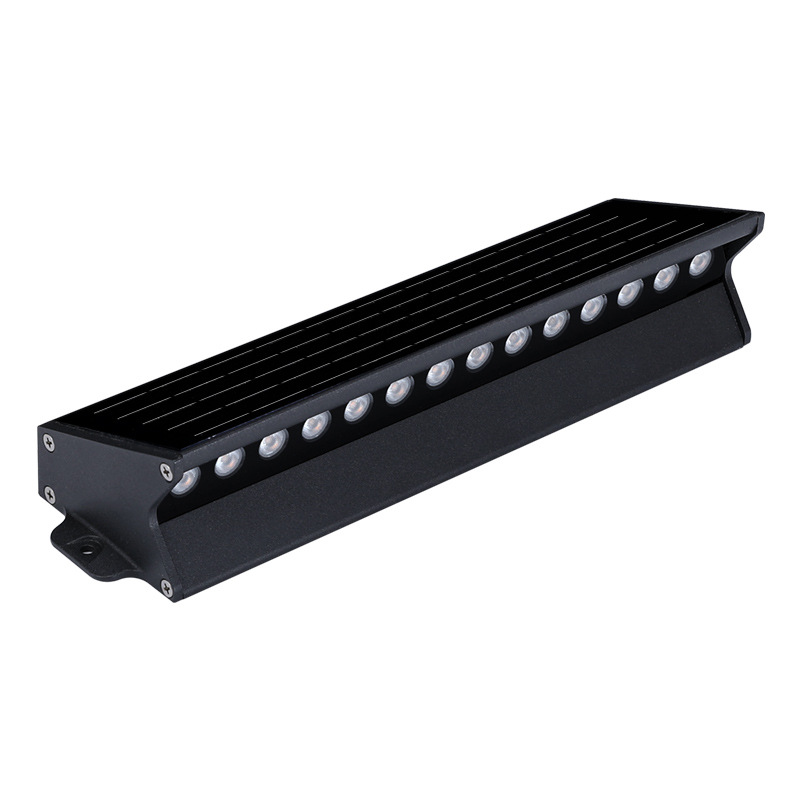 wall washer light fixture featuring high-efficiency LED optics and die-cast aluminum housing.">
How Solar Wall Washers Work in Building Projects
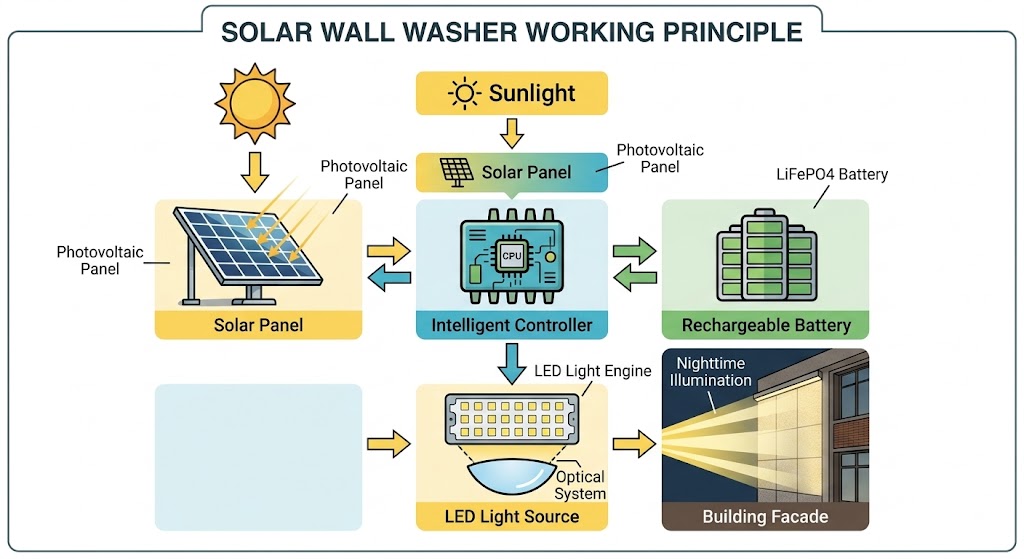
A solar wall washer is a self-contained lighting system that generates electricity through an onboard photovoltaic panel, stores it in a rechargeable battery, and uses that stored energy to power high-efficiency LEDs during nighttime hours. The entire system operates autonomously, requiring no connection to the electrical grid.
Core Components:
1. Photovoltaic Panel – The solar panel converts sunlight into electrical energy. Modern monocrystalline panels achieve efficiencies exceeding 22%, allowing significant energy harvest even in less-than-ideal light conditions. The panel's size, efficiency, and orientation directly determine the system's daily energy generation capacity.
2. Rechargeable Battery – The battery stores energy generated during daylight hours for nighttime use. Two chemistries dominate the solar lighting market: standard lithium-ion (Li-ion) and lithium iron phosphate (LiFePO4). LiFePO4 offers superior cycle life (2,000+ cycles) and thermal stability, making it the preferred choice for commercial architectural projects where reliability is paramount.
3. LED Light Engine – The LED light source produces the illumination. Advanced LED chips now achieve 160–180 lumens per watt, enabling solar-powered fixtures to project usable light across significant distances. For architectural applications, high CRI (Color Rendering Index) LEDs—typically 80 or above—are essential for preserving the true appearance of building materials.
4. Intelligent Controller – The controller manages the entire system: regulating charge and discharge, protecting the battery from overcharging or deep discharge, and controlling the light's on/off schedule through light sensors or timers. Advanced controllers may include dimming functions, motion sensing, and state-of-charge management that adjusts brightness based on available battery capacity.
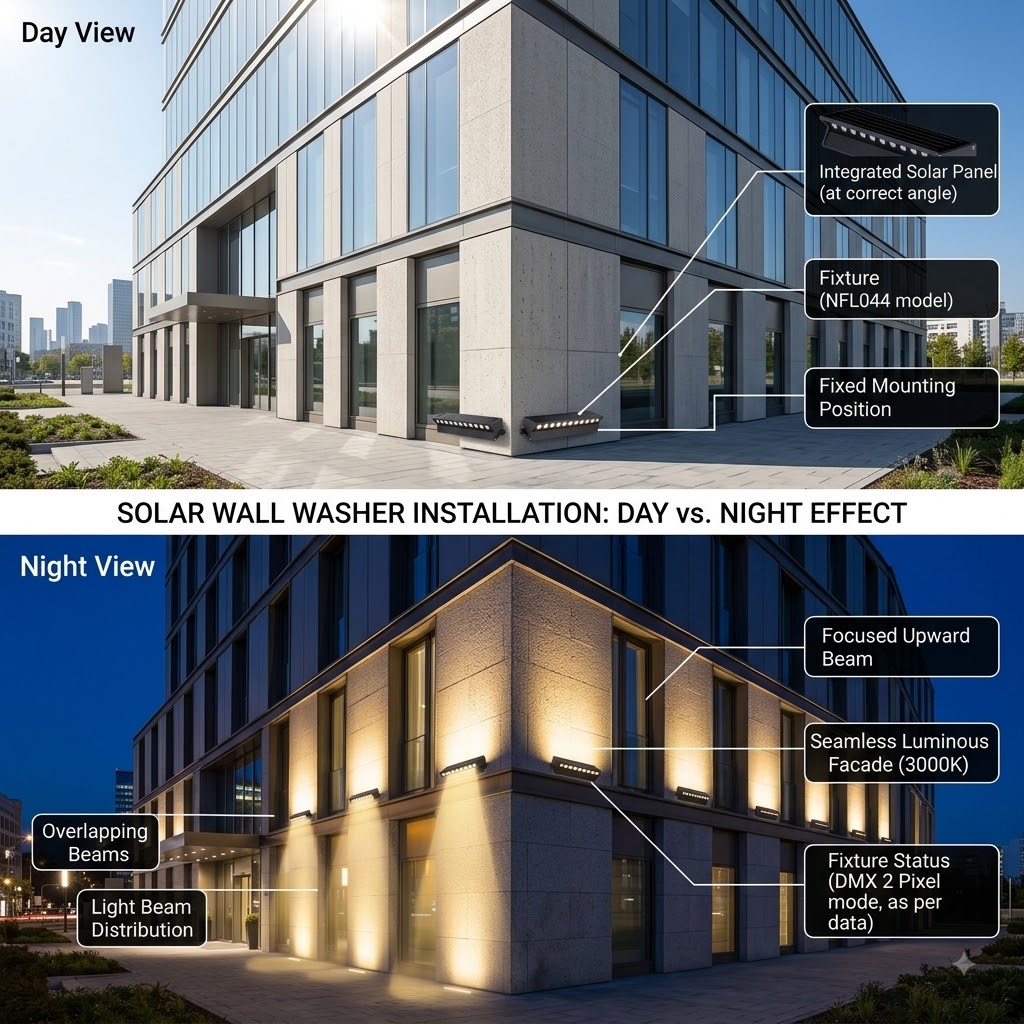
5. Optical System – The lens or reflector shapes light into the desired beam pattern. Wall washers typically use asymmetric or elliptical beam distributions designed to project light upward from a mounting position near the wall base, or downward from above, creating a smooth, continuous wash of light across the facade.
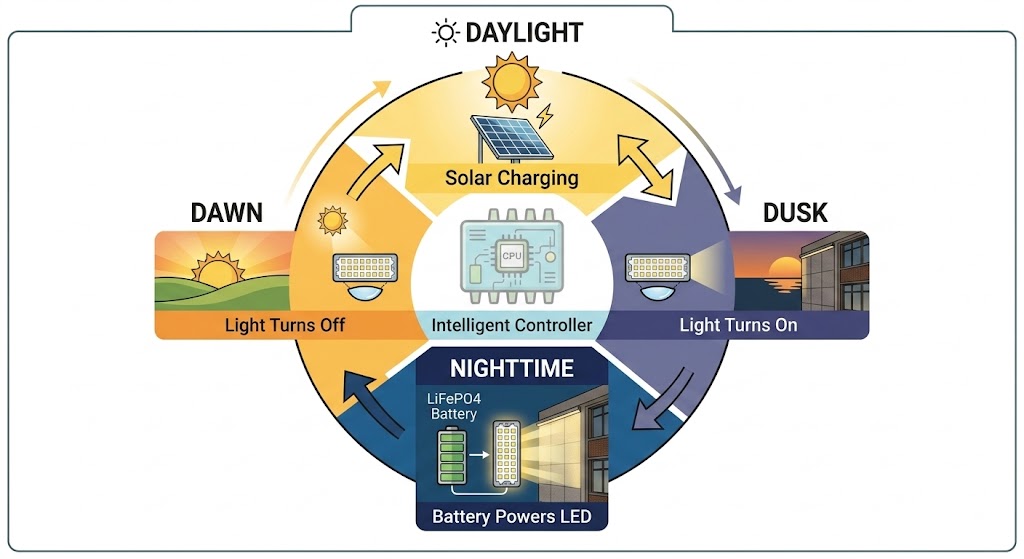
System Operation Cycle:
Daylight hours: Solar panel converts sunlight to DC power. Controller regulates charging and safely stores energy in the battery.
Dusk: Light sensor detects declining ambient light and signals the controller to activate the LED light source.
Nighttime: Fixture draws power from stored battery energy to illuminate the facade. Duration depends on battery capacity, power consumption, and previous day's solar exposure.
Dawn: Light sensor detects increasing ambient light and turns the fixture off. Charging cycle begins again.
This autonomous operation means zero grid dependency, zero electricity bills, and zero cabling—a paradigm shift for architectural lighting projects.
Benefits for Architectural Projects
1. Elimination of Trenching and Cabling
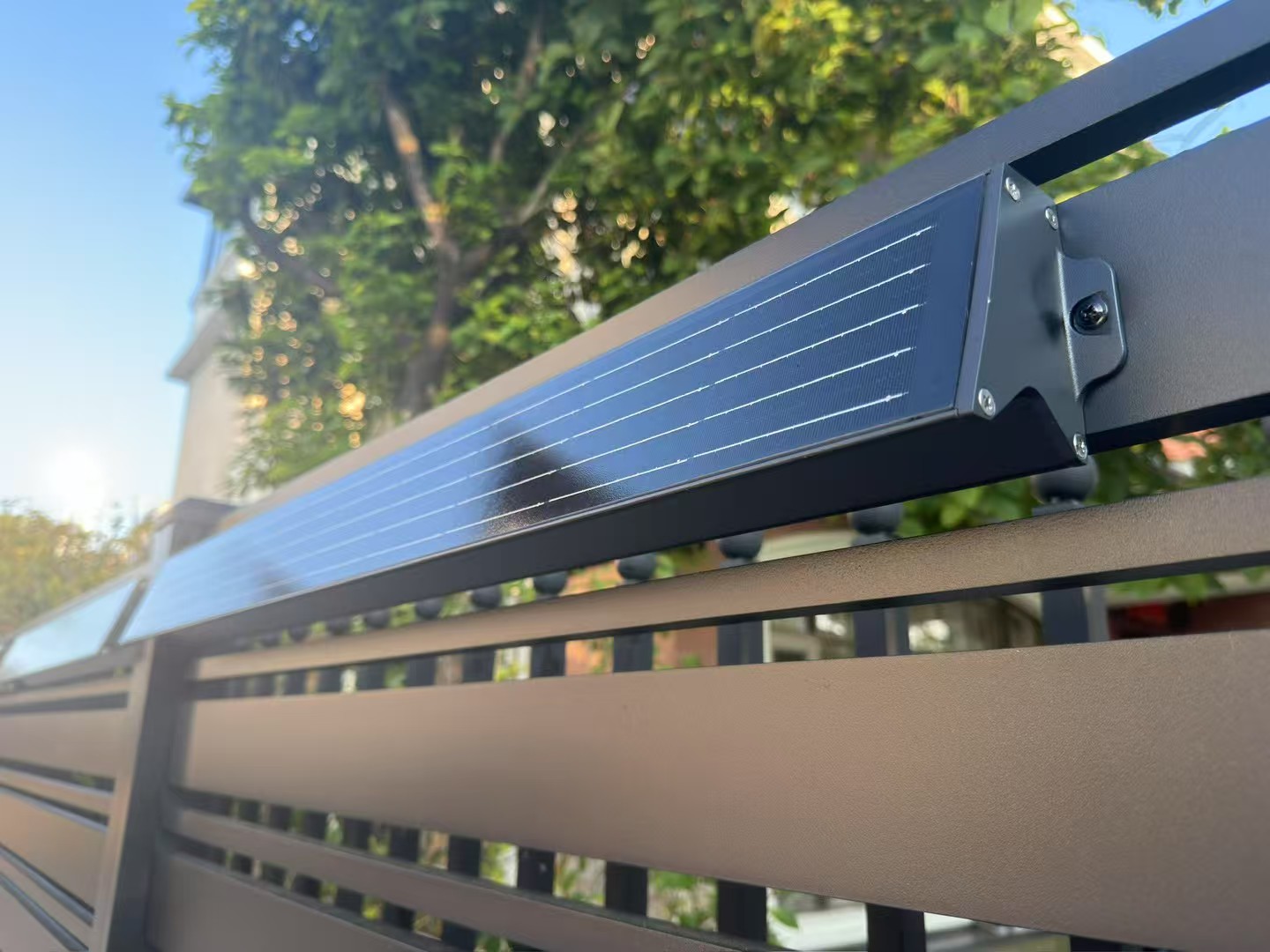
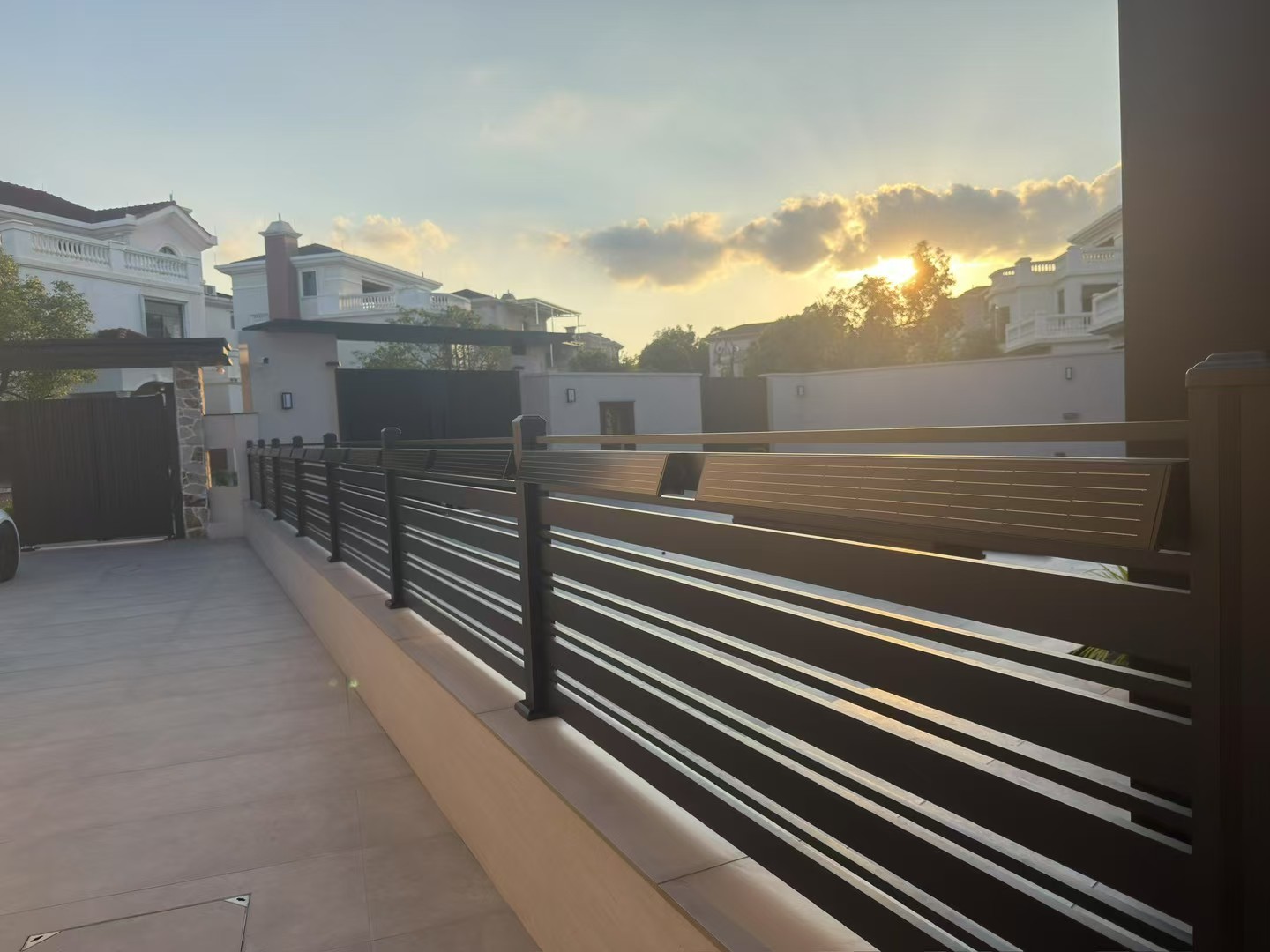
In large-scale facade projects, the cost of trenching, laying conduit, pulling cable, and restoring finished surfaces often exceeds the cost of the luminaires themselves. Solar wall washers eliminate this entirely. They surface-mount directly to the building facade with no wiring required—significantly reducing installation time, labor costs, and disruption to the site.
2. Zero Electricity Costs
Traditional wired wall washers consume electricity every night, generating ongoing utility costs. Solar wall washers operate on free solar energy, eliminating monthly electricity bills for the life of the system. For projects with long operating hours, the savings can be substantial.
3. Unrestricted Design Freedom
Without the constraint of electrical infrastructure, solar wall washers can be placed virtually anywhere that receives adequate sunlight. This opens up design possibilities for:
Historical buildings where trenching is prohibited
Complex facades where running cables is impractical
Remote structures far from electrical panels
Temporary or phased installations
4. Green Building Certification Support
Solar wall washers contribute to a building's sustainability profile and can help projects achieve points toward LEED, BREEAM, and other green building certification systems. The U.S. Department of Energy has identified net-zero and LEED installations as priority targets for solar integration in the built environment.
5. Resilience and Reliability
An autonomous lighting system remains operational during grid failures. This resilience is valuable for critical infrastructure, emergency lighting, and buildings in areas with unreliable grid power.
6. Reduced Maintenance Burden
Solar wall washer systems have few moving parts and require minimal upkeep. LED light sources have rated lifespans of 50,000+ hours (approximately 14 years at 10 hours per night), and batteries typically last 5–8 years depending on chemistry and usage. Regular cleaning of the solar panel is typically the only routine maintenance required.
Solar vs. Traditional Wired Systems: Cost-Benefit Analysis
Understanding the financial case for solar wall washers is essential for project decision-makers. The table below compares traditional wired systems with solar LED wall washers across key metrics.
|
Metric |
Traditional Wired System |
Solar Wall Washer |
|
Power Source |
Grid electricity |
Solar panel + battery |
|
Installation |
Trenching, conduit, cabling |
Surface mount, no wiring |
|
Energy Cost |
Monthly utility bills |
Zero |
|
Maintenance |
Higher (wiring faults, corrosion) |
Minimal (panel cleaning) |
|
Design Flexibility |
Constrained by electrical layout |
Virtually unlimited |
|
Grid Dependency |
Fully dependent |
Independent |
|
Typical Payback |
N/A (ongoing costs) |
3–5 years |
Cost Breakdown
Traditional Wired System:
Materials: Luminaires + cables + conduit + junction boxes + electrical panels + transformers
Labor: Trenching, backfilling, cable pulling, terminations, permitting, inspections
Ongoing: Monthly electricity consumption + periodic cable inspections and repairs
Solar Wall Washer System:
Materials: Luminaires with integrated solar panels, batteries, and controllers
Labor: Surface mounting only—no trenching, no cabling, no electrical connections
Ongoing: Zero electricity costs + occasional battery replacement (every 5–8 years)
Simple Payback Calculation:For projects where wired infrastructure would otherwise be required, solar wall washers often pay for themselves within 3–5 years through electricity savings alone.
Application Scenarios: Matching Product Specifications to Project Needs
Different architectural projects have different lighting requirements. The table below outlines common application scenarios for solar wall washers, along with recommended specifications tailored to each use case.
Hotel Facade Lighting
Typical Requirements:
Warm, inviting atmosphere – Guest-facing spaces require a welcoming, comfortable light quality that enhances the building's visual appeal
Long operating hours – Hotel facades typically operate from dusk until well past midnight (8–12 hours nightly)
Low maintenance – Hotel operations cannot be disrupted by frequent fixture maintenance
High-quality color rendering – Materials (stone, wood, metal finishes) must appear true to their design intent
Recommended Specifications:
|
Parameter |
Recommendation |
|
Color Temperature |
2700K–3000K (warm white) |
|
CRI |
90+ (excellent color rendering) |
|
IP Rating |
IP65 minimum (IP66 recommended for coastal locations) |
|
Battery Type |
LiFePO4 (long cycle life, thermal stability) |
|
Autonomy |
2–3 days (hotels cannot have dark facades) |
|
Beam Angle |
Asymmetric (10°×60° or similar) for uniform wall coverage |
Why This Spec: Warm white light creates the welcoming, premium atmosphere expected at hotels. High CRI ensures that architectural materials appear in their true colors—important for design-driven hospitality brands. LiFePO4 batteries provide the long cycle life and reliability required for daily, year-round operation. IP65/66 protection ensures durability in all weather conditions with minimal maintenance intervention.
Landscape and Garden Lighting
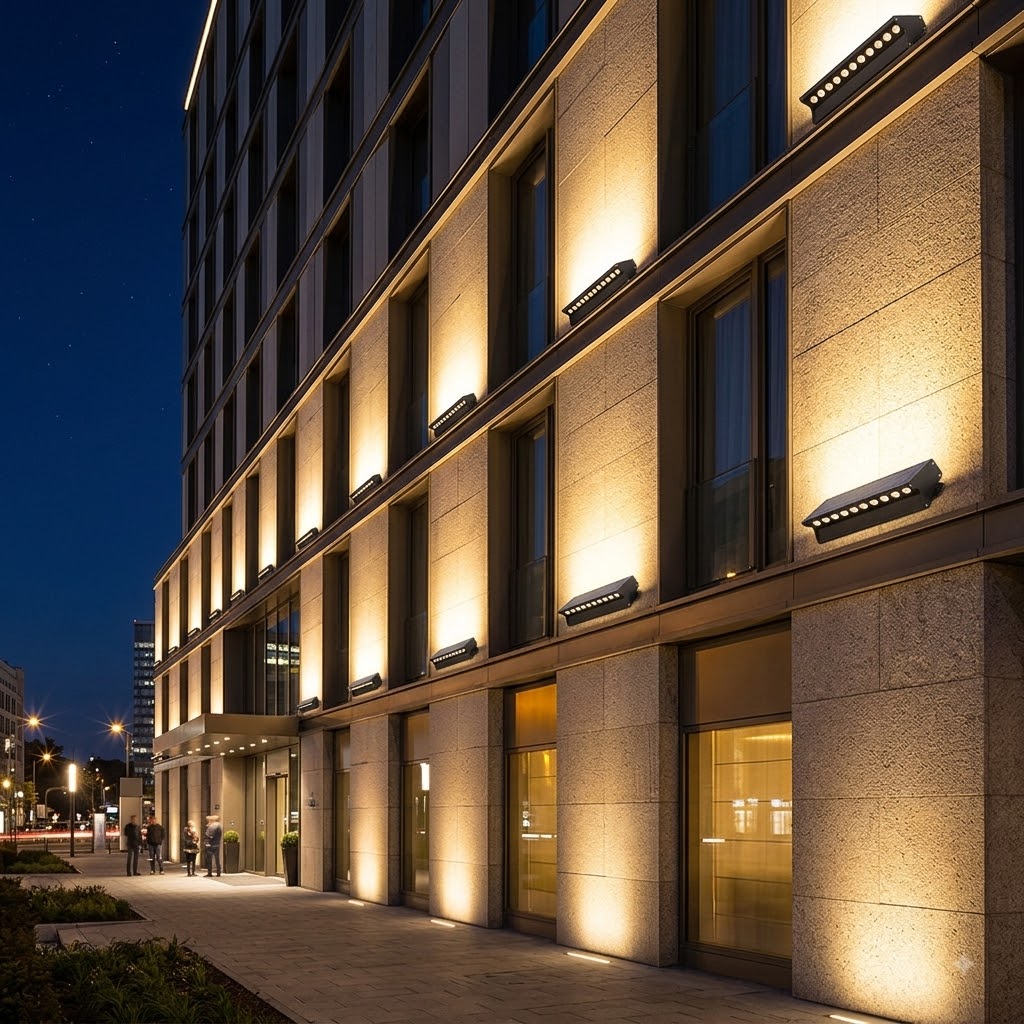
Typical Requirements:
No wiring or trenching – Garden areas often have finished landscaping, hardscaping, or sensitive plantings that make trenching undesirable or impossible
Flexible installation – Fixtures may need to be repositioned or added over time as landscapes mature
Aesthetic integration – Fixtures should be unobtrusive and complement the landscape design
Moderate operating hours – Landscape lighting typically operates 6–10 hours nightly
Recommended Specifications:
|
Parameter |
Recommendation |
|
Color Temperature |
2700K–3000K (warm, natural feel) |
|
CRI |
80+ (adequate for plant materials) |
|
IP Rating |
IP65 (standard for garden exposure) |
|
Battery Type |
Integrated Li-ion or LiFePO4 (factory-sealed) |
|
Autonomy |
1–2 days (some flexibility acceptable) |
|
Mounting |
Ground spikes, wall brackets, or surface-mount |
Why This Spec: Integrated solar solutions (all components in one housing) simplify installation and eliminate exposed wiring—particularly valuable in garden environments. Warmer color temperatures complement natural materials and create a relaxing atmosphere. IP65 protection handles rain, sprinklers, and humidity while allowing the fixture to be positioned close to the ground.
Remote Building Lighting
Typical Requirements:
No grid connection – Buildings in remote areas (mountains, islands, rural locations) may have no access to electrical infrastructure
Reliable performance – Off-grid applications cannot rely on grid backup; the system must perform autonomously
Long autonomy – Extended cloudy periods are common in many remote locations
Durability – Remote sites often have limited access for maintenance
Recommended Specifications:
|
Parameter |
Recommendation |
|
Color Temperature |
4000K (neutral white) for visibility, or 3000K for ambiance |
|
CRI |
80+ (adequate for general purposes) |
|
IP Rating |
IP66 minimum (exposed to harsh conditions) |
|
Battery Type |
LiFePO4 with high-capacity configuration |
|
Autonomy |
3–5 days (extended cloudy weather coverage) |
|
Solar Panel |
Larger or separate panel for increased charging capacity |
Why This Spec: High-capacity battery systems are essential for remote applications where grid backup is unavailable. Extended autonomy (3–5 days) ensures the lighting system remains operational through consecutive cloudy or rainy days. IP66 or higher protection is recommended for exposed mountain, coastal, or rural installations where weather conditions can be severe.
Commercial Building Facades (Office, Retail)
Typical Requirements:
Clean, professional appearance – Commercial buildings benefit from crisp, modern lighting that reinforces brand identity
Consistent operation – Facades should illuminate reliably every night
Moderate operating hours – Typically 6–8 hours nightly
Cost efficiency – Commercial projects often have tight budgets and require demonstrated ROI
Recommended Specifications:
|
Parameter |
Recommendation |
|
Color Temperature |
4000K (neutral white) for modern commercial aesthetics |
|
CRI |
80+ (adequate for most commercial materials) |
|
IP Rating |
IP65 (standard for building facades) |
|
Battery Type |
LiFePO4 or high-quality Li-ion |
|
Autonomy |
2 days (standard) |
|
Solar Panel |
Variable based on facade geometry |
For a deeper dive into commercial applications, see our sub-article: How to Choose Solar Wall Washer Lights for Commercial Buildings.
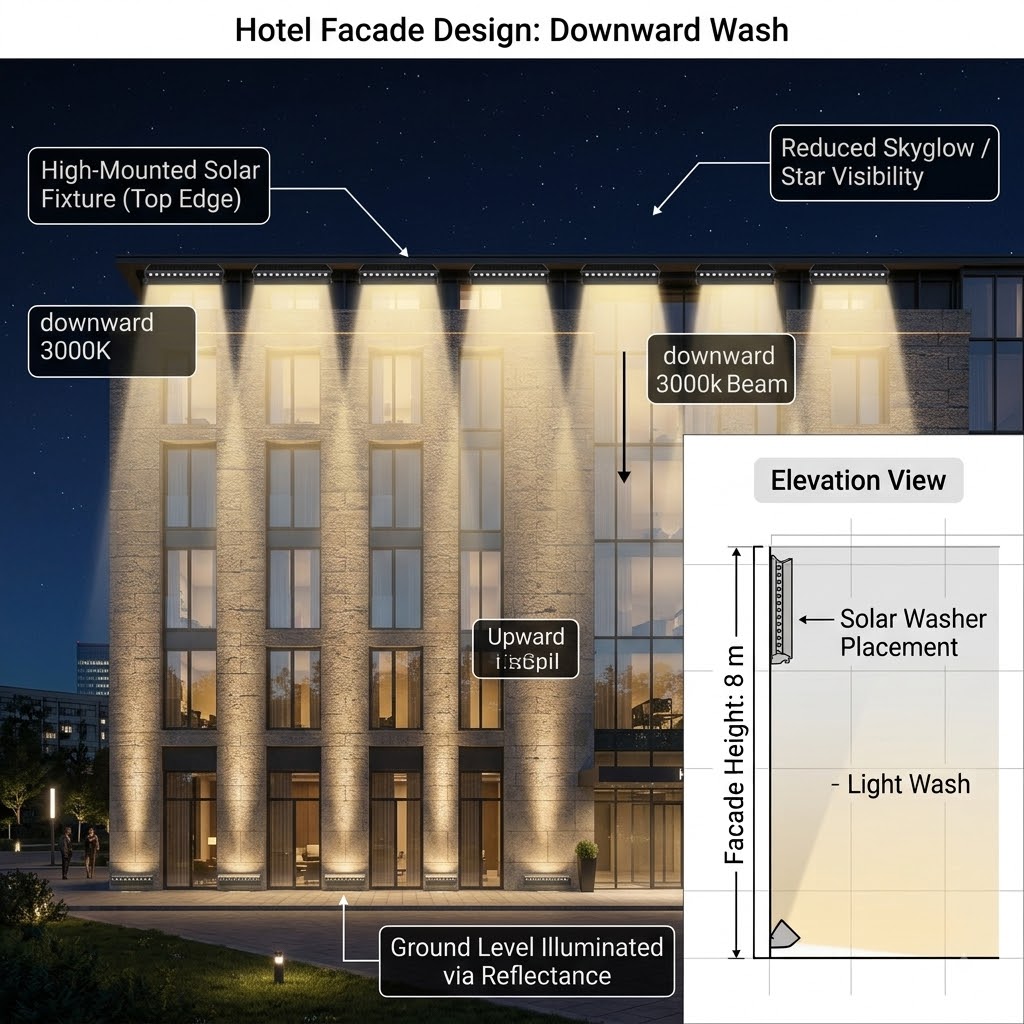
Design Scenario Simulation: Solar Wall Washer Lighting for a Hotel Facade
The following scenario demonstrates how to apply the design principles and specifications discussed in this guide to a real-world architectural lighting project. This is a design exercise—not a case study of a completed installation—intended to illustrate the decision-making process for specifying solar wall washers.
Project Assumptions
|
Parameter |
Value |
|
Building Type |
Mid-sized boutique hotel |
|
Facade Height |
8 meters (approximately 2.5 stories) |
|
Facade Length |
100 meters (continuous wall surface) |
|
Location |
Mediterranean climate (average 5 peak sun hours/day) |
|
Material |
Textured limestone and glass curtain wall |
|
Lighting Objective |
Uniform wall washing from ground level, creating a warm, welcoming impression for arriving guests |
|
Operating Hours |
Dusk to 1:00 AM (approximately 8–10 hours depending on season) |
|
Budget Constraint |
Mid-range; ROI is a consideration |
Design Requirements
Based on the hotel facade application scenario, the following requirements are established:
Illuminance target: 50–100 lux on the wall surface (sufficient for atmospheric facade lighting without overlighting)
Uniformity: Minimum uniformity ratio (Emin/Emax) of 0.3
Color temperature: 3000K warm white to complement limestone and create a premium hospitality atmosphere
CRI: 90+ to accurately render the texture of natural stone
Autonomy: Minimum 2 days of operation without solar input (to handle cloudy conditions)
Waterproofing: IP65 minimum (Mediterranean climate with occasional heavy rain)
Aesthetics: Fixtures should be unobtrusive; low-profile design preferred
Fixture Selection and Layout
Step 1: Determine Beam Angle and Mounting Position
For a wall height of 8 meters, the optimal mounting distance from the wall is approximately 2–3 meters (roughly one-third of the wall height). The fixture should be mounted at ground level, angled upward to project light across the full height of the facade.
An asymmetric beam distribution (e.g., 10°×60°) is ideal—the narrower vertical angle projects light upward along the wall, while the wider horizontal angle spreads light across the building face.
Step 2: Determine Spacing
For uniform coverage along a 100-meter wall, fixture spacing should typically be 3–4 meters for full coverage, or 5–6 meters for an accent wash effect. For this project, we select 4-meter spacing, which yields 25 fixtures for the full wall length.
Step 3: Select Fixture Wattage
For 8-meter wall height at 4-meter spacing, a 40–60W LED fixture will typically deliver 50–100 lux at the wall surface. We select a 50W fixture with the following specifications:
Luminous flux: 8,000–9,000 lumens (at 160–180 lm/W)
Beam angle: 10°×60° asymmetric
Color temperature: 3000K
CRI: 90+
Visual Quality Considerations
The success of this installation depends not only on technical specifications but also on visual quality:
Avoid striping: With 4-meter spacing on an 8-meter wall, the beam overlap should provide uniform coverage without visible bright or dark bands
Highlight material texture: The warm 3000K light and high CRI will reveal the texture of the limestone, creating visual interest
Glass curtain wall: Fixtures near glass areas should be positioned to avoid excessive glare or reflections visible from inside the building
Project Inspiration Gallery
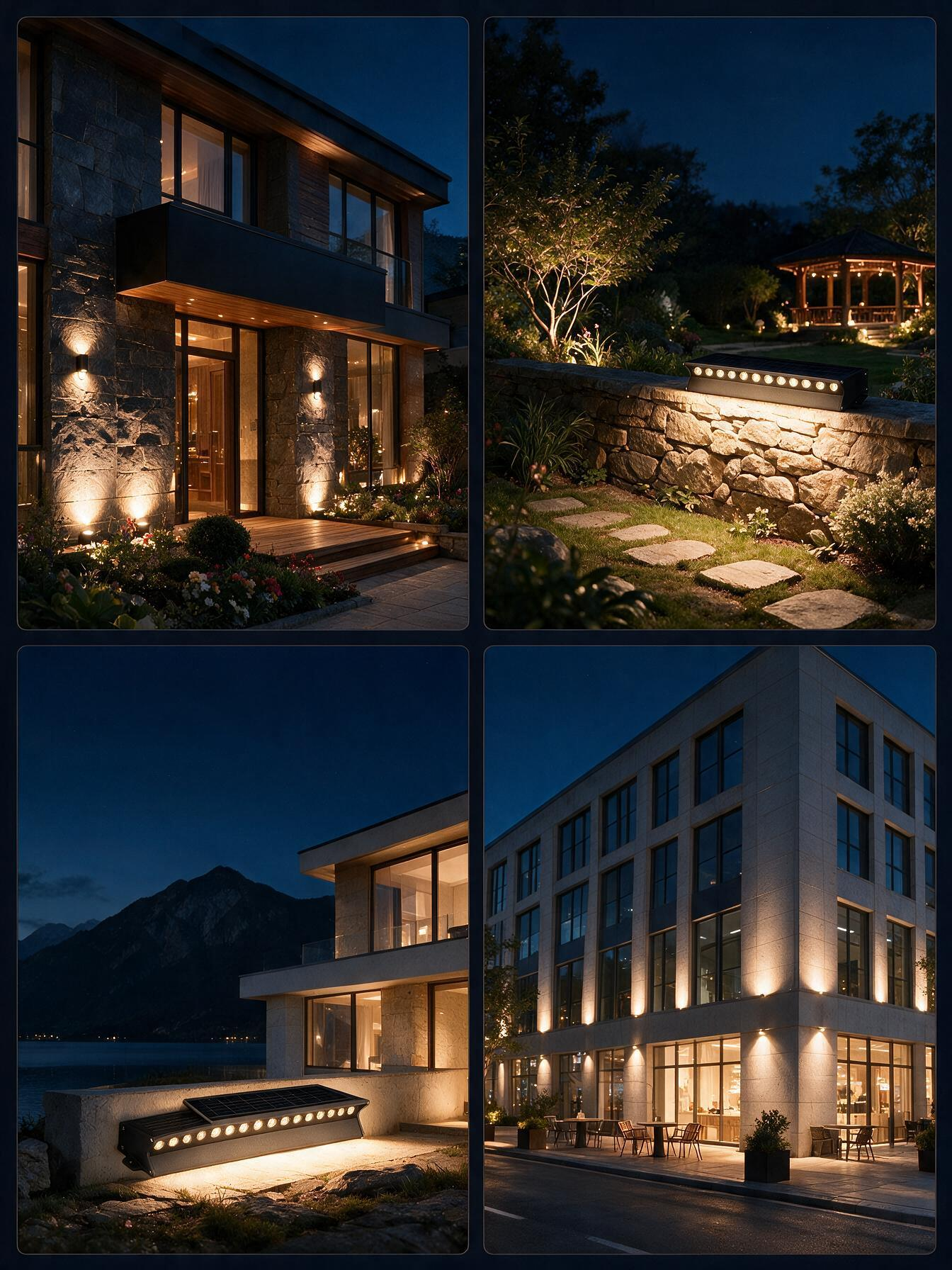
The following examples demonstrate possible applications and lighting concepts for solar wall washer systems. These are industry reference illustrations—not our proprietary projects—intended to show the range of architectural effects achievable with wall washing techniques.
Concept A: Continuous Linear Wash Application: Modern office buildings, retail plazas, civic buildings Effect: A smooth, continuous ribbon of light running the full length of the facade, visually extending the building's horizontality Technique: Fixtures spaced closely (2–3 meters) with wide beam angles, creating an uninterrupted light curtain
Concept B: Accent Pillar Lighting Application: Hotel entrances, colonnades, corporate headquarters Effect: Individual columns or architectural features highlighted with focused light, creating rhythm and hierarchy Technique: Narrow beam angles on single columns or regularly spaced features, creating dramatic shadow lines
Concept C: Dynamic Color-Changing Facades Application: Entertainment venues, cultural institutions, retail Effect: Programmable color sequences that create visual interest and attract attention Technique: RGB or RGBW fixtures with DMX or wireless control, synchronizing color changes across multiple fixtures
Concept D: Grazing Light on Textured Walls Application: Stone or brick facades, heritage buildings Effect: Light that rakes across the surface at a low angle, emphasizing texture and materiality Technique: Fixtures mounted very close to the wall (10–30cm) with a tight grazing optic—a technique suited to solar wall washers with custom optical designs
Concept E: Landscape Path and Garden Boundary Lighting Application: Hotel grounds, residential developments, public parks Effect: Soft, low-level light that defines garden edges and paths while drawing the eye to key landscape features Technique: Low-powered solar wall washers mounted on ground spikes or low bollards, washing light across planting beds or retaining walls
Installation Best Practices for Facade Projects
Pre-Installation Planning
1. Site Assessment
Evaluate the installation location for solar exposure throughout the day. The solar panel must receive direct, unobstructed sunlight for optimal charging. Use a solar pathfinder or similar tool to identify potential shading from:
Adjacent buildings
Trees and landscaping
Building setbacks and overhangs
Seasonal variations in sun angle
2. Facade Analysis
Assess the wall surface:
Material: Smooth, textured, or reflective surfaces absorb and reflect light differently
Color: Dark surfaces require higher light output for the same perceived brightness
Geometry: Recesses, projections, and curves create shadows and require careful fixture positioning
3. Lighting Design
Determine the desired illuminance level, uniformity ratio, and beam angle based on the facade height, architectural intent, and application scenario.
Installation Guidelines
1. Fixture Positioning
Mount the fixture at the appropriate distance from the wall surface. As a general rule:
Wall height ≤ 5m: Mounting distance = 1.5–2m
Wall height 5–10m: Mounting distance = 2–3m
Wall height > 10m: Mounting distance = 3–4m (or consider multiple rows)
2. Angle Adjustment
Most fixtures include adjustable brackets allowing tilt adjustment. Position the fixture so that the center of the beam strikes approximately two-thirds of the way up the wall for optimal distribution.
3. Solar Panel Orientation
In the northern hemisphere: Panels should face true south
In the southern hemisphere: Panels should face true north
Optimal tilt angle: Approximately equal to the local latitude
Avoid any shading on the panel during peak sunlight hours (9:00 AM–3:00 PM)
4. Secure Mounting
For high-rise applications, ensure mounting hardware and brackets are rated for:
Wind loads specific to the building's location and height
The weight of the fixture (solar panels add weight to the fixture assembly)
Structural requirements of the building facade
Common Mistakes to Avoid
Insufficient solar exposure: Panels installed in shaded areas will not charge adequately, regardless of fixture quality
Wrong beam angle: Narrow beams on wide walls create uneven coverage; wide beams on tall, narrow surfaces waste light
Incorrect spacing: Fixtures placed too far apart create visible bright and dark bands
Excessive spacing: Fixtures placed too close waste budget without improving uniformity
Overlooking maintenance access: Ensure fixtures can be safely reached for panel cleaning and servicing
Quality Certifications and What They Mean for Your Project
Certifications provide independent verification that products meet recognized standards for safety, performance, and environmental compliance. For project buyers, understanding these certifications is essential for mitigating risk and ensuring successful project delivery.
Essential Certifications for Solar Wall Washers
|
Certification |
Market |
What It Means |
|
CE |
European Union |
Mandatory for EU sales; indicates compliance with health, safety, and environmental standards |
|
RoHS |
Global |
Restricts hazardous substances in electrical equipment |
|
UL 1598 |
North America |
Safety standard for luminaires (stationary and fixed) |
|
IEC 60598 |
Global |
International standard for luminaire safety |
|
ISO 9001 |
Global |
Quality management system certification |
|
SGS / TÜV |
Global |
Third-party testing and verification |
What to Look For When Evaluating Suppliers
Ask for certification documentation – Reputable manufacturers will provide test reports and certificates upon request.
Verify third-party testing – CE marking allows self-declaration, but third-party verification (TÜV, SGS, etc.) provides greater confidence.
Check for relevant standards – For architectural projects, ensure compliance with IEC 60598 (luminaire safety) and relevant photometric standards.
Confirm warranty terms – Industry-standard warranties range from 2–5 years. Clarify whether the warranty covers the entire fixture or only specific components, and understand the terms for battery replacement.
Maintenance, Lifespan, and Long-Term Performance
Solar wall washers require minimal maintenance compared to wired systems. The primary tasks are:
1. Solar Panel Cleaning
Dust, dirt, bird droppings, and pollen can reduce panel efficiency by 15–30% if left uncleaned. Clean panels with water and a soft cloth or sponge every 3–6 months—more frequently in dusty environments or areas with heavy bird activity.
2. Battery Health Monitoring
Check battery performance annually. If runtime decreases noticeably or the fixture fails to stay on for the expected duration, the battery may be approaching end of life.
3. Fixture Inspection
Visually inspect for physical damage, loose connections, water ingress, or damaged seals. Replace damaged gaskets promptly to maintain the IP rating.
4. Lens Cleaning
Clean optical lenses to maintain light output. Use a soft, non-abrasive cloth to avoid scratching the lens surface.
Expected Lifespan
|
Component |
Typical Lifespan |
Notes |
|
LED light source |
50,000+ hours |
~14 years at 10 hrs/night |
|
LiFePO4 battery |
2,000+ cycles |
~5–6 years with daily cycling |
|
Solar panel |
20–25 years |
Gradual degradation (~0.5–1% per year) |
|
Housing and optics |
10–15 years |
Depending on environmental exposure |
|
Controller |
5–10 years |
Solid-state, but sensitive to temperature extremes |
Battery Replacement Planning
Batteries are the most significant consumable component in solar lighting systems. Plan for replacement at approximately 5–8 years, depending on:
Chemistry: LiFePO4 typically outlasts standard Li-ion
Depth of discharge: Regular deep cycling reduces battery life
Temperature: Extreme heat accelerates degradation
Usage patterns: More hours of operation = more cycles
For an in-depth comparison of battery technologies, see our sub-article: Solar Wall Washer Light Battery Guide: LiFePO4 vs Lithium-ion Battery.
Conclusion
Solar wall washer lights represent a fundamental shift in how architectural lighting can be conceived and executed. By combining the aesthetic power of wall washing with the autonomy of solar power, these systems offer architects, designers, and project owners a compelling alternative to traditional wired lighting.
Key Takeaways
Solar wall washers eliminate trenching, cabling, and ongoing electricity costs
Modern systems deliver professional-grade light quality with 160–180 lm/W efficacy and 80+ CRI
LiFePO4 batteries provide 2,000+ cycles of reliable performance—5–8 years of typical service
Proper system sizing is essential: calculate daily consumption, battery capacity, and solar panel requirements using the formulas provided
IP65 is the practical minimum for exposed facades; IP66 for coastal or high-pressure washdown areas
ROI typically ranges from 1–3 years for grid-connected projects; solar is often the only option for off-grid applications
Quality certifications (CE, UL, RoHS, IEC) provide essential assurance for project buyers
The future of architectural lighting is not just energy-efficient—it is independent. Solar wall washers are leading this transformation, enabling stunning facade illumination without the constraints of the electrical grid. Whether for hotels, commercial buildings, landscape environments, or remote off-grid structures, solar wall washers offer a viable, sustainable, and aesthetically powerful solution for architectural lighting projects.
About Us
As an outdoor architectural lighting manufacturer, we specialize in developing and manufacturing reliable lighting solutions for building facades, landscapes, commercial spaces, and other outdoor architectural projects. Our experience in wall washers, linear LED lighting, and customized architectural luminaires provides a strong foundation for developing solar-powered lighting solutions for professional projects.
Our manufacturing capabilities include precision aluminum extrusion, LED optical system design, thermal management, and weather-resistant fixture construction. By combining these capabilities with photovoltaic panels, rechargeable battery systems, and intelligent controllers, we are expanding our product portfolio into solar wall washer lighting designed for applications where grid connection, trenching, or electrical cabling may be difficult or undesirable.
We focus on supporting B2B customers, lighting designers, architects, contractors, and project buyers with project-oriented lighting solutions rather than simply supplying standard fixtures. From beam angle and color temperature to power configuration, mounting requirements, waterproof protection, and solar energy system sizing, we can work with customers to develop lighting solutions according to specific project requirements. Our goal is to provide practical, durable, and visually effective outdoor lighting solutions that combine architectural lighting performance with the advantages of solar power.
FAQs
Q1: How do solar wall washer lights work?
Solar wall washer lights use a photovoltaic panel to convert sunlight into electrical energy during the day. The energy is stored in a rechargeable battery and used to power the LED light source at night. An intelligent controller manages charging, battery protection, and automatic lighting based on ambient light conditions.
Q2: Can solar wall washers replace traditional wired facade lighting?
Yes. Solar wall washers can be used as an alternative to traditional wired lighting when the installation site receives adequate sunlight. They eliminate trenching, electrical cabling, and grid connections, making them particularly suitable for remote buildings, historical sites, complex facades, and projects where electrical infrastructure is difficult to install.
Q3: How many hours can a solar wall washer operate at night?
Operating time depends on the fixture's power consumption, battery capacity, solar panel output, and the amount of sunlight received during the previous day. Project specifications in the article range from approximately 6–10 hours for landscape applications to 8–12 hours for hotel facade lighting. Systems designed for remote locations may require larger batteries and solar panels to maintain operation during cloudy periods.
Q4: Will solar wall washer lights work during cloudy or rainy weather?
Yes, provided that the system has been correctly sized for the local climate. Solar lighting systems can store energy in the battery and continue operating without direct sunlight during the night. For projects with frequent cloudy weather, a higher-capacity LiFePO4 battery and larger solar panel can provide greater autonomy. Remote applications in the article recommend approximately 3–5 days of autonomy.
Q5: What type of battery is recommended for architectural solar wall washers?
LiFePO4 batteries are recommended for commercial architectural projects because they offer long cycle life and good thermal stability. The article indicates that LiFePO4 batteries can provide more than 2,000 cycles and typically support approximately 5–8 years of service depending on operating conditions.