Architectural Lighting for Facades, Landmarks, and Monuments
Architectural lighting is never just about making a building visible after dark. In real projects, the harder task is deciding how light should shape perception, support the architecture, and meet the client’s goals at the same time. A building can look energetic, elegant, dramatic, calm, or completely forgettable depending on how it is lit.
That is especially true for commercial facades, landmark buildings, and monuments. These three building types may all need exterior lighting, but they do not share the same design logic. A commercial facade needs to support business visibility and brand image. A landmark building needs to create a strong night identity. A monument needs to be lit with restraint so its meaning is preserved rather than overpowered.
1. Outdoor Lighting Design for Different Building Types
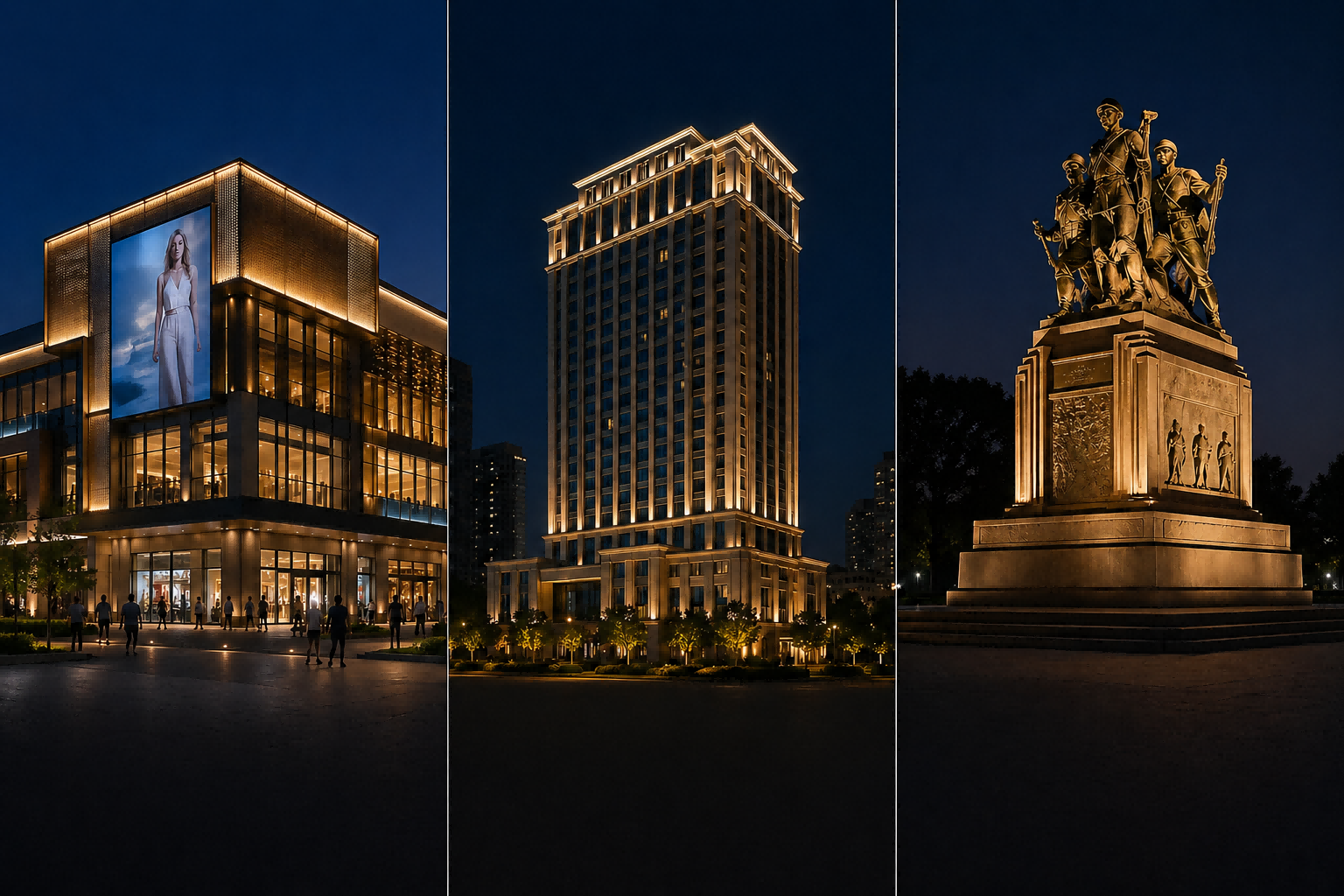
Before selecting a fixture or deciding on a control system, the first question should always be: what is this building supposed to communicate at night? A shopping mall, hotel, office tower, city landmark, and memorial sculpture all call for different levels of brightness, different beam control, and different emotional tone.
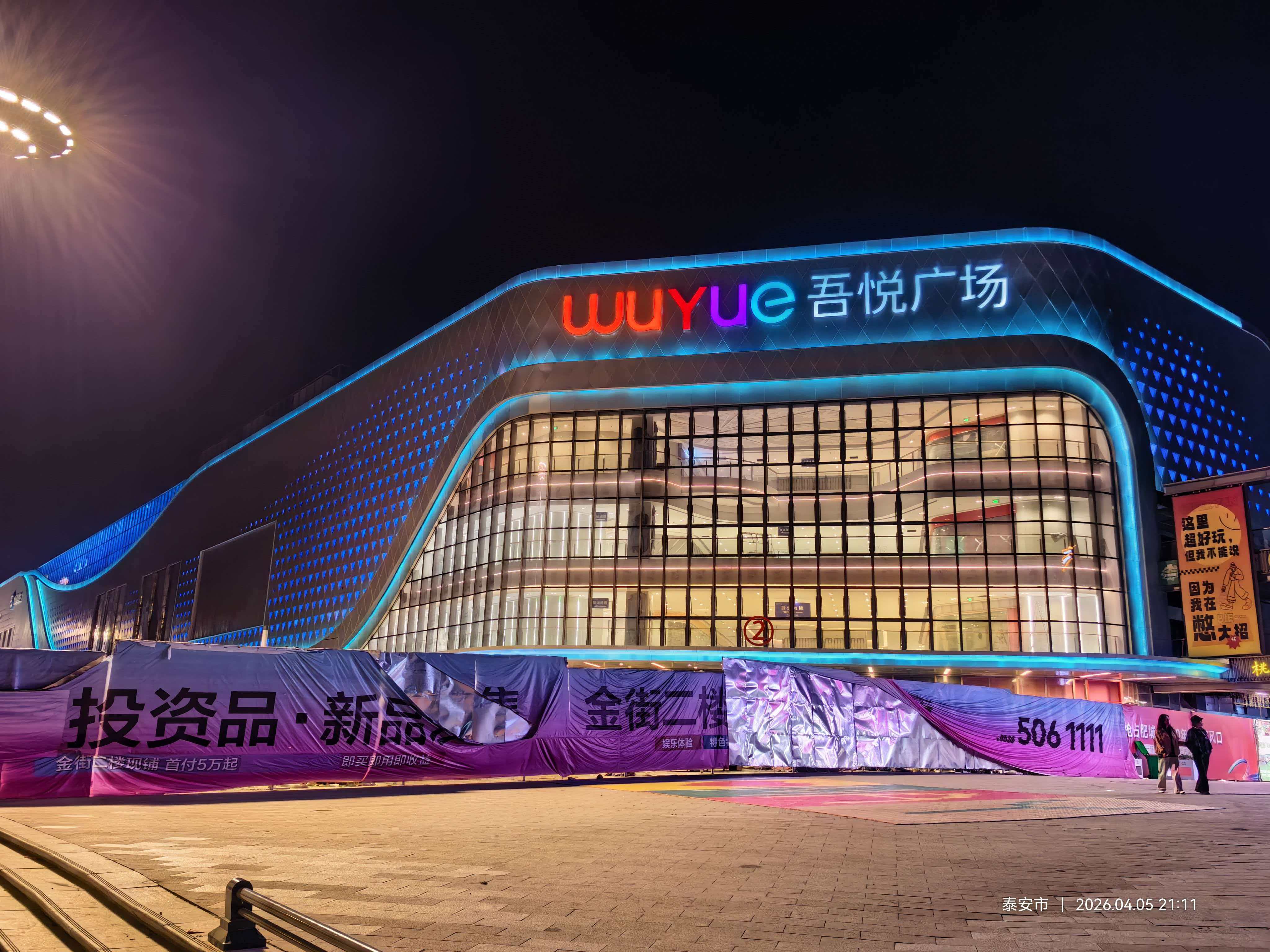
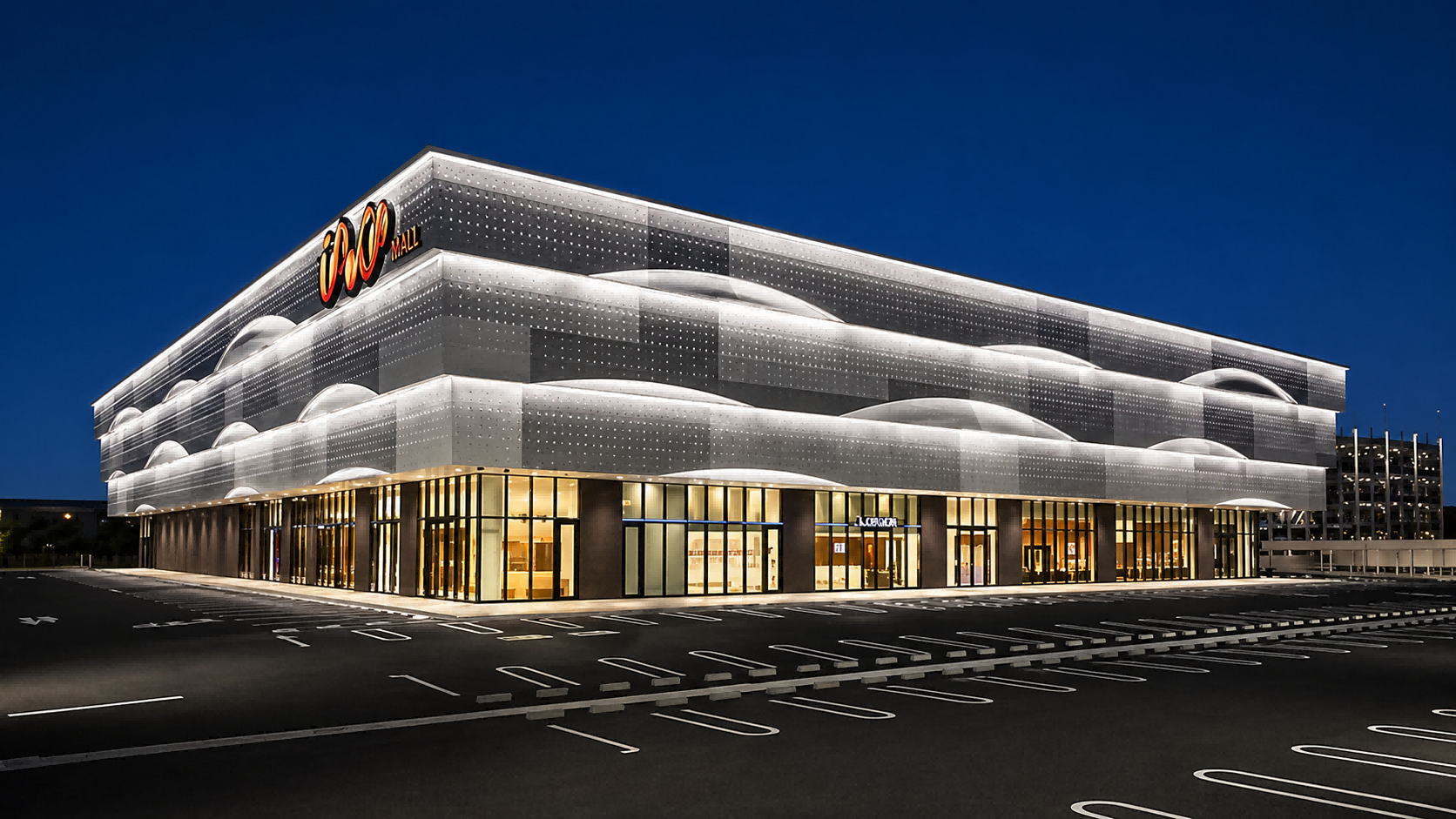
A commercial facade is usually part of a business-oriented environment such as a shopping mall, hotel, office tower, retail center, or mixed-use development. In that context, lighting helps attract attention, support commercial value, and make the building feel active after sunset. In many retail or hospitality projects, the challenge is not adding more light, but making sure the facade feels lively and premium without becoming visually noisy.
A landmark building plays a different role. It often becomes part of the visual identity of a district or city, so the lighting needs to emphasize form, proportion, and presence, not just surface brightness. A monument carries even more responsibility, because it may represent history, remembrance, civic pride, or cultural heritage. In that case, lighting should improve legibility without distorting the object’s character.
A monument carries even more responsibility. It may represent history, remembrance, civic pride, or cultural heritage. In this case, lighting should improve legibility without distorting the object’s character. The goal is not to dramatize it. The goal is to reveal it respectfully.
2. Architectural Lighting Principles: Light and Shadow, Color Temperature, and Dark Sky Protection
Even though these building types are different, they still rely on the same basic lighting principles. The first is hierarchy. Light should guide the eye toward the most important parts of the architecture, whether that is an entrance, a crown line, or a sculptural detail. If the lighting has no hierarchy, the building competes with itself and the visual message becomes weak.
The second is balance. Too much light can flatten texture and remove atmosphere, while too little light can make the building disappear into the background. A good design creates enough contrast to show depth while keeping the overall effect comfortable to look at. The third is glare control. Exterior lighting should be visible, but not uncomfortable, so fixture angle, shielding, beam control, and mounting position all matter.
Durability and color consistency are just as important. Outdoor lighting has to survive rain, heat, dust, wind, vibration, and long operating hours, which means IP rating, thermal performance, corrosion resistance, and maintenance access cannot be ignored. In facade and landmark projects especially, uneven whites or unstable RGB output can make a building look cheap even when the concept is strong.
3. Commercial Facade Lighting Design: Wall Washers, Linear Lights, and Brand Visibility
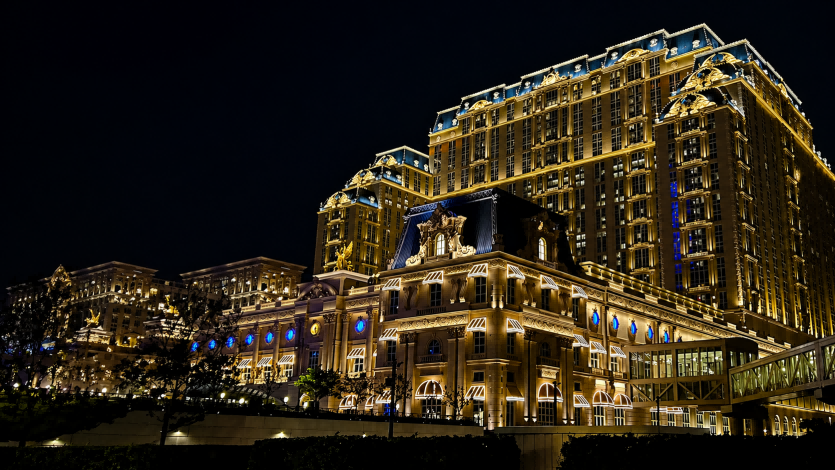
Commercial facade lighting should do more than make a building visible. In most real projects, it needs to help the building attract attention, look trustworthy, and feel active after dark without becoming overly bright or visually messy. The best lighting strategy usually starts with the facade itself. Recessed surfaces, vertical fins, columns, frame lines, and textured materials are all clues that tell the designer where light should go and where it should stay quiet. A good design does not hide these details; it uses light to make them easier to read at night.
Wall washing is often the most effective solution when the goal is to create a clean and premium appearance. It works particularly well on hotels, shopping centers, and office towers where the facade surface is large and smooth enough to receive an even layer of light. In practice, wall washers are often used to make the building feel more polished from a distance and more welcoming at the entrance level. For example, on a hotel facade, a soft and uniform wall wash can make the entrance feel more refined, while on a retail project it can help the building stand out without relying on excessive color or animation.
Linear lighting and accent lighting are usually added to support the main architectural rhythm. Linear lights are ideal for outlining edges, tracing horizontal layers, or emphasizing vertical movement, especially on modern commercial buildings with strong geometry. Accent lighting is more suitable for drawing attention to key points such as entrances, logos, columns, or decorative frames. In larger commercial projects, media facades or dynamic lighting can also be effective, but only when they serve a clear purpose such as branding, events, or seasonal campaigns. If used too aggressively, motion and color can quickly make the building look crowded instead of premium, so the lighting should always match the scale and identity of the project.
4. Landmark Building Lighting Design: Night Identity, Contour Lighting, and Skyline Impact
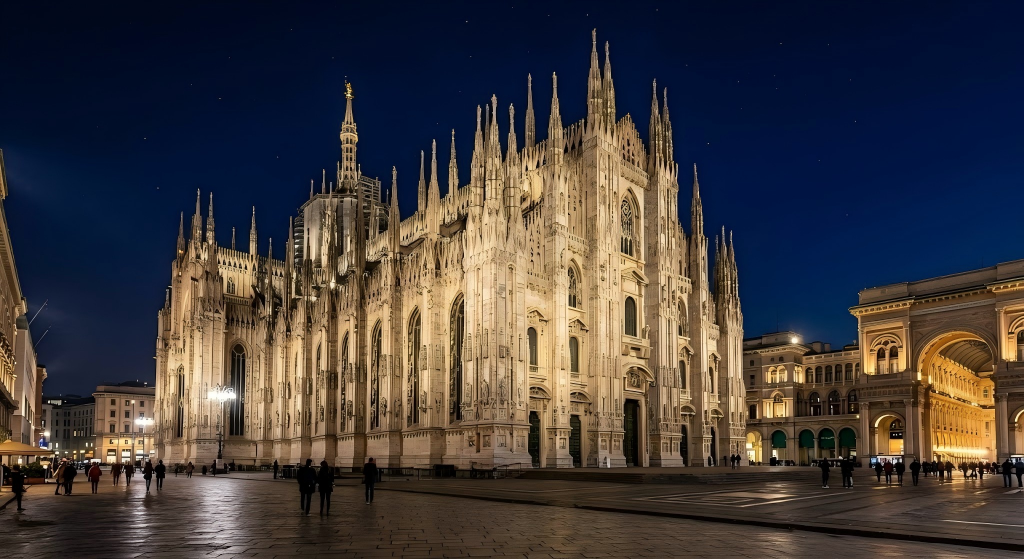
Landmark lighting is about identity. The building should not just be seen; it should be remembered. A landmark usually has a stronger public role than a standard commercial facade, and its lighting therefore has to work from several viewpoints at once. People may see it from a nearby plaza, across a river, from a highway, or from a higher point in the city. Each of those viewpoints affects how the building is perceived, so the lighting design has to be planned with distance, angle, and silhouette in mind.
Contour lighting is one of the most effective techniques for landmark buildings because it helps define the shape of the structure after dark and makes the outline easier to recognize. This is especially valuable for towers, civic buildings, bridges, or mixed-use complexes that are meant to stand out in the skyline. In many projects, a clean contour can communicate more effectively than a much brighter but less structured facade wash. Dynamic lighting can also work well when the building is used for public events, holidays, or city celebrations, but motion should always have a reason. A landmark does not need constant color changes to be powerful. In many cases, a clean static scene is more elegant, more timeless, and easier to maintain.
One detail that is often overlooked is viewing distance. A lighting effect that looks dramatic up close may become unreadable from farther away, so landmark lighting has to be designed for the real audience, not just for the installer standing at the base of the building. In practice, the strongest result often comes from contrast, silhouette, and controlled brightness rather than from sheer output. If the building is meant to be seen from a highway or skyline view, the lighting must communicate the shape first and the surface detail second. For fixtures, landmark projects usually demand more precise optics, stronger output, and better color stability. Beam spread, mounting angle, weather resistance, and maintenance access should be planned early, and if the project includes dynamic scenes, the control system must be stable enough to handle scene changes without visual inconsistency.
5. Monument Lighting Design: Dignified Illumination for Heritage and Sculptural Structures
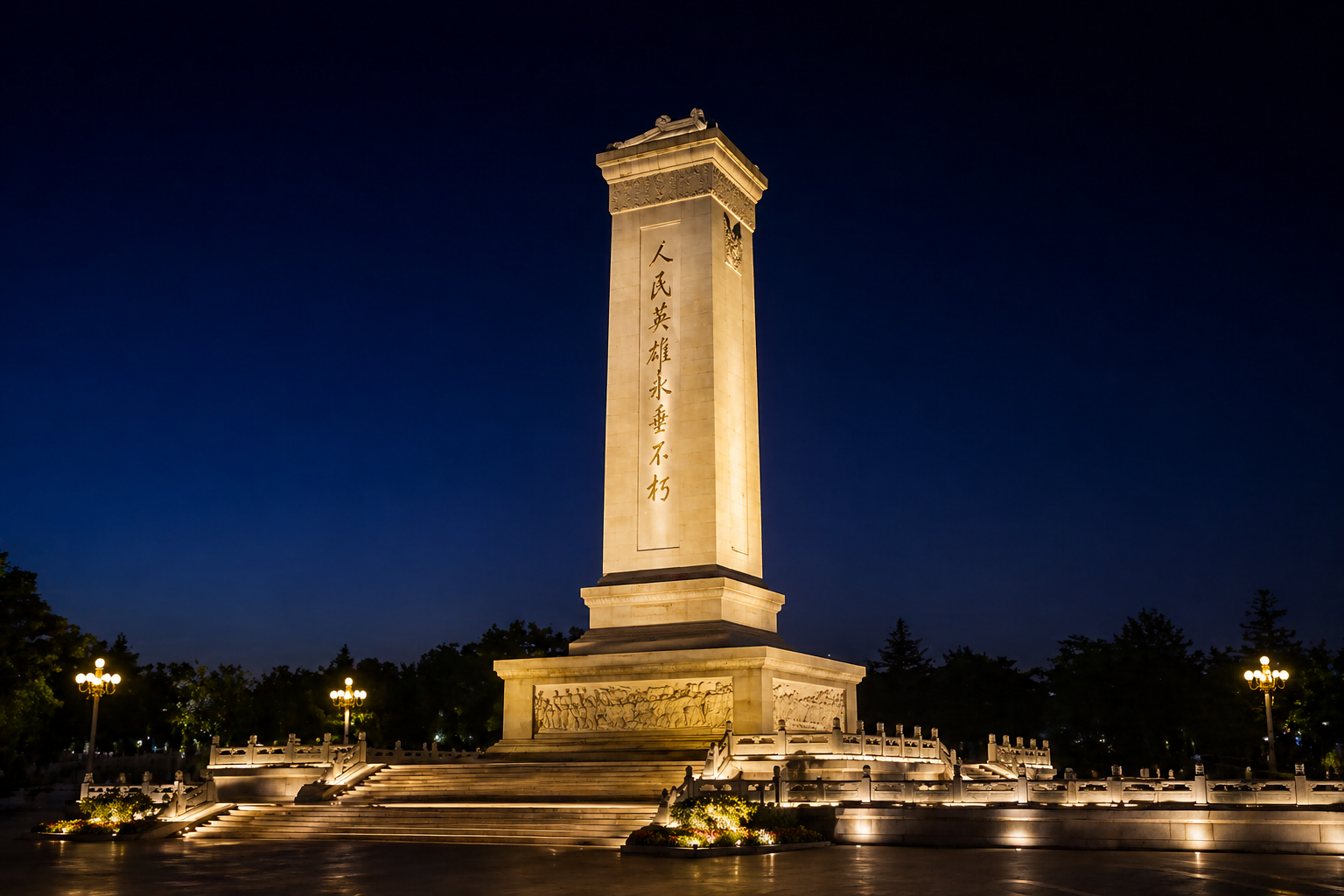
Monument lighting requires the most restraint. The purpose is not to create spectacle. The purpose is to reveal the object with dignity. Unlike a commercial facade, a monument often carries emotional, historical, or symbolic meaning, so the lighting must be careful from the beginning. Brightness should be controlled, color should be chosen deliberately, and shadows should be used to shape form rather than create unnecessary drama.
Soft uplighting is often a good starting point because it reveals height and volume without making the structure feel harsh. Low-angle grazing can also be effective when the surface has texture, such as carved stone or sculpted relief. The challenge is that monument surfaces often behave differently from commercial materials, so a fixture that works well on one material may not work well on another.
Color temperature is usually best kept warm or neutral. Warm white gives a dignified, timeless feeling, while neutral white can work well for certain stone materials or civic memorials. Strong saturated colors are usually not suitable for daily monument lighting unless there is a clear cultural or ceremonial reason. In most cases, restraint creates more emotional impact than color effects because the object already carries enough meaning on its own.
6. Outdoor LED Lighting Fixtures, Beam Angles, and DMX/DALI Control Systems
Across all three categories, fixture selection should follow the architecture and the purpose of the project, not the other way around. For commercial facades, a combination of linear lights, wall washers, and accent fixtures usually works best. For landmarks, higher-output fixtures with tighter optical control are often needed, especially when the building must be visible from a distance. For monuments, smaller fixtures with soft optics and careful shielding are often the most suitable choice. The same fixture can behave very differently depending on mounting position, beam angle, and the surface it is illuminating, so product choice should never be made in isolation.
Beam angle is one of the most important technical decisions. A narrow beam is useful for emphasizing vertical details or specific features. A wider beam is better for smooth surface washing. Choosing the wrong beam angle usually leads to wasted light, uneven brightness, or unwanted spill. In many projects, the issue is not that the fixture cannot perform, but that it was selected without enough consideration for distance and mounting geometry.
IP rating and housing quality are equally important. Outdoor lighting has to deal with moisture, dust, temperature changes, and long-term exposure. In coastal or polluted environments, corrosion resistance becomes even more important. If the fixture is not built to last, the visual effect will not last either. This is why technical durability should be treated as part of the visual design, not just part of the procurement list.
Control systems give the lighting its flexibility. A simple static scene may be enough for some commercial facades and monuments. Landmark buildings may need holiday scenes, event scenes, or programmed transitions. DMX and DALI are both common options depending on project complexity. The important thing is not which protocol sounds more advanced, but whether the system is stable, scalable, and easy to maintain. For long-term projects, especially those managed by property owners or municipal teams, ease of operation is often just as important as visual effect.
7. Common Mistakes in Facade, Landmark, and Monument Lighting Projects
One of the most common mistakes in exterior lighting is using color without purpose. RGB effects can be effective, but if they are used too often or without a clear concept, the building can lose its identity very quickly. This is especially risky in commercial and landmark projects, where color should support a message rather than replace it. A well-chosen scene can feel powerful; random color changes usually do the opposite.
Poor fixture placement is another issue that appears in many projects. A small error in angle, spacing, or mounting height can create hotspots, dark gaps, or glare that is immediately visible at night. This is why mock-up testing and on-site aiming are so valuable. A lighting concept may look perfect on paper, but the actual result depends on how the fixtures behave on the real facade.
Maintenance is also often underestimated. Outdoor lighting systems need cleaning, checking, and occasional adjustment. A good design that cannot be maintained will deteriorate much faster than expected. This is especially true in large or high-mounted projects where access is difficult. The most beautiful lighting design in the world loses value if it cannot be serviced efficiently.
The final mistake is treating every building the same. A monument should not be lit like a shopping mall, and a landmark should not be treated like a generic office block. The building type always matters. When the design ignores context, it usually becomes visually generic, and generic lighting rarely creates a strong impression.
8. Lighting Design Workflow: Site Analysis, Mock-Up Testing, and Commissioning
A successful architectural lighting project usually follows a fairly clear process. It begins with site analysis. The designer studies the building, the surrounding environment, the viewing distance, and the project objective. After that comes the concept stage, where the visual story is defined. Then fixture selection, aiming, and layout planning turn that concept into a real technical solution.
For important projects, mock-up testing is highly valuable. It allows the team to check brightness, beam spread, color temperature, and uniformity before final installation. This step often saves time and prevents expensive corrections later. In many projects, mock-up testing is where the actual lighting concept becomes real, because it reveals whether the selected fixtures and aiming strategy actually match the building.
Installation and commissioning are the final stages. During commissioning, the lighting scenes are adjusted, aiming is refined, and output levels are balanced across the building. In practice, the difference between an acceptable result and an excellent one often comes from these small final adjustments. This is also where a professional team makes a clear difference, because the final visual quality depends not only on product selection but also on how carefully the system is tuned on site.
FAQs
Q1: What is the best lighting for commercial facades?
The best solution usually combines wall washing, linear lighting, and accent lighting. The exact mix depends on the facade material, building height, and the visual goal of the project. For hotels and shopping centers, a clean and uniform facade wash often works best, while modern commercial buildings may benefit more from linear outlines and layered light.
Q2: How do you light a landmark building at night?
Landmark lighting should emphasize identity, silhouette, and viewing distance. Contour lighting, structural highlighting, and controlled brightness are often the most effective methods. The goal is to make the building recognizable from multiple viewpoints without making the design feel overdecorated or overly bright.
Q3: What is the best way to light a monument?
Monuments are usually best lit with restraint and precision. Soft uplighting, low-angle grazing, and high-CRI fixtures can help reveal form and texture while keeping the atmosphere dignified. In most cases, the lighting should support the meaning of the monument rather than compete with it.
Q4: Why is color temperature important in architectural lighting?
Color temperature affects how the building and its materials are perceived at night. Warm white is often better for stone, heritage buildings, and monuments because it feels softer and more respectful. Cooler white tones usually suit modern buildings and metal or glass facades because they create a cleaner and sharper appearance.
Conclusion
Lighting commercial facades, landmarks, and monuments is both a technical task and a visual discipline. Each building type has its own purpose, and the lighting should support that purpose with precision. Commercial facades need visibility, energy, and brand identity. Landmarks need clarity, recognition, and night-time character. Monuments need restraint, dignity, and respect. When these differences are understood, lighting becomes more than decoration. It becomes part of how a building communicates with the city.
A strong architectural lighting design does not simply illuminate a structure. It reveals what the structure means, and it does so through a combination of technical control, material sensitivity, and visual judgment. For complex facade, landmark, or monument projects, the best results usually come from choosing the right fixtures, planning the right control strategy, and refining the final effect through on-site adjustment. If you are developing a project like this, a professional lighting plan can help ensure the building looks right at night and performs well for years to come.
At LNJAMI, we focus on outdoor architectural lighting solutions for commercial facades, landmark buildings, monuments, and other exterior lighting projects. Since 2008, we have been developing and supplying lighting products and project solutions from Shenzhen, including wall washers, linear lights, flood lights, pixel lights, inground lights, and other outdoor luminaires. Beyond products, we also support clients with lighting design, project consultation, custom solutions, and installation guidance, helping each project achieve a better balance between visual effect, technical performance, and long-term reliability.