LNJAMI Outdoor Facade Lighting Case Study | Feicheng Wuyue Plaza
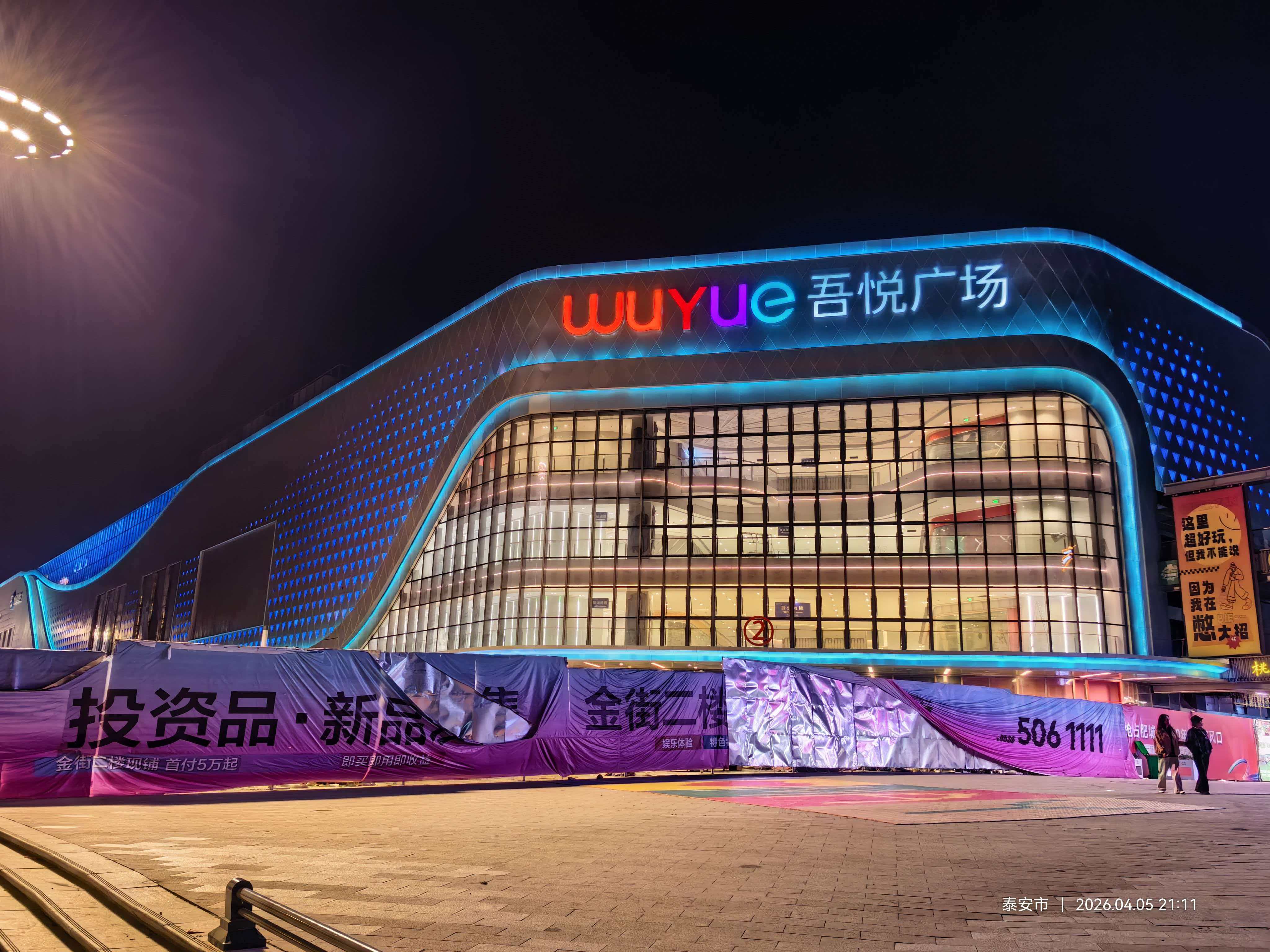
Feicheng Wuyue Plaza is one of the main commercial complexes in Feicheng, Tai’an. From the beginning, the expectation for this project was not just to make the building brighter, but to give it a recognizable nighttime presence. When we first looked at the facade, the challenge was quite clear: the building already had strong lines and structure, but once night fell, those features were almost lost. The goal was to bring those architectural elements back using facade lighting without making the facade feel over-lit or visually noisy.
For this reason, the solution we provided included custom light guide panels, linear edge lighting along the building edges, and a DMX512-controlled animation system. Instead of treating lighting as an add-on, we approached it as part of the facade expression itself, so the building could gain a stronger nighttime identity while still feeling controlled and commercially appropriate.
Commercial Facade Lighting Goals for Feicheng Wuyue Plaza
At an early stage, we aligned on a simple but important direction: the building needed to stand out, but in a controlled way. Commercial facade lighting for a commercial plaza is very different from lighting a landmark or monument. If the lighting is too aggressive, it quickly feels messy. If it is too subtle, it simply disappears into the background. That balance was especially important here, because the project needed to support the building’s commercial image without losing refinement.
Another factor was long-term operation. This is a high-traffic commercial lighting space, so the lighting system had to be stable, easy to maintain, and suitable for continuous outdoor use. That influenced both the product selection and how we structured the control system. In short, the goal was not just visual impact, but a result that could actually work every night, for the long term.
Custom Light Guide Panels and Linear Edge Lighting
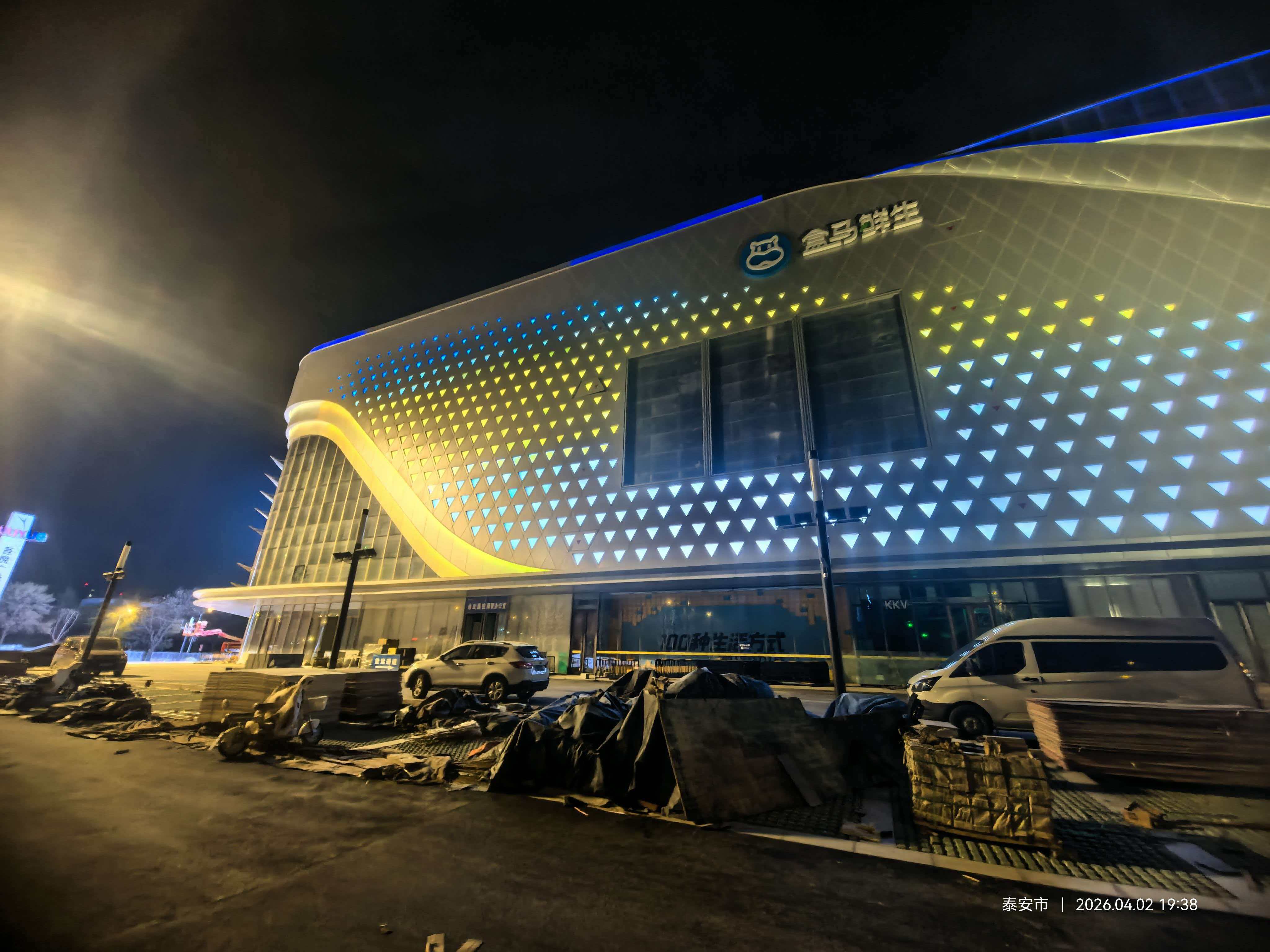
The custom light guide panels were one of the parts we spent the most time refining. At the beginning of testing, the panels were actually a bit too flat visually. The brightness was there, but the surface did not have enough depth. After a few adjustments, mainly tuning the brightness distribution and coordinating it with the animation, we started to see a more layered effect. In the final result, the panels do not just emit light. They create a subtle texture across the building facade, and when the animation runs, the light moves in a controlled way across the surface, which makes the building feel more dynamic without being overwhelming.
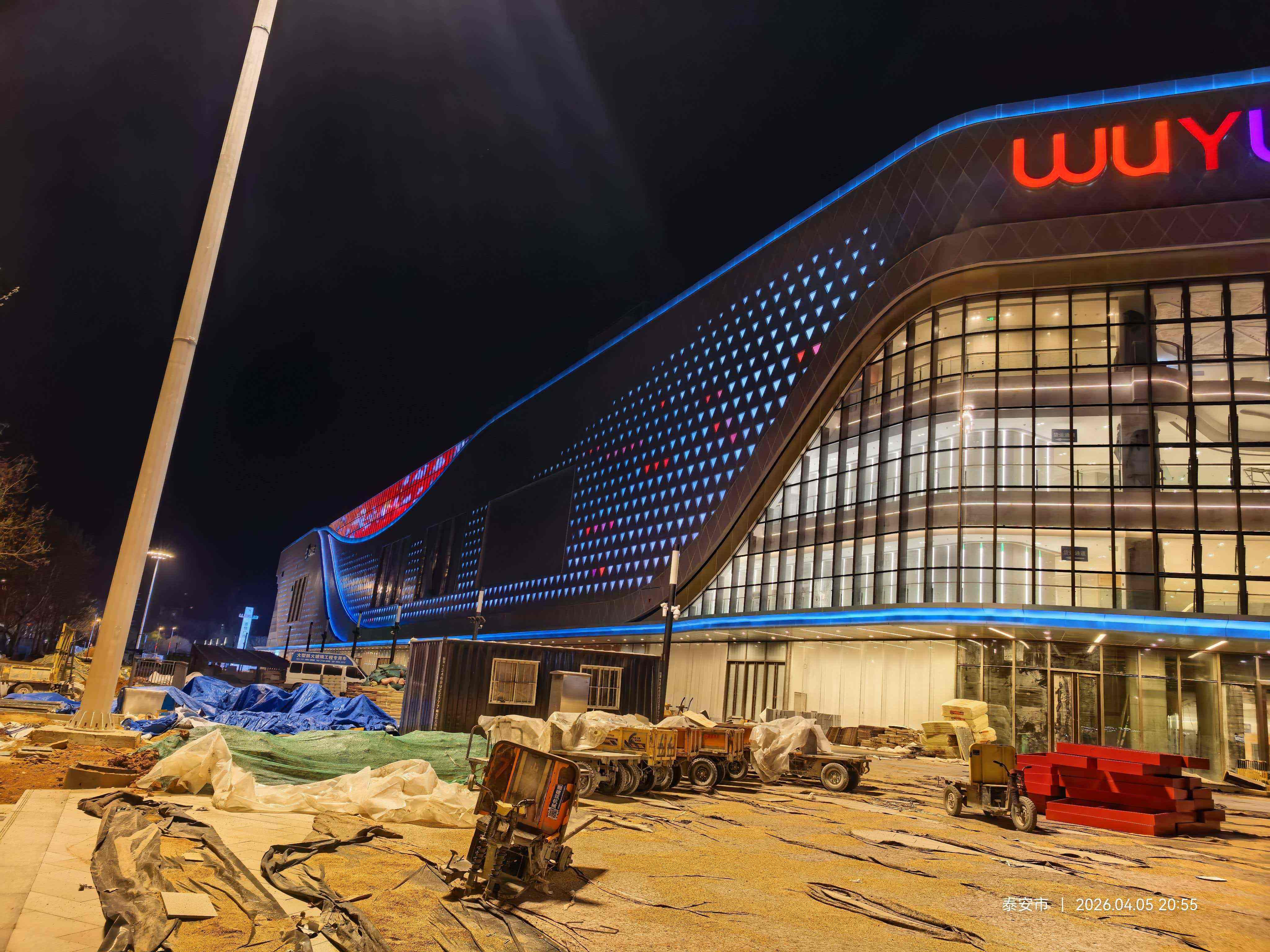
The linear edge lighting along the building edges played a more structural role. During installation, one of the key adjustments was the angle and brightness. In the first test, some sections appeared slightly too sharp, especially when viewed from a distance. We reduced the intensity and adjusted the positioning, which made the building outline look cleaner and more continuous. Once dialed in, the edge lighting started to do exactly what it was supposed to do: define the building. At night, you can clearly read the geometry of the facade lighting design even from far away.
DMX512-Controlled Animated Lighting Effects for Commercial Buildings
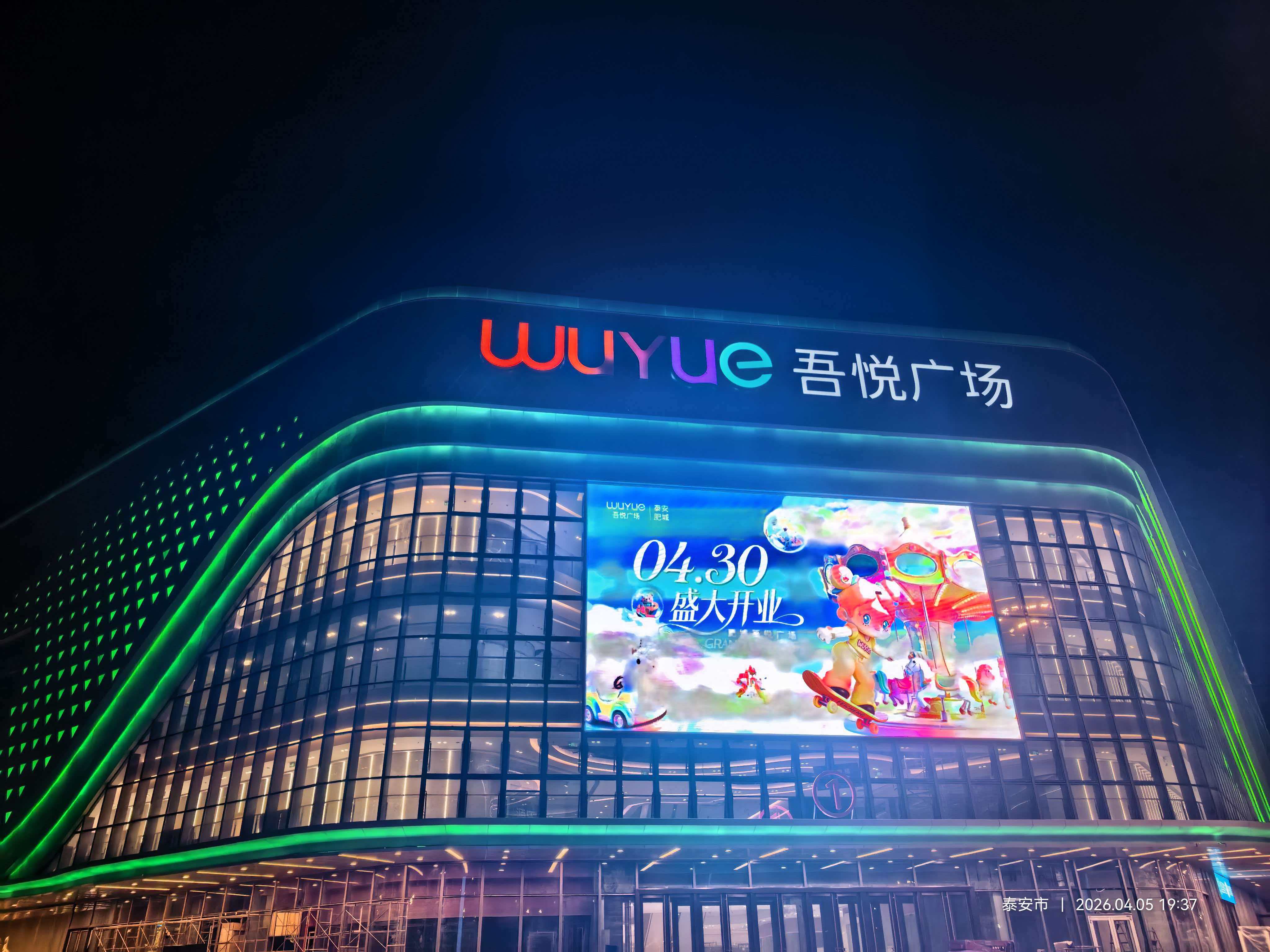
The animated lighting effects on the upper facade are probably the most eye-catching part of the project. This was not something that worked perfectly on the first try. The initial animation speed was slightly too fast, which made the effect feel a bit harsh. After slowing it down and adjusting the transition timing, the movement became much smoother and more natural. That small change made a big difference. Instead of feeling like a lighting effect, it started to feel like part of the building.
Using DMX512 control allowed us to fine-tune these details quite precisely. We could adjust timing, synchronize different sections, and test multiple variations on site until the result felt right. For a commercial facade lighting project, that flexibility is important, not just for the initial setup, but also for future adjustments or seasonal changes. It gives the facade room to evolve without needing a complete system change.
On-Site Commissioning and Real Installation Conditions
If you look at the project video, you can see what the site actually looked like during on-site commissioning. There were cables on the ground, equipment still being arranged, and a laptop connected to the lighting system for testing. The lighting was already running, but we were still adjusting it in real time. This is usually how these outdoor lighting projects go. The design is one thing, but the final effect always depends on what happens on site.
We went through several rounds of adjustment, including fine-tuning brightness levels, adjusting fixture angles, and modifying animation timing. Some changes were small, but very noticeable. For example, a slight reduction in brightness made the facade immediately feel more refined, while small timing changes made the animation look smoother and less mechanical. This stage is where the facade lighting installation and commissioning really comes together.
Final Lighting Effect of the Feicheng Wuyue Plaza Facade Project
After all adjustments were completed, the building finally reached the effect we were aiming for. The custom light guide panels added depth and identity to the facade. The linear edge lighting defined the structure clearly. The DMX512-controlled animated lighting introduced movement without overwhelming the building. At that point, the difference was obvious, even compared to earlier test stages. The building no longer just looked lit. It had a presence.
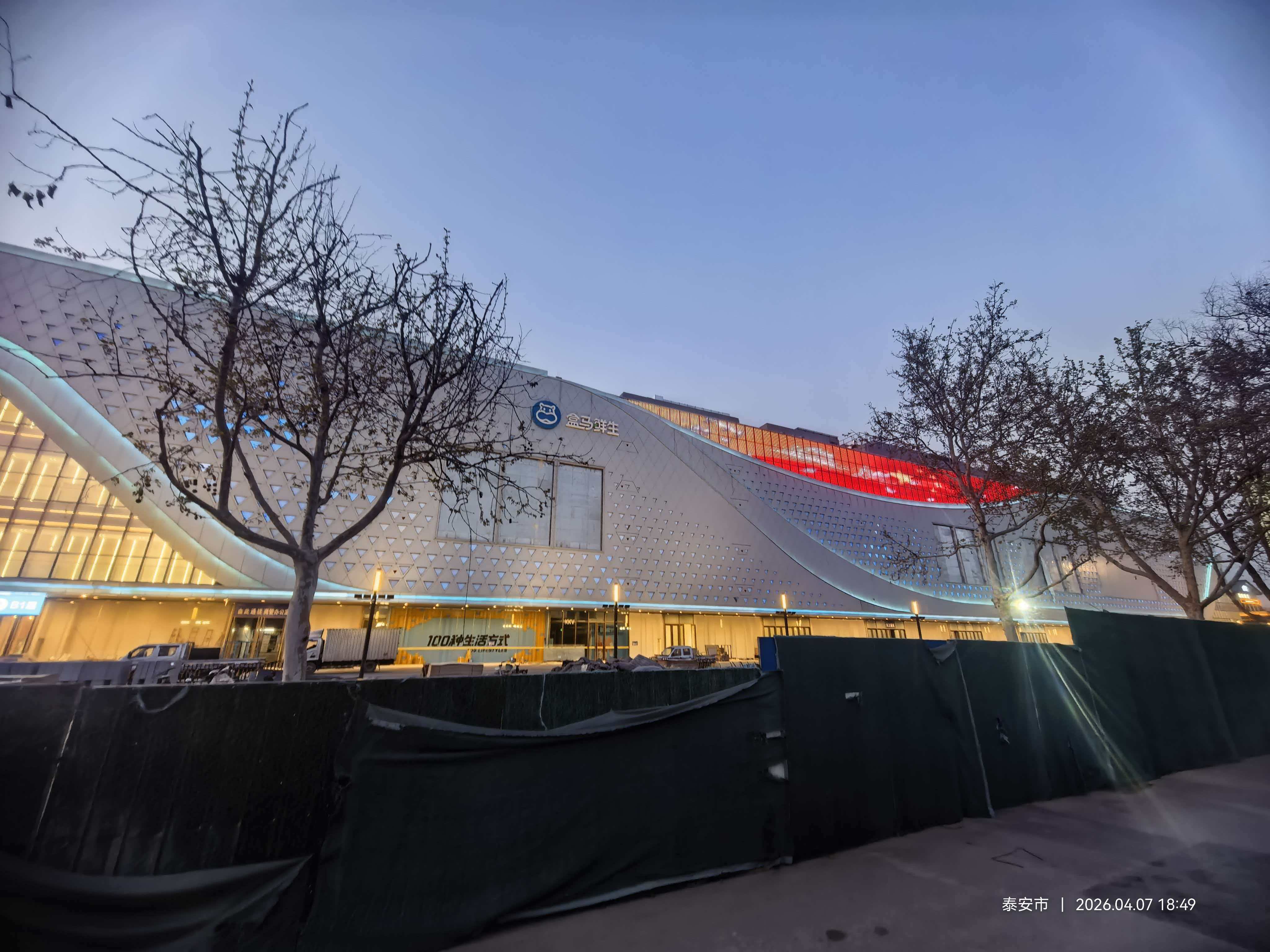
From a distance, it stands out. Up close, it still feels controlled and comfortable. That balance is what makes the result work for a commercial plaza lighting environment. It is not about making the facade as bright as possible, but about creating a strong and recognizable outdoor facade lighting identity.
Why LNJAMI Was Chosen for This Project
Projects like this require more than just supplying fixtures. In this case, the work involved custom product adaptation, control system setup, and on-site adjustment. Each part affects the final result, and they need to work together. As an outdoor lighting supplier and facade lighting manufacturer, our role was to make sure the lighting concept could actually be executed, not just in theory, but on a real building under real conditions.
That includes making adjustments when something does not look right, not just delivering what was originally planned. For a commercial facade lighting project, that flexibility is often the difference between a concept that looks good on paper and a result that actually works in the field.
FAQs
Q1: What is this Feicheng Wuyue Plaza lighting project about?
This project is an outdoor facade lighting case study for Feicheng Wuyue Plaza in Tai’an, China. LNJAMI provided custom light guide panels, linear edge lighting, and a DMX512-controlled animation system to improve the building’s nighttime presence and commercial identity.
Q2: What lighting solutions were used in this project?
The project combined three main solutions: custom light guide panels for facade texture, linear edge lighting for building outline definition, and DMX512-controlled animated lighting for dynamic visual effects.
Q3: Why were custom light guide panels used for this facade?
The custom light guide panels helped create a layered and textured surface on the facade. Instead of making the building look like a flat illuminated wall, they gave it more depth, identity, and visual rhythm at night.
Q4: What is the role of linear edge lighting in this project?
The linear edge lighting was used to define the building’s outline and make its structure easier to read at night. It helped the facade look cleaner, more organized, and more recognizable from a distance.
Conclusion
The Feicheng Wuyue Plaza project is a good example of how facade lighting works in practice. It is not only about selecting the right products, but also about how those products are used, adjusted, and integrated with the building. Through custom light guide panels, linear edge lighting, and DMX512-controlled animation, the facade gained a clearer identity and a more engaging nighttime presence.
More importantly, the result is stable, repeatable, and suitable for long-term commercial use. If you are planning a commercial facade lighting project, especially for a commercial complex, the key is not just the design, but how that design is executed on site. That is where the real difference is made.