LED Tree Ring Lights for Christmas and Holiday Displays: Colors, Controls and Planning
Short answer: for a holiday display that also serves as everyday lighting, use RGBW tree ring lights with individual DMX addresses, group them in the controller by color and location, and program timed scenes with dimming late at night. Plan and order in early autumn, and choose ingress protection and materials for the real winter conditions on site.
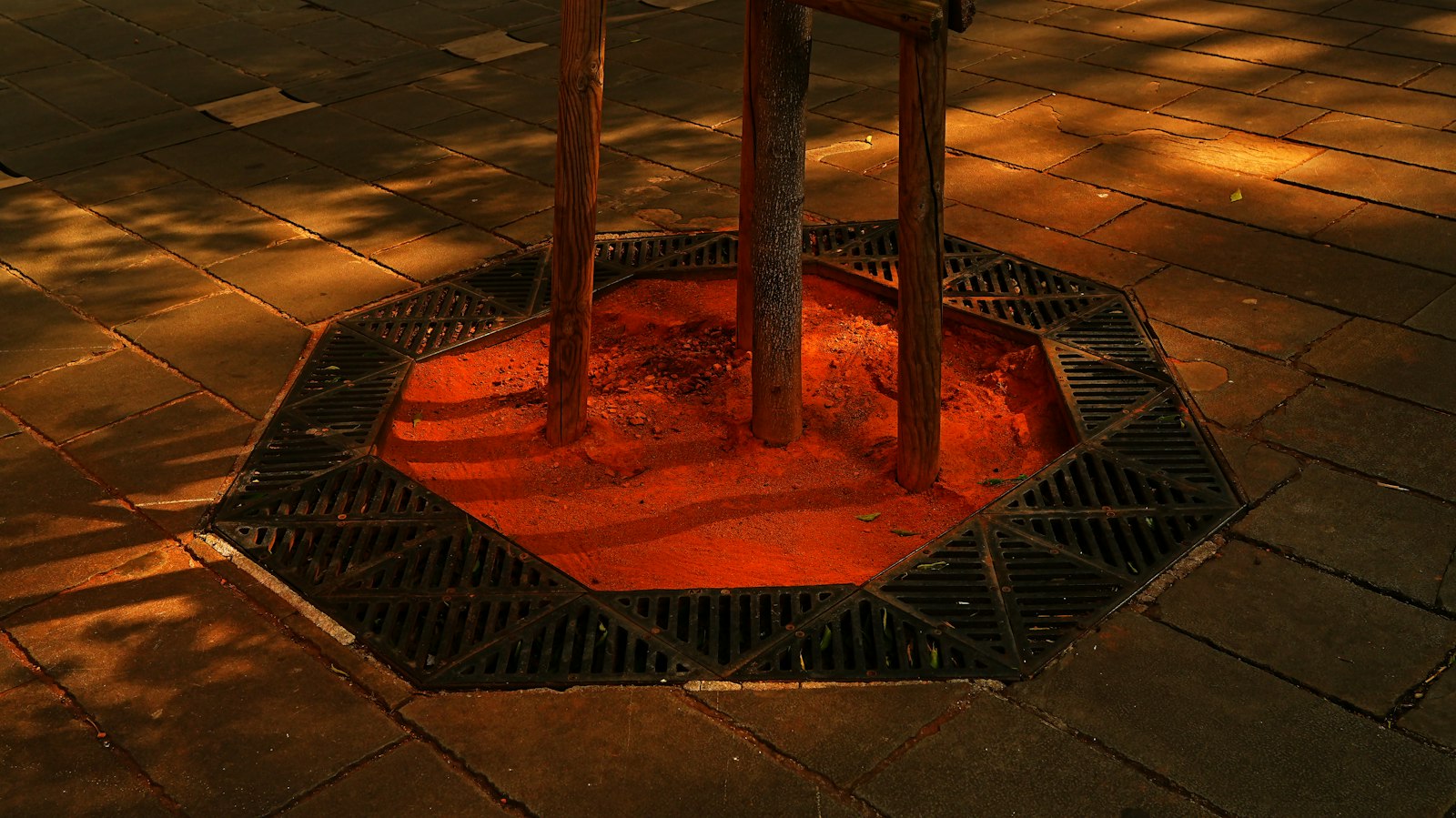
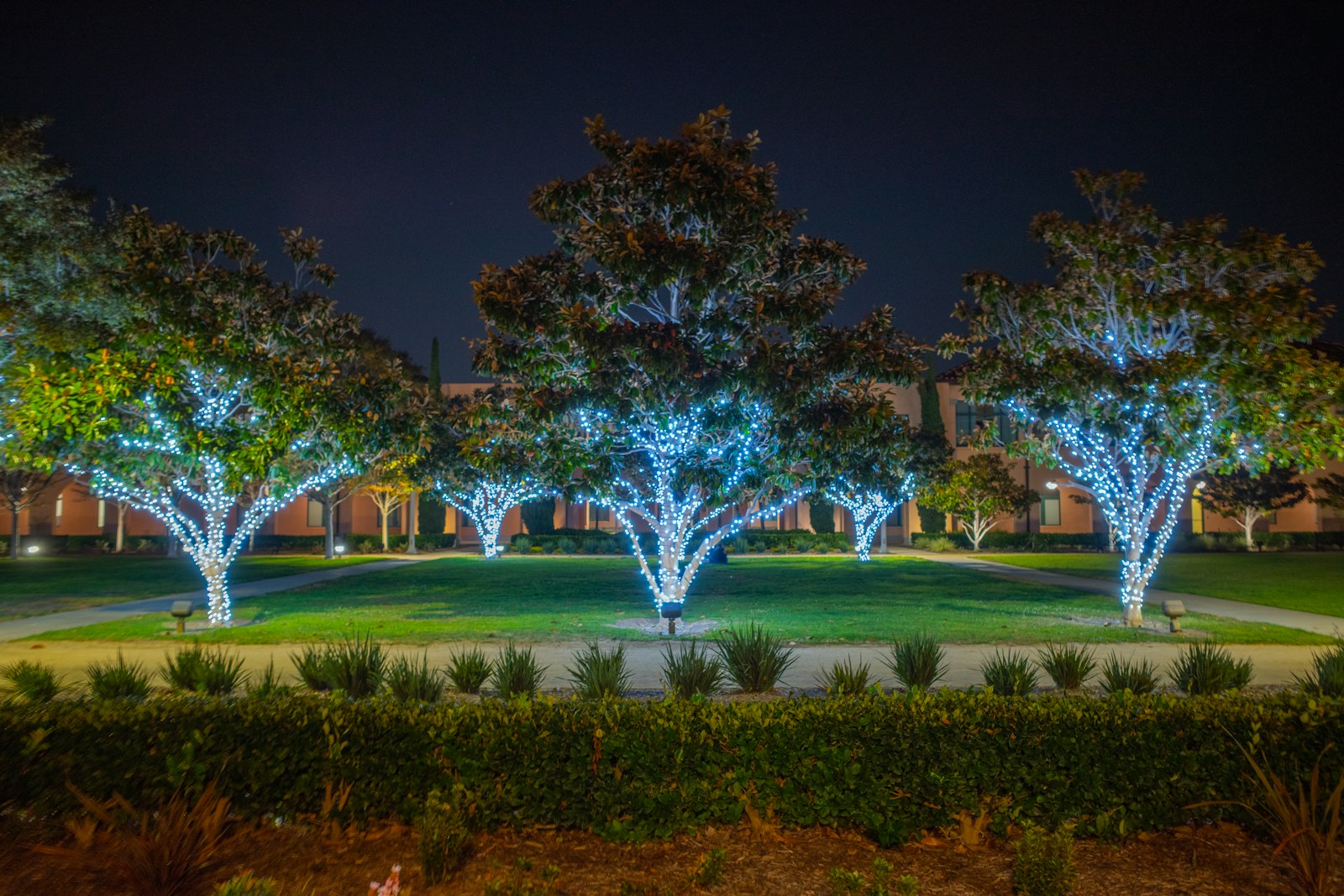
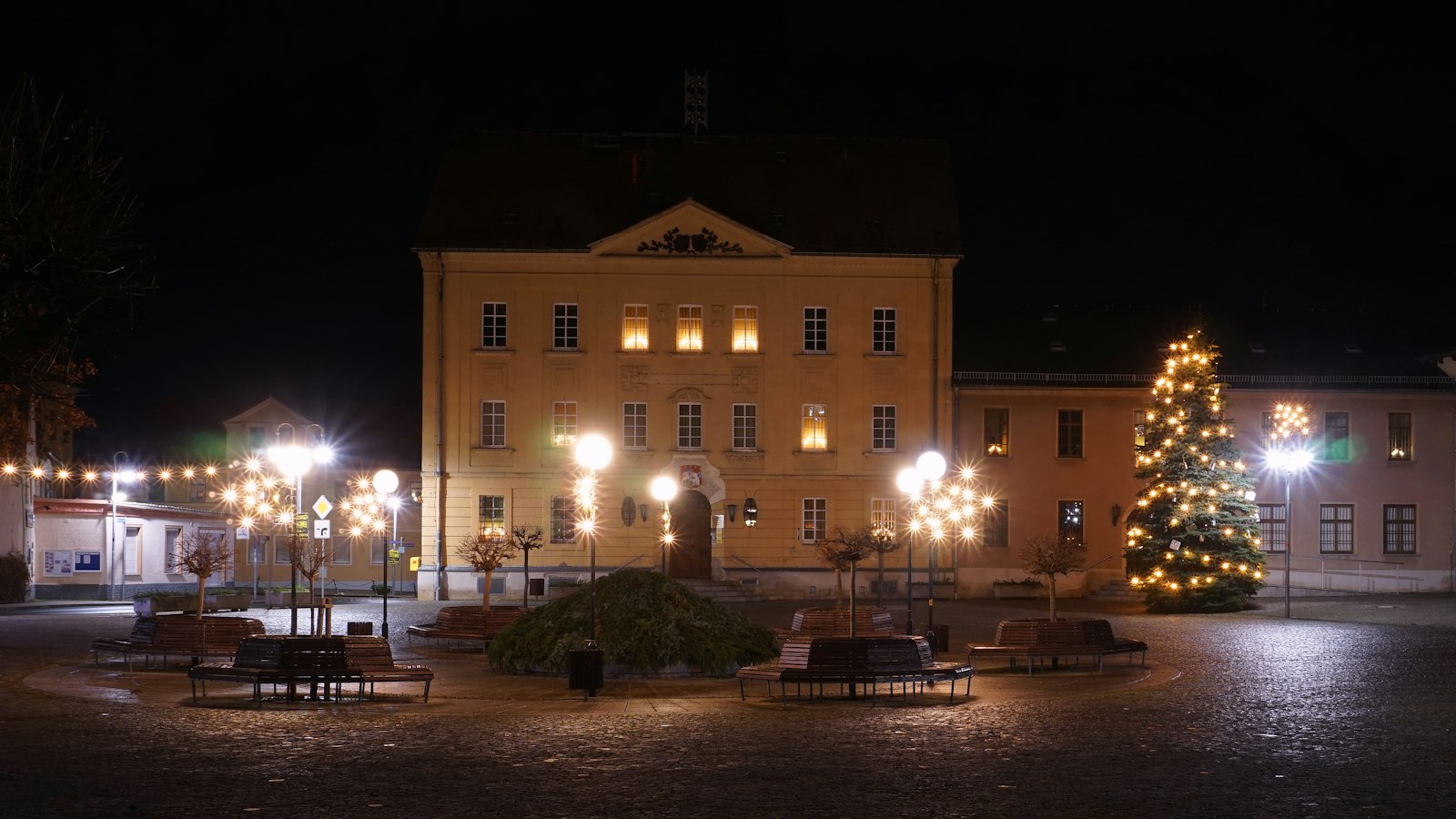
String lights wrapped through branches are still the default for Christmas, but they mean ladders, time at height and a second visit to take everything down. Color-changing tree ring lights at the base of each tree take a different route: the fixtures stay in place all year, and the holiday look is created by programming rather than by installation.
That shifts the work. Instead of labor on site each December, the effort goes into fixture choice, control design and testing. This article focuses on those parts, with a worked example of a plaza display and a practical look at DMX512 addressing and wiring. If you are new to these fixtures, start with our complete guide to LED circular tree lights.
1. RGB or RGBW: What the Difference Means on a Tree
RGB fixtures mix light from red, green and blue LEDs. Saturated colors such as red, green and blue are their strength. White is made by mixing all three, and it often looks slightly tinted or uneven on bark.
RGBW fixtures add a separate white channel. That white comes from its own LED, so its quality depends on that LED's color temperature and color rendering. Two RGBW fixtures from different suppliers will not necessarily produce the same white, so if the trees will spend most of the year in white, ask for the CCT and CRI of the white channel and compare samples side by side.
RGBW is not simply "RGB plus a better white". Adding white changes how some colors and pastel tones are mixed, and whether an RGBW fixture matches an RGB one color for color depends on the LED chips, the optics and how the control software uses the white channel. For a display that runs in color for a few weeks and in white for the rest of the year, RGBW is usually the more practical choice. For a project that is only ever used in saturated color, RGB can be enough.
A third option is a warm white ring with dimming. If the holiday look you want is golden and classic rather than colorful, it avoids the cost and complexity of color control altogether.
2. Example: Planning a Christmas Tree Lighting Display for a Commercial Plaza
Illustrative example. The figures below show how such a project can be planned. They are not taken from a specific LNJAMI project.
The site
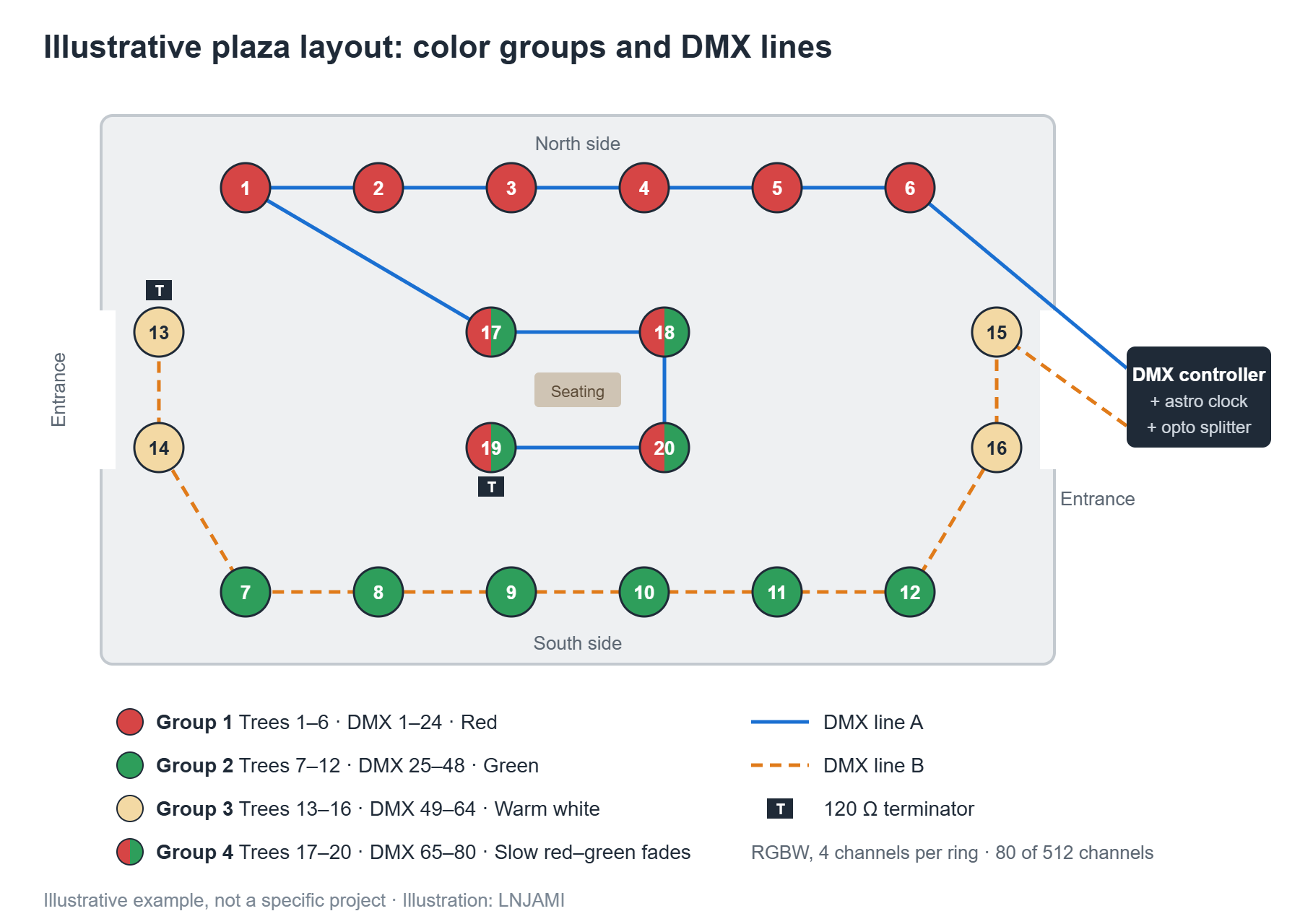
A commercial plaza has 20 trees: 6 along each of the two long sides, 4 at the two entrances and 4 around a central seating area. All trees have ring lights at the base, using RGBW fixtures with one control zone per ring. Each ring therefore uses 4 DMX channels: red, green, blue and white.
Color groups and addresses
Each ring gets its own DMX start address, so any tree can be changed later without rewiring. Groups are then created in the controller rather than by giving several fixtures the same address. With 4 channels per ring, tree n starts at address 4n − 3.
|
DMX group |
Trees |
Location |
DMX addresses |
Christmas scene |
|---|---|---|---|---|
|
Group 1 |
Trees 1–6 |
North side |
1–24 |
Red |
|
Group 2 |
Trees 7–12 |
South side |
25–48 |
Green |
|
Group 3 |
Trees 13–16 |
Entrances |
49–64 |
Warm white |
|
Group 4 |
Trees 17–20 |
Central seating area |
65–80 |
Slow red–green fades, synchronized |
The whole plaza uses 80 of the 512 channels in one DMX universe, which leaves room to add trees or change to fixtures with more channels later.
Warm white at the entrances is a deliberate choice. It gives a calm, welcoming first impression, keeps faces and signage readable, and stops the red and green sides from feeling too heavy. On RGBW rings this comes from the white channel, so specify the white CCT you want (for example around 3000K) when ordering.
Scenes and timing
|
Time |
Scene |
|---|---|
|
Dusk to 22:00 |
Christmas scene: Groups 1–3 static; Group 4 crossfades slowly between red and green over about a minute |
|
On the hour, 18:00–21:00 |
A short slow wave across all 20 trees, then back to the main scene |
|
22:00 to closing |
All groups dimmed, Group 4 static |
|
After closing |
Off, or low warm white if needed for safety |
The controller is a standalone DMX unit with an astronomical clock, so it switches on at dusk without manual adjustment as day length changes, and plays the scenes from memory without a computer on site.
Wiring
Two DMX lines leave the controller through an opto-isolated splitter: one serving the north side and central trees, the other the south side and entrances. Each line runs from fixture to fixture in a daisy chain and ends with a 120 Ω terminator. Power for the rings runs separately from the data cable.
Testing before opening
- Run each group on its own to confirm every tree responds to the right address.
- Check that red and green look balanced on the actual bark at night. Red often looks darker than expected and may need a higher level.
- Walk every approach to the plaza and check for glare at eye height and light on nearby windows.
- Leave the full program running through at least one evening cycle, including the timed changes.
- Record the address of every tree on a site plan and keep it with the controller.
For a project like this, ring sizes should be confirmed tree by tree before ordering; see how to size an LED tree ring light. Fixtures, controllers and any custom sizes need production and shipping time, so the order should be placed in early autumn, not in November.
3. DMX512 for Tree Ring Lights: Channels, Addresses and Wiring
Channels per fixture
A DMX512 universe carries 512 channels. How many rings that covers depends on the fixture's channel layout. A single-zone RGB ring typically uses 3 channels and a single-zone RGBW ring 4. Some fixtures add channels for master dimming or effects, and rings with several independently controlled segments use 3 or 4 channels per segment. Always check the fixture's DMX channel chart before planning addresses.
On channel count alone, one universe could take 128 single-zone RGBW rings. In practice the electrical side sets a lower limit first.
Devices per line and signal distribution
DMX512 runs on RS-485, and a standard line is designed for up to 32 unit loads. Larger installations, or sites where trees are spread out in different directions, use opto-isolated DMX splitters or repeaters to create several lines from one controller. Splitters also isolate faults, so a damaged cable on one side of a site does not stop the rest of the display.
Cable, topology and termination
- Use cable designed for DMX/RS-485 data (shielded twisted pair, 120 Ω), not ordinary power or audio cable.
- Connect fixtures in a daisy chain. Do not split a DMX line into branches with simple cable joints; use a splitter.
- Terminate the last fixture on each line with a 120 Ω terminator.
- Keep data and power cables separated where possible, and add surge protection on outdoor data lines.
- For long runs, follow the cable and controller manufacturers' limits, and add a repeater rather than pushing a single line too far.
Setting addresses
Depending on the fixture, the start address is set with DIP switches, an on-board display, RDM from the controller, or an address-writing tool from the supplier. Fixtures given the same address will always behave identically, which is simple but makes it impossible to separate them later without re-addressing. Individual addresses with grouping in the controller give more freedom when the design changes from one season to the next.
Choosing a controller
- Standalone DMX controllers with stored scenes and a clock suit permanent installations such as plazas, hotels and streets.
- Art-Net or sACN over Ethernet, with DMX nodes near the trees, suits large sites with several universes or long distances.
- DALI or 0–10V are mainly for dimming white light and suit projects that do not need color.
- Wireless or app control is easiest for a home garden or a small courtyard with a few trees.
4. Colors That Read Well on Bark
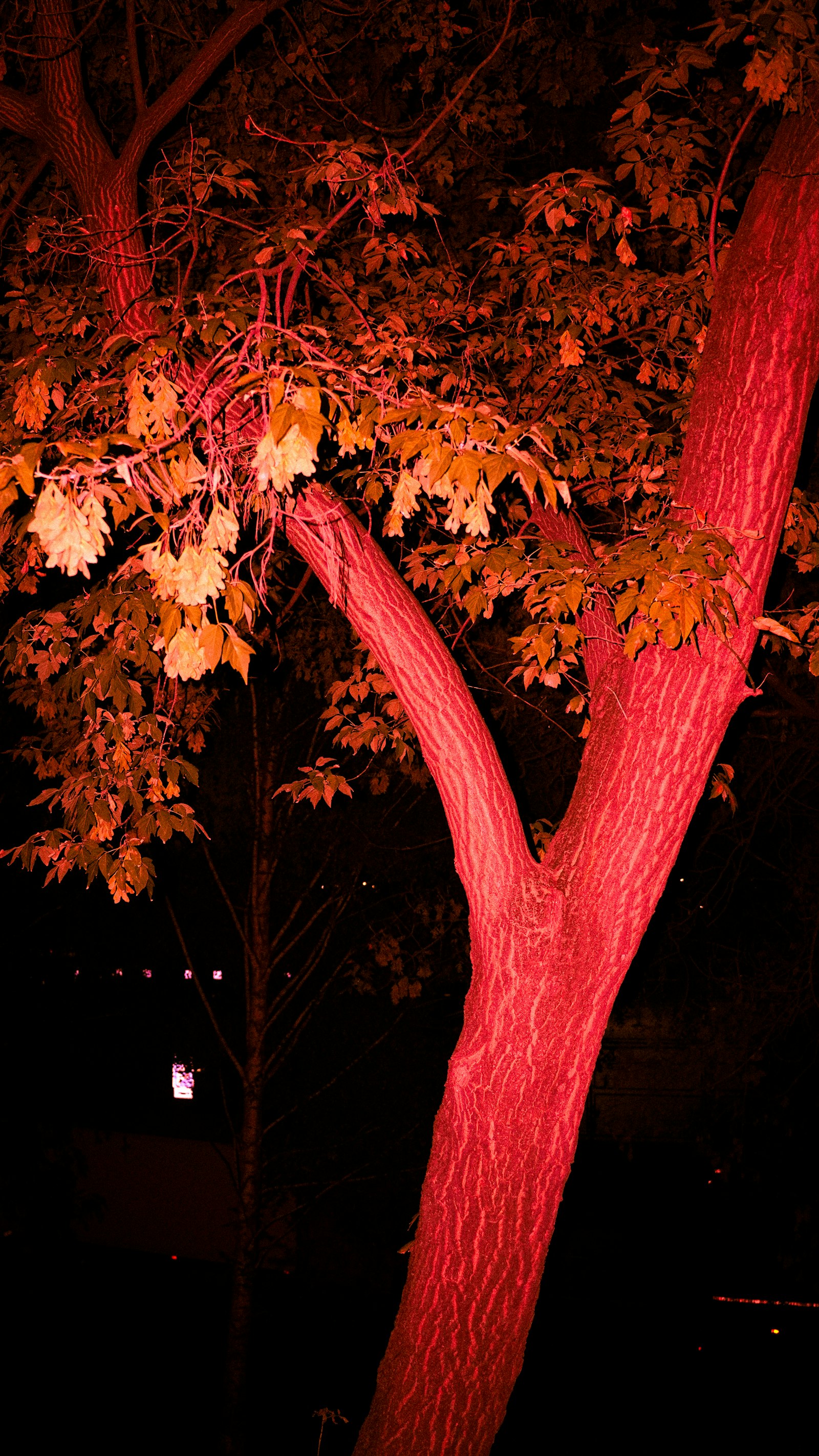
Bark absorbs much more light than a screen suggests, and deep red or blue on dark bark can look dim. Mixing in white trees, or lighter tints, helps the display read from a distance.
|
Occasion |
Color scheme |
Note |
|---|---|---|
|
Christmas |
Red and green by group, with some warm white |
Avoids a heavy, single-color look |
|
Elegant winter season |
Warm gold or amber |
Suits hotels, restaurants and luxury retail |
|
Snow and ice theme |
Cool white with soft blue |
Strong blue looks cold and is more disruptive at night |
|
New Year and Lunar New Year |
Red and gold |
Slow transitions read better than fast changes |
|
Brand events |
Brand colors |
Test on real bark at night before approving |
5. Winter Conditions: Water, Ice and Salt
Ingress protection
Select an ingress protection rating appropriate to the actual installation conditions. IP65 may suit exposed outdoor installations, while locations exposed to temporary immersion may require suitably tested IP67-rated fixtures. Neither rating replaces proper drainage design, and prolonged submersion must be checked against the manufacturer's specifications.
In winter, look at the site rather than the rating alone:
- Could the fixture sit in water for a short time, for example during snowmelt or heavy rain?
- Is there anywhere water stands for long periods? If so, fix the drainage first.
- Will water around the fixture freeze and thaw repeatedly? Freeze-thaw cycles put stress on seals and cable entries.
- Are the cable connectors and junction boxes protected to the same level as the fixture?
- Has the product actually been tested to the rating claimed?
Corrosion is a separate question
An IP rating describes protection against dust and water, not against corrosion. De-icing salt on streets and plazas, and salt air on the coast, attack housings, fasteners and connectors. In these locations, specify the housing material and surface treatment as carefully as the IP rating: 316 stainless steel or well-protected aluminum, stainless fasteners and a durable coating. If your project needs salt spray test reports, testing can be arranged according to project requirements.
Electrical safety
Use GFCI/RCD protection on outdoor circuits, have mains wiring done by a licensed electrician, and protect cables in conduit where crowds walk. Holiday displays bring more people, and more cables get stepped on.
6. Keeping Holiday Lighting Considerate
A display that annoys neighbors or floods a park with light rarely gets approved again the following year. A few design habits help:
- Aim light up the tree, not outwards. Check that no ring sends light directly into nearby windows, especially homes and hotel rooms.
- Use only as much brightness as the scene needs. A plaza seen up close rarely needs full output; save it for trees seen from a distance.
- Avoid continuous fast flashing. Slow fades and short timed shows are easier on visitors and residents than constant strobing.
- Set a switch-off or dimming time. Follow any local rules on outdoor lighting hours, and dim or switch off once the site closes.
- Take care near parks and water. Keep strong blue and white to a minimum after late evening, and avoid lighting tree canopies where birds roost.
7. When the Season Ends
After the holidays, switch the program back to warm white (around 2700K–3000K for most landscapes) with a late-night dimming schedule. Check the rings and cable entries once the snow has gone, clean the lenses, and update the address plan if any tree was changed during the season. Next year's display then only needs new scenes, not a new installation.
FAQ
How many DMX channels does an RGBW tree ring light use?
A single-zone RGBW ring usually uses 4 channels: red, green, blue and white. Fixtures with a master dimmer or effect channels use more, and rings with several independently controlled segments use 3 or 4 channels per segment. Always check the fixture’s DMX channel chart before planning addresses.
How many tree ring lights can one DMX controller run?
One DMX universe has 512 channels, so on channel count alone it could take up to 128 single-zone RGBW rings. In practice the electrical side often sets the limit first: a standard DMX line is designed for 32 unit loads, so larger systems use splitters or repeaters, and very large sites run several universes over Art-Net or sACN. The controller’s outputs and the site layout need to be checked as well.
Can the same tree ring lights be used for Christmas and everyday lighting?
Yes. With RGBW fixtures, the program can switch from holiday colors back to white after the season. The white comes from the fixture’s dedicated white channel, so specify its color temperature when ordering if the trees will be lit in white for most of the year.
Do color-changing tree lights need a professional lighting programmer?
Not always. A small garden with wireless or app control can be set up by the owner. Larger displays with DMX groups, timed scenes and several signal lines are easier to run long term when someone sets the addresses, programs the scenes and documents the system, so changes next season are quick.
For the bigger picture, see our complete guide to LED circular tree lights and our guide on how to size an LED tree ring light.
Planning a holiday tree lighting project? Send us your tree count, site plan and design idea for a free project consultation →