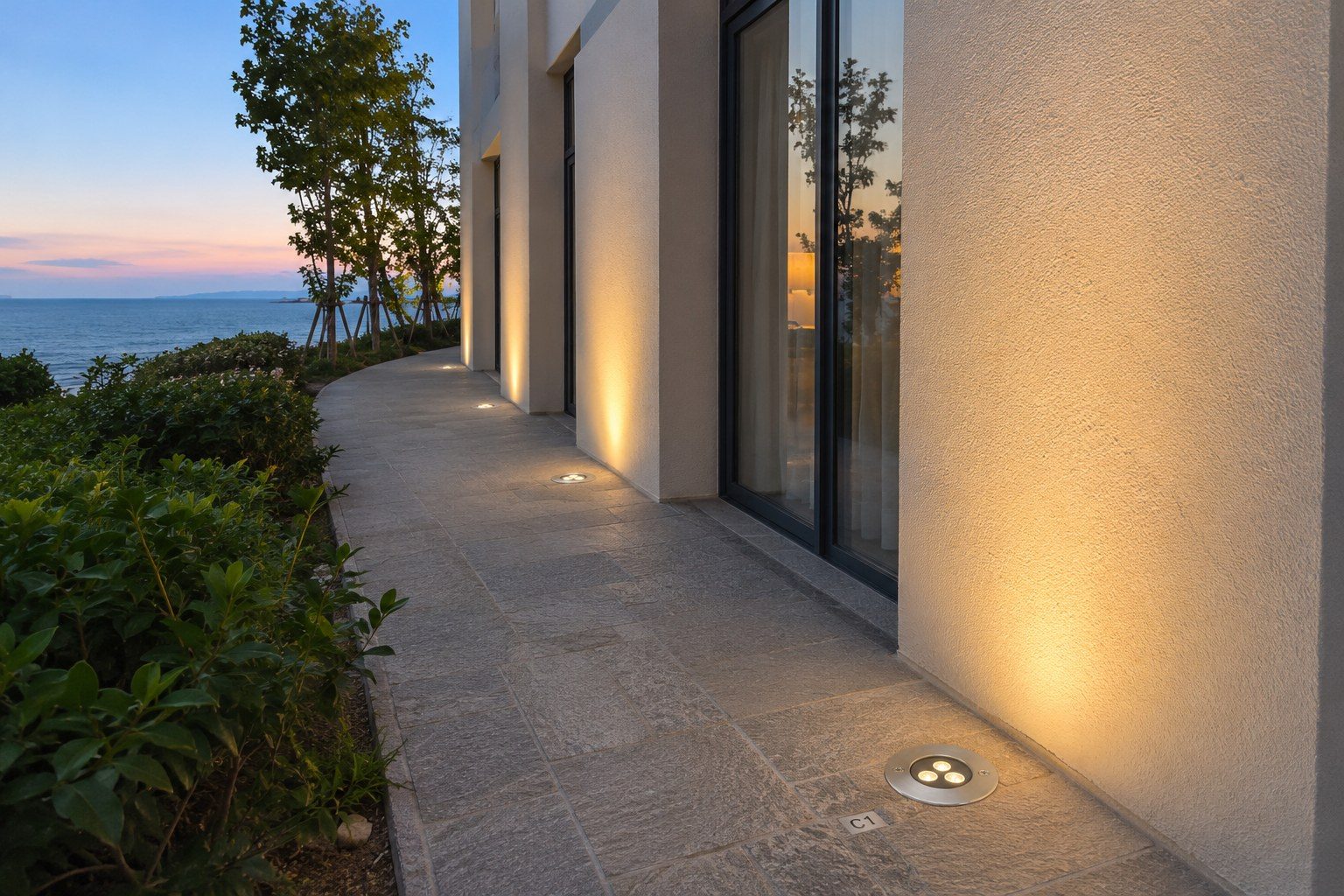
DMX vs DALI vs 0–10V for Architectural Lighting
Choose the control system from the required behaviour: simple white-light zones, individually addressed scenes or coordinated RGBW animation. DMX is a common choice for dynamic facade effects; DALI suits addressable building-lighting functions; 0–10V can suit straightforward dimming zones. The final decision depends on the exact controller, driver, fixture and installation, not only the protocol name.
Begin with a scene list: normal evening, late-night reduction, special-event colour and the required response to power or signal loss. Decide who will operate the system and replace components later. A visually impressive demonstration does not establish every required interface or long-term operating condition. For the wider picture of façade control architecture, see our facade lighting control guide.
LNJAMI manufactures LED wall washers, linear façade lights and pixel point lights for architectural control systems, and this guide reflects the questions our engineers review when a project chooses between DMX, DALI and 0–10V. It is written for lighting designers, consultants and system integrators.
Quick checklist for choosing DMX, DALI or 0–10V
List the scenes: normal evening, late night, events and the response to signal loss.
Match the protocol to the behaviour: DMX for dynamic colour, DALI for addressable building lighting, 0–10V for simple dimming zones.
Record fixture, driver, controller and firmware in a compatibility schedule.
Draw the system diagram, including DMX termination and DALI bus power.
Test one representative assembly before ordering the full system.
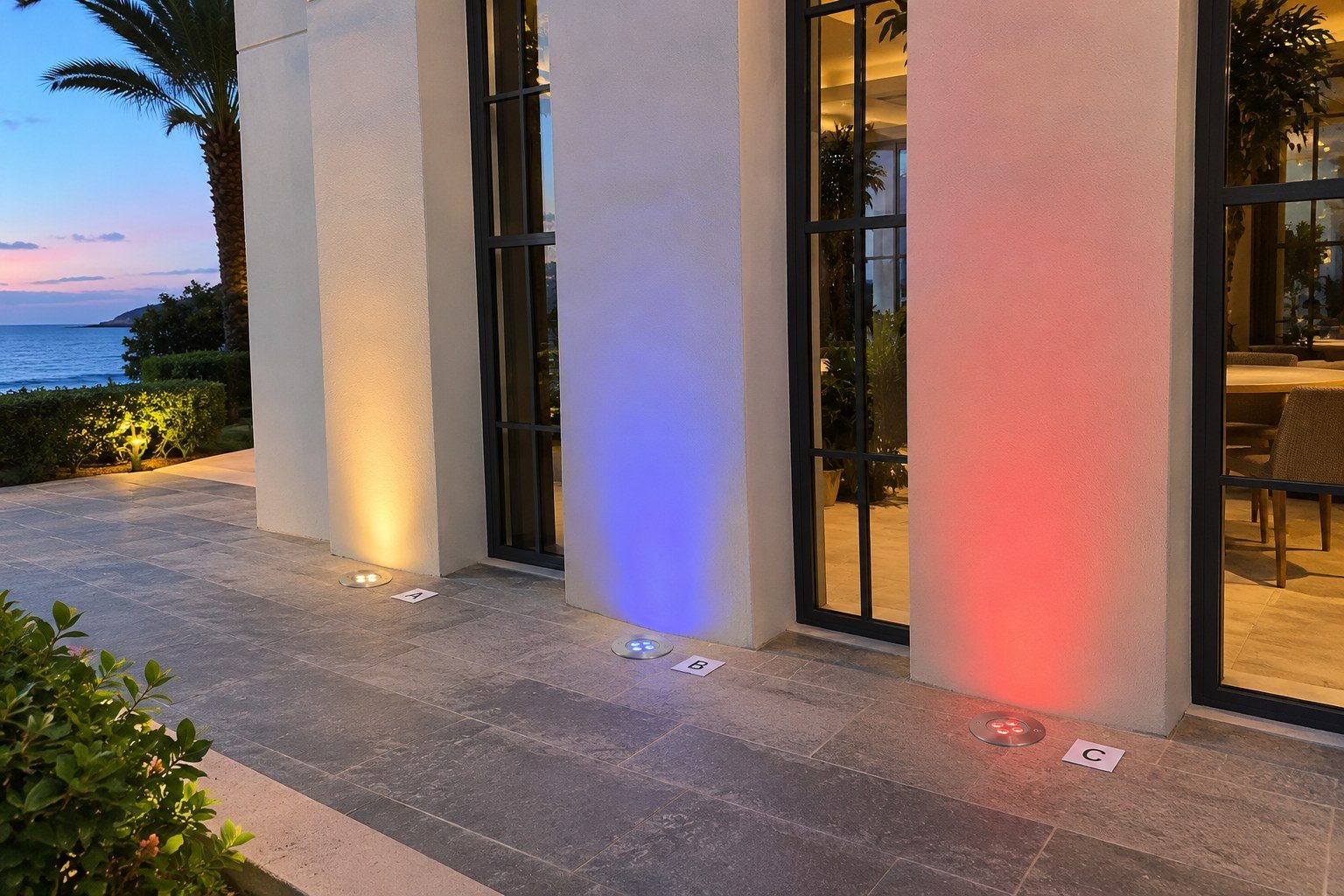
1. Compare the three systems against the lighting brief
| Requirement | DMX | DALI | 0–10V |
|---|---|---|---|
| Static white and dimming | Suitable with compatible drivers; often useful where it shares a show system. | Suitable for individually addressed or grouped building lighting. | Useful for simple zones with a compatible analogue interface. |
| RGBW effects | Common choice for rapid multi-channel sequences. | Colour control is possible with compatible control gear and controller features; verify the required behaviour. | Usually requires separate analogue channels and a suitable driver; complex choreography is less convenient. |
| Feedback and management | Basic DMX is one-way; RDM adds supported management functions. | Supports addressing and queries; actual reporting depends on devices and the system. | The analogue dimming pair does not provide individual digital addressing or status feedback. |
| Main commissioning task | Confirm universe, address, channel personality and signal distribution. | Commission addresses, groups, scenes and controller integrations. | Confirm interface compatibility, zones, minimum level and switching behaviour. |
DALI is not limited to white light: the DALI Alliance’s colour-control guidance describes supported colour functionality. For any protocol, compare the exact scene behaviour required by the project. Do not assume one protocol automatically saves more energy or costs less; the equipment, operating schedule and commissioning scope determine those outcomes.
2. Build a compatibility schedule before approving the quotation
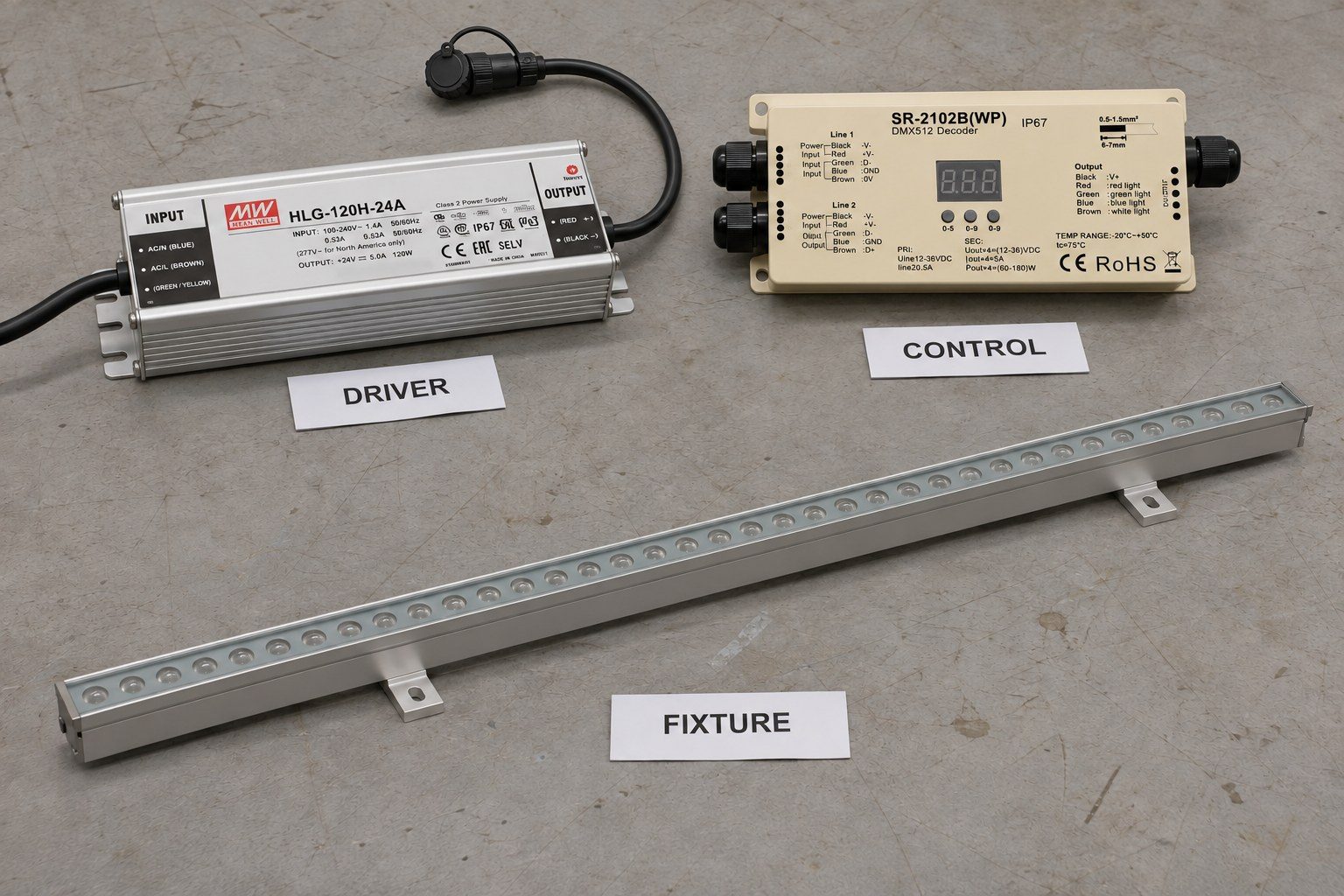
The control device shown is a waterproof DMX decoder, not the DMX master controller. A luminaire with an integrated DMX decoder may not need an external PWM decoder. Confirm whether the selected fixture accepts DMX data or a compatible dimmed power output before choosing the system. The components in the photo are shown separately and are not a verified wiring combination.
| Record | Why it matters |
|---|---|
| Fixture and driver models | Confirm output type, current or voltage, load and supported control input. |
| Controller and firmware | Record the interface, software version, channel mapping and available functions. |
| Dimming behaviour | Test low-end stability, fade quality, start-up and off behaviour. |
| RGBW personality | Confirm channel order, master dimmer, colour modes and any additional channels. |
| Integration | Define gateway functions, building-management commands and failure behaviour. |
For 0–10V, confirm current-source/current-sink compatibility, channel loading, polarity and the required off arrangement. A low control voltage does not universally guarantee full switch-off. Do not assume 0–10V and 1–10V products are interchangeable. eldoLED’s control-system overview is useful background; the selected equipment manuals govern the actual connection.
For DALI, verify the exact certified product where certification is required and confirm that both ends support the intended colour or device features. A gateway between two protocols needs its own function-by-function test; the presence of a port is not proof of complete interoperability.
Not sure your controller and drivers will work together? Send your equipment list for a free project consultation →
3. Use a system diagram before a cable schedule
Conceptual control paths
DMX Controller → approved splitter/line → compatible drivers → line termination
DALI Application controller + bus power supply → DALI bus → compatible control gear
0–10V Compatible dimming output → polarity-correct zone control pair → compatible drivers
Power Appropriate electrical supply → each driver → matched luminaire load
Concept only. Follow equipment-specific wiring, protection, segregation, cable and length requirements. These interfaces are not interchangeable.
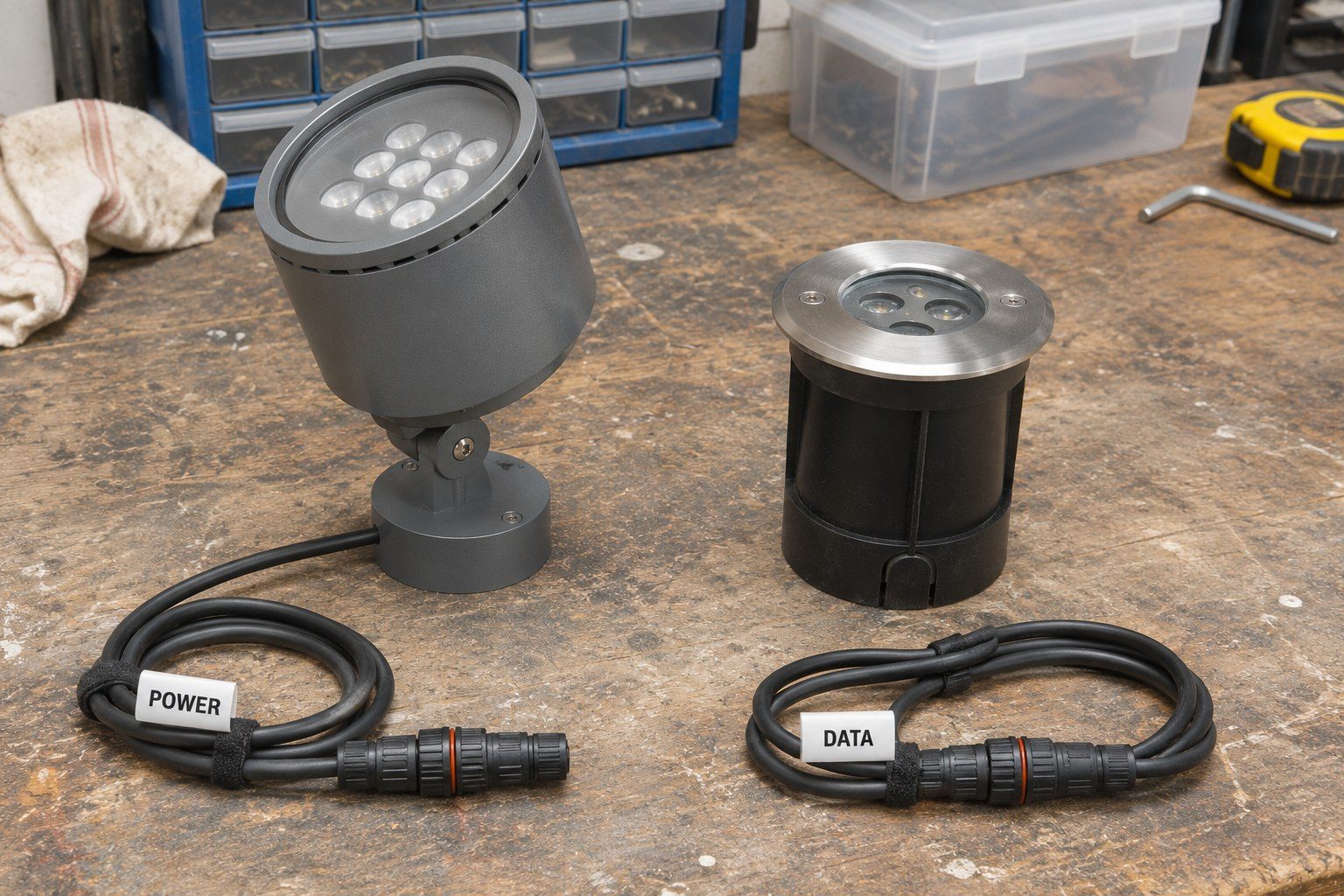
For DMX, draw each signal line, branch device and termination point. ETC’s DMX guidance describes end-of-line termination with a 120-ohm resistor across the data pair. Use the selected devices’ instructions, including any built-in termination. Avoid unplanned passive branches.
For DALI, account for bus power and device loading as well as addresses. For 0–10V, check the controller’s permitted load and the length and routing limits in the manuals. Mark control and supply cables distinctly, and have the electrical design resolve isolation, earthing and routing requirements.
4. Allocate addresses from the actual channel personality
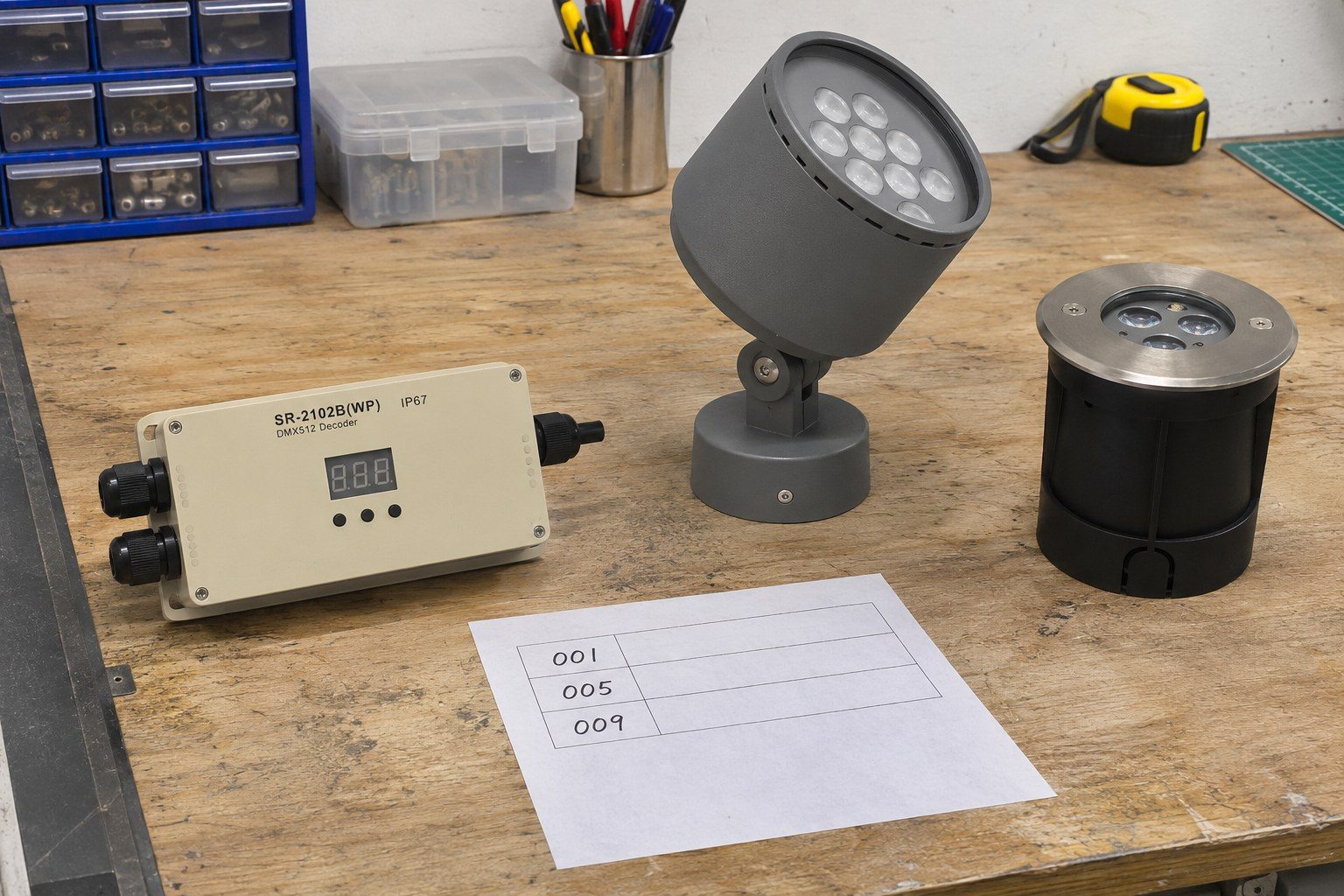
As a planning example, three fixtures using exactly four consecutive channels each can start at 001, 005 and 009. Their channel ranges are 001–004, 005–008 and 009–012. A fixture with a master dimmer, strobe or higher-resolution channels consumes a different number of slots. Read the personality table before assigning addresses.
A DMX universe provides 512 control slots; that is not a universal fixture count. Group fixtures intentionally only where shared behaviour is required. Maintain a schedule with position, universe, start address, personality and cable line. For more detail, use LNJAMI’s DMX addressing and RGBW troubleshooting guide.
5. Separate a published demonstration from a verified system combination
LNJAMI’s published Jeddah sample-case demonstration describes DMX512 wall washers, linear lights, pixel lights and flexible samples presented for a Saudi facade project. This is relevant demonstration context. It does not provide a complete controller/driver model list and test matrix that would establish compatibility for every new order.
| Candidate arrangement | Evidence status for this guide | Approval required |
|---|---|---|
| DMX controller + mixed fixture samples | A public Jeddah demonstration is described; exact BOM and test record are not supplied here. | Confirm the actual models, firmware, personalities and required scenes. |
| DALI controller + DALI control gear | Proposed selection route; no LNJAMI combination is verified in this package. | Obtain model-level evidence and run the agreed sample test. |
| 0–10V controller + analogue driver | Proposed selection route; no LNJAMI combination is verified in this package. | Confirm interface type, load, low end and off behaviour. |
Test one representative assembly before ordering the full system. Include the longest relevant cable arrangement, intended load and approved power distribution. Record each test as observed, passed against an agreed criterion, or still open. Keep the scene file and firmware versions with the result.
6. Commission, label and hand over the system
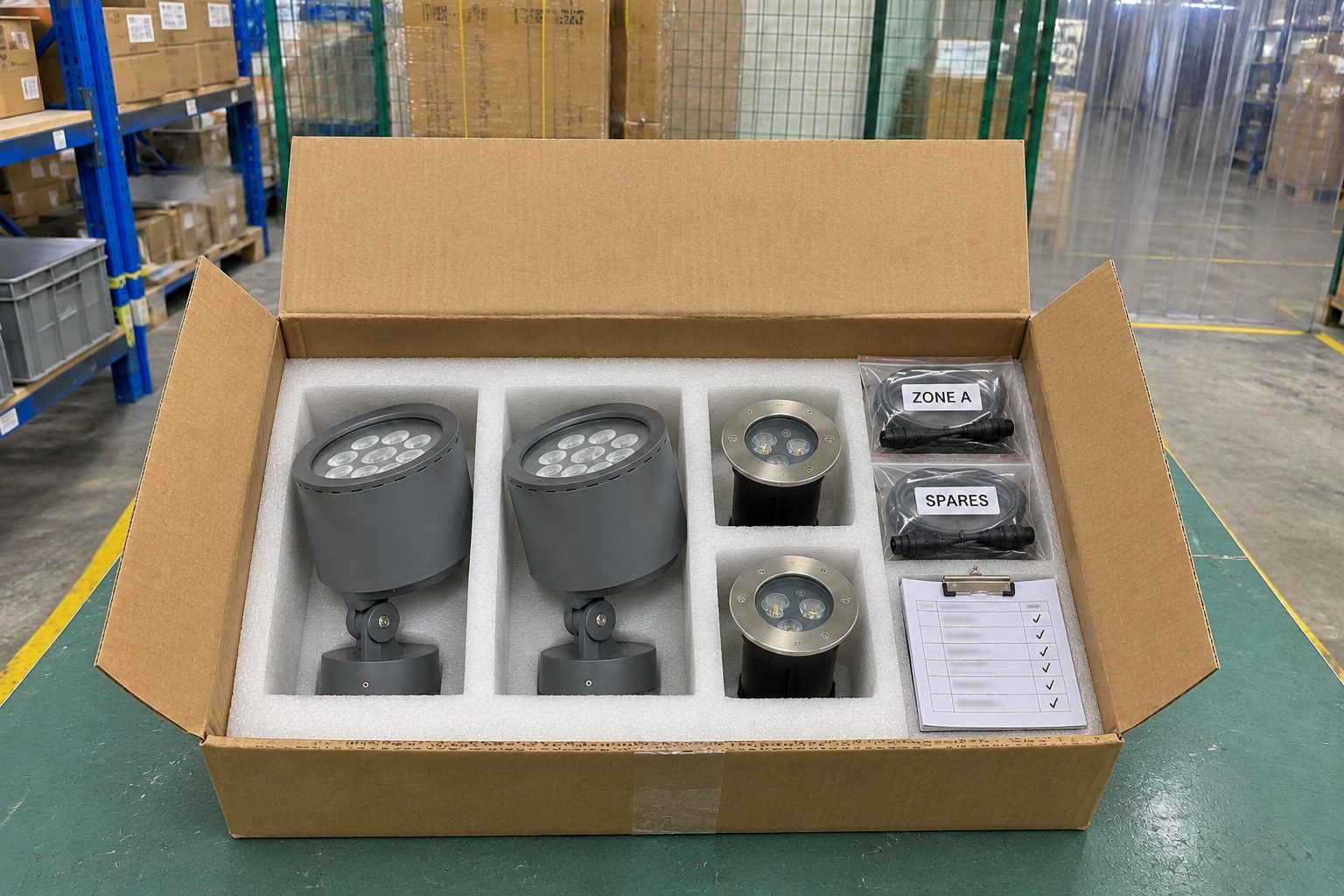
Check received models and label cartons by intended zone, keeping controller and spare parts identified.
Power and test a single fixture before extending the system.
Verify white and colour channels, groups, scenes, fades and minimum output.
Test restart and agreed signal-loss behaviour, then restore normal settings.
Back up programming, addresses, firmware records and final cable drawings.
Document how to replace a driver or luminaire and restore its settings.
If a DMX fixture behaves incorrectly, isolate the issue by testing a known configuration and reviewing power, addressing, personality and signal path separately. Do not repeatedly change multiple variables without recording them. DALI replacement and 0–10V dimming faults likewise need model-specific procedures, rather than assumptions based on connector appearance.
For the bigger picture, see our facade lighting control guide.
Frequently asked questions
Is DMX only for stage lighting?
No. It is also widely used for architectural colour effects. Suitability depends on the required scenes, equipment and installation.
Can DALI control RGBW?
Compatible colour-control gear and controllers can support colour functions. Confirm the exact feature set and required timing in a sample test.
Does 0–10V eliminate commissioning?
No. Check interface compatibility, zone assignment, polarity, low-end behaviour, off control and restart behaviour.
Why choose LNJAMI for architectural lighting control projects
DMX512 fixture range. Wall washers, linear lights, pixel lights and flexible lights for DMX512 façade projects, demonstrated in our Jeddah sample case.
Customized fixtures. Custom lengths, wattages, beam angles and color temperatures. See our custom wall washer and linear light solutions.
Burn-in before shipment. Fixtures are burned in before they leave the factory, typically for 24–48 hours, so early failures are caught before installation.
MEAN WELL drivers. Integral or remote driver configurations, with MEAN WELL drivers available.
Standard or custom brackets. Standard mounting hardware, or custom brackets and fasteners designed for the project.
Project engineering support. Free project consultations on drawings, fixture schedules and installation details before purchase.
Get a free project consultation for your lighting controls
Send LNJAMI your scene list, zone drawing, fixture quantities and building-control requirements. Our engineers will reply with:
an identified equipment schedule for the selected control system
a sample demonstration plan with agreed acceptance criteria
a list of open compatibility questions to resolve before purchase
Book a Free Project Consultation → · Explore Pixel Point Lights · Explore Linear Façade Lights
Note: Product ratings, materials, installation details and control compatibility must be confirmed for the selected model and project conditions. Inspection and packing arrangements shown are examples.