4-Meter Custom Linear LED Lighting for Tunnel Portals: Why Seamless Long-Span Fixtures Improve Highway Tunnel Illumination
For highway tunnel lighting projects, choosing the right custom linear LED lighting solution is critical for achieving uniform illumination, reliable operation, and seamless architectural integration.
For a recent expressway tunnel portal project in China, the answer was clear. The client needed ceiling-mounted linear lighting at the tunnel entrance—a critical transition zone where drivers adjust from sunlight to tunnel lighting conditions. After evaluating both options, they chose custom 4-meter seamless linear fixtures.
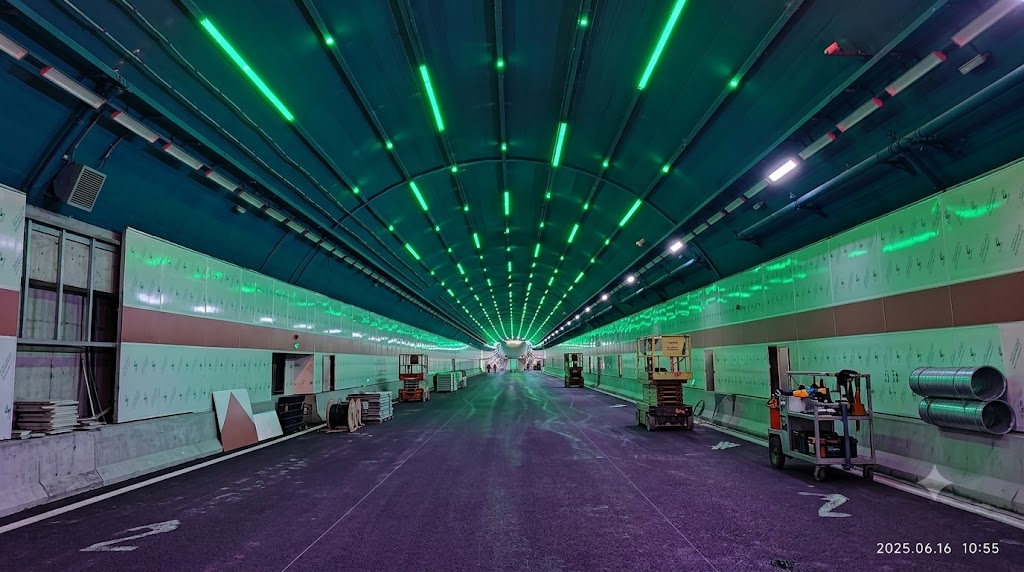 LED lighting fixtures mounted on a highway tunnel entrance ceiling displaying uniform green light.">
Here's why, how we engineered them, and how they performed on site.
Why 4 Meters? The Case for Seamless Linear Fixtures
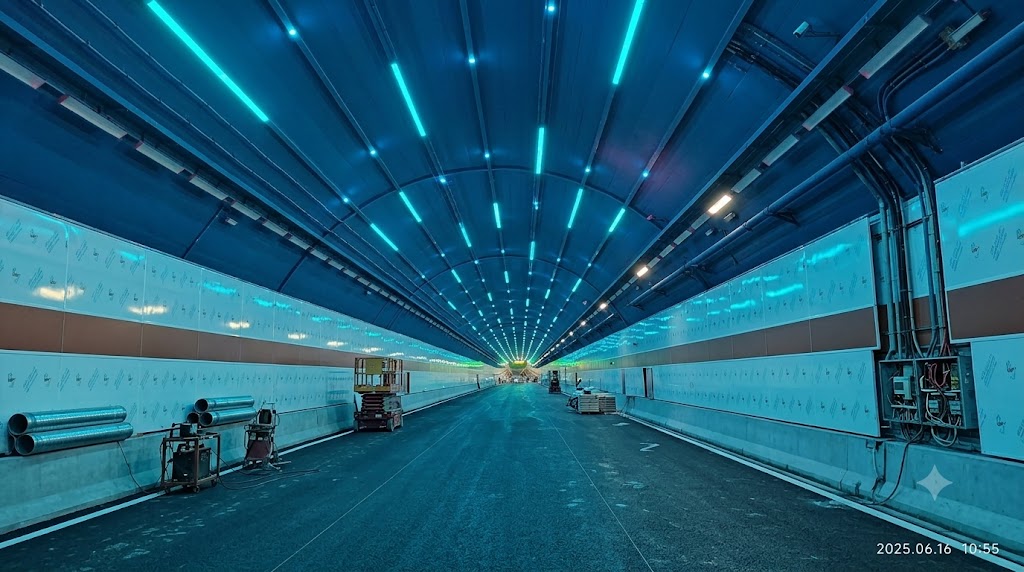
The Traditional Approach: Shorter Sections Joined Together
Most tunnel lighting installations use standard 1-meter or 2-meter linear fixtures mounted end-to-end. This approach is cheaper upfront and uses off-the-shelf components. But it comes with hidden drawbacks:
|
Issue |
Impact |
|
Visible gaps between fixtures |
Breaks visual continuity; creates dark "joint lines" on the ceiling |
|
Shadow zones at connection points |
Light distribution uneven; dark spots reduce visibility |
|
Alignment drift during installation |
Multiple fixtures harder to align perfectly; slight angles create jagged appearance |
|
Increased maintenance points |
More connectors, more failure points, more long-term upkeep |
|
Aesthetic compromise |
Tunnel portal is a gateway landmark; visual quality matters |
For the client on this project, these issues were deal-breakers. The provincial highway authority had received complaints about the previous lighting installation—which used joined 2-meter sections—looking "dated and patchy." They wanted the upgraded tunnel entrance to have a premium, integrated appearance.
The 4-Meter Advantage
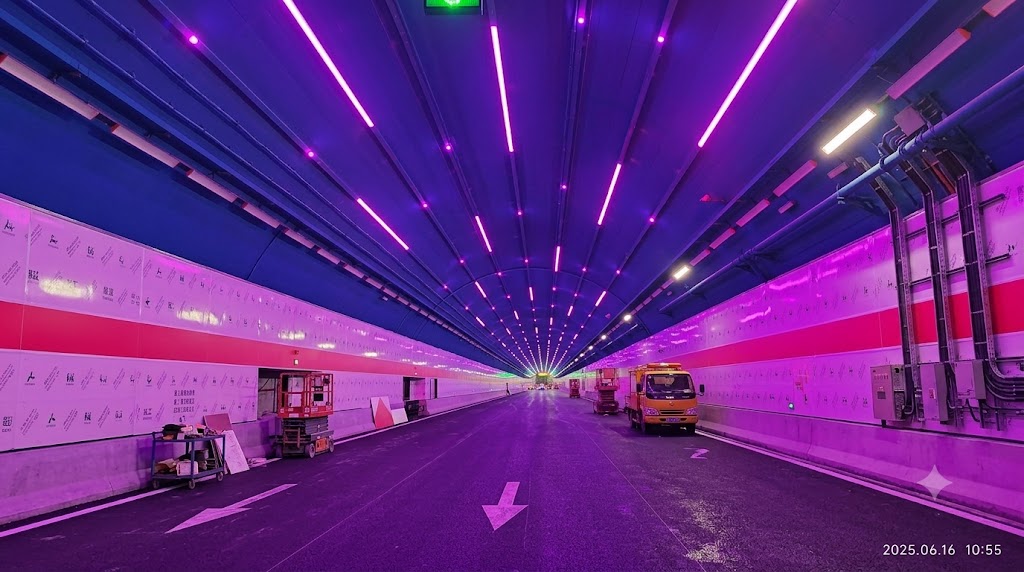
A custom 4-meter seamless fixture eliminates all the problems of joined sections:
One continuous housing — No gaps, no shadow lines, no alignment issues
Uniform optics across the entire length — Single PCB layout with consistent LED spacing
Fewer connection points — 75% fewer connections compared to four 1-meter sections
Clean aesthetic — A single, uninterrupted ribbon of light
But here's the trade-off: 4-meter fixtures require custom engineering. Standard extruded housings cap out at 3 meters. The optics need recalibration. Shipping is more complex. And thermal expansion becomes a real concern.
The client evaluated both options and determined that the visual and performance benefits justified the additional investment. The budget for the seamless solution was approximately 18% higher than the joined-section alternative—but the client accepted this based on the expected improvement in visual quality and reduced long-term maintenance.
Note: Exact figures vary by project scale; the key takeaway is that the seamless approach pays for itself through reduced installation labor and maintenance.
How We Engineered the 4-Meter Solution
1. Extrusion & Housing Design
Standard aluminum extrusion profiles are limited to 3 meters due to manufacturing constraints. For this project, we sourced a specialty extruder capable of producing 4.2-meter profiles, then trimmed them to exactly 4 meters.
Material choice: 6063-T5 aluminum alloy — selected for its high strength-to-weight ratio and excellent thermal conductivity.
Profile design considerations:
Thicker wall sections at stress points to prevent sagging over the 4-meter span
Internal T-slots for flexible bracket mounting
A recessed LED channel that ensures precise optical alignment
Anti-Sag Reinforcement: Even with reinforced walls, a 4-meter aluminum housing will deflect slightly under its own weight. We added a hidden internal steel stiffener bonded to the extrusion with structural adhesive. This reduced deflection from 3mm (measured in the initial un-stiffened prototype) to under 1.5mm over the full span — well within acceptable tolerance for ceiling mounting.
2. Thermal Management
Heat is the enemy of LED longevity. At 4 meters, managing thermal buildup requires intentional design.
The physics problem: A 4-meter fixture running at 150W generates significant heat. The center of the fixture runs hotter than the ends, creating a temperature gradient that can affect both LED performance and the housing's structural integrity over time.
Our engineering response:
A copper thermal spreader laminated beneath the LED PCBs, pulling heat from the LEDs and distributing it across the full length
The aluminum housing acts as a passive heat sink with 20% more surface area than standard designs
Thermal adhesive ensures efficient heat transfer
Test results: After 8 hours of continuous operation in a 40°C ambient chamber, the fixture's hottest point measured 52°C — well below the LED manufacturer's maximum junction temperature rating of 85°C.
3. Optical System & The Prototype Failure That Taught Us
Achieving uniform light distribution across 4 meters requires precision LED placement and secondary optics.
LED layout:
40 LEDs per meter, spaced at 25mm intervals
160 LEDs total per fixture
Power injection at both ends and the center point to prevent voltage drop
The prototype failure: During the first prototype test, we powered the fixture from both ends only. At full brightness, the center section was visibly darker — voltage drop reached 8.2%, equivalent to a 12% brightness reduction at the midpoint. We had to redesign the power injection scheme with a three-point topology (ends + center). This solved the issue entirely, but it added a week to the development timeline and required custom wiring harnesses.
Diffuser selection: After testing three different haze levels, we chose a 45% frosted PMMA diffuser that delivers:
88% light transmission efficiency
Excellent diffusion that eliminates visible LED hotspots
UV stability for outdoor tunnel portal use (prevents yellowing over time)
4. IP65 Weatherproofing
Tunnel portals are transitional environments — sheltered from direct rain but exposed to wind-blown moisture, dust, and vehicle exhaust.
Our sealing approach:
Double-gasket end caps with silicone seals
Potting compound on all driver connections
Marine-grade stainless steel hardware for corrosion resistance
Verification: Each fixture underwent a 5-minute water spray test at 100 kPa pressure to confirm IP65 compliance before shipping.
5. Dimming Integration
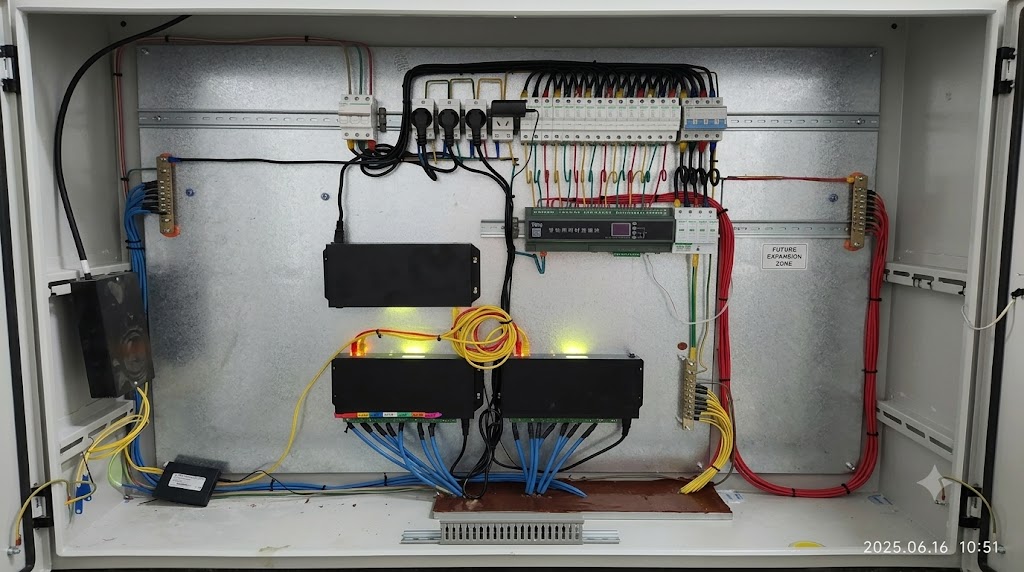 IP-rated power distribution and 0-10V dimming control cabinet for tunnel linear LED lighting.">
The fixtures needed to interface with the tunnel's central lighting management system, which automatically adjusts brightness based on exterior daylight levels.
Control protocol: 0-10V dimming (also compatible with DALI networks)
Why dimming matters for tunnel safety:
During daytime, tunnel entrances need higher light levels to help drivers' eyes adapt from bright sunlight
At night, levels can drop to save energy
Smooth, flicker-free dimming is essential — abrupt changes can be dangerous
Our driver design ensures flicker-free dimming down to 5%, with no visible color shift across the full range.
Installation: 2 Nights, 48 Fixtures
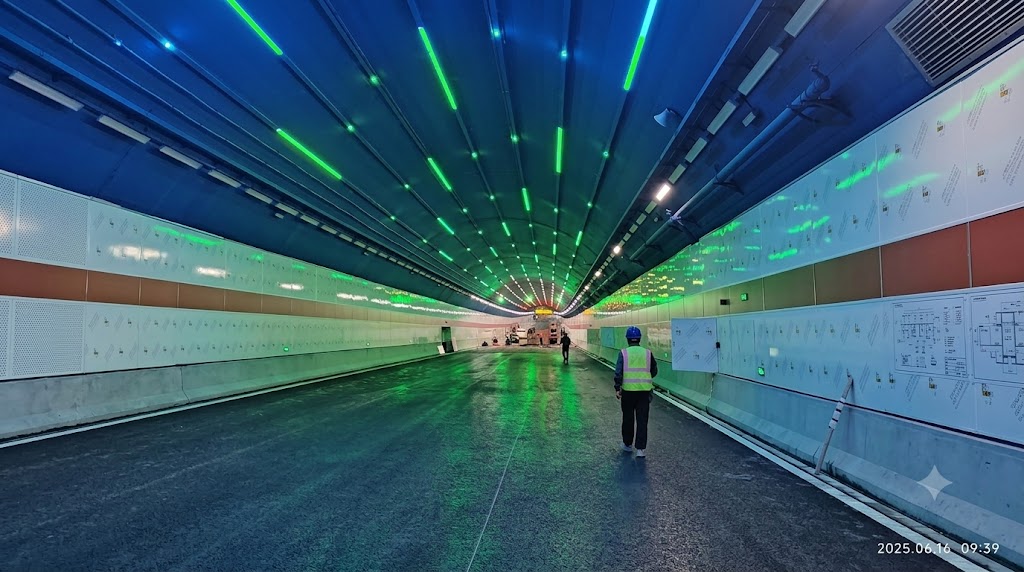
The tunnel portal ceiling has a slight arch — not a sharp curve, but enough that standard straight-mounted fixtures would have looked misaligned.
Mounting solution:
Adjustable brackets that compensate for the ceiling's curvature
Each bracket mounts to the concrete ceiling with expansion anchors
The fixture slides onto the brackets and locks with a cam-latch mechanism
Installation timeline:
|
Phase |
Duration |
Work Performed |
|
Preparation |
1 week (off-site) |
Bracket fabrication, fixture pre-testing |
|
Night 1 |
10 PM – 5 AM |
Laser-marking, bracket installation (48 positions) |
|
Night 2 |
10 PM – 5 AM |
Fixture hoisting, securing, electrical connection |
|
Night 3 (testing) |
10 PM – 12 AM |
Full system test and calibration |
Labor comparison: The installation team confirmed that mounting 48 single-unit fixtures took approximately 40% less installation time than mounting 192 shorter units (which would have been required using 1-meter sections). The tunnel closure window was tight, and this time saving was critical.
The critical detail: Because 4 meters is a long span, we used sliding mounts on one end to allow for thermal expansion. Without this, the 2.4mm expansion over the temperature range would have been enough to buckle the fixture or pull it out of alignment over time.
Need a Custom Linear LED Lighting Solution for Your Next Project?
Every infrastructure and architectural lighting project has different requirements — from fixture length and optical distribution to installation conditions and control systems.
As a specialized custom linear LED lighting manufacturer, Shenzhen Liangjiamei Lighting (LJM) provides complete engineering support for tunnel lighting, building facades, bridges, and other large-scale outdoor lighting applications.
Our team can assist with:
Custom fixture lengths and aluminum extrusion design
Optical simulation and IES file preparation
Thermal and structural optimization for long-span fixtures
IP-rated outdoor lighting solutions
0-10V, DALI, and DMX512 control integration
Whether you are a lighting designer, engineering contractor, or project developer, we can help transform your lighting concept into a reliable, production-ready solution.
Contact our engineering team today to discuss your project requirements and receive a customized lighting proposal.
FAQs
Q1: Why use seamless linear LED fixtures for tunnel lighting?
Seamless linear LED fixtures provide continuous illumination without visible gaps, dark lines, or uneven brightness between connected sections. In tunnel entrance and exit areas, where drivers transition between bright outdoor environments and indoor lighting conditions, consistent light distribution is critical for visual adaptation and driving safety. Compared with multiple short fixtures joined together, custom seamless linear LED lighting systems reduce alignment issues, minimize connection points, and create a cleaner architectural appearance.
Q2: Can linear LED lights be customized to 4 meters?
Yes. Custom linear LED lights can be manufactured in extended lengths such as 4 meters or longer depending on project requirements. Long-span fixtures require careful engineering of the aluminum housing, PCB layout, power injection design, thermal management, and installation structure to maintain mechanical strength and uniform light output. For infrastructure applications such as tunnel portals, custom 4-meter linear LED fixtures can provide better visual continuity and lower maintenance requirements compared with multiple shorter fixtures.
Q3: What is the recommended IP rating for tunnel entrance lighting?
For tunnel entrance and outdoor transition areas, IP65 or higher protection is commonly recommended to protect LED fixtures from moisture, dust, vehicle exhaust, and environmental exposure. The required protection level depends on the installation environment, including humidity, rainfall, cleaning methods, and exposure to road contaminants. A properly sealed linear LED fixture should include features such as waterproof end caps, sealed electrical connections, corrosion-resistant hardware, and verified ingress protection testing.
Q4: How does continuous linear lighting improve tunnel safety?
Continuous linear lighting helps reduce sudden changes in brightness at tunnel entrances, improving drivers’ visual adaptation when moving from bright sunlight into darker tunnel environments. A uniform lighting system minimizes dark zones, shadow bands, and uneven illumination that can affect visibility and driver comfort. By providing smooth light transitions and consistent brightness, continuous linear LED lighting supports safer tunnel operation while also improving the overall appearance of the infrastructure.
Q5: Can custom linear LED fixtures support DALI or 0-10V dimming?
Yes. Custom linear LED fixtures can be designed to integrate with advanced tunnel lighting control systems, including 0-10V dimming, DALI, and other smart lighting protocols. These control options allow tunnel operators to automatically adjust brightness according to daylight conditions, traffic requirements, and energy-saving strategies. Proper dimming design also ensures flicker-free operation and stable color performance throughout the brightness range.