Why outdoor LED diffusers turn yellow: what to check
A continuous line of light makes a small colour difference easy to notice. One section looks creamier than the next, and the first question is usually whether the LEDs need replacing. Before ordering another fitting, look at the diffuser with the power off. The cover itself may have changed, or the difference may appear only when the light is on.
Outdoor LED diffuser yellowing can involve material ageing, surface contamination or more than one problem at once. A sensible inspection separates those observations from changes in the light source and the surrounding surfaces. That gives a contractor, distributor or building owner a clearer question to put to the luminaire manufacturer.
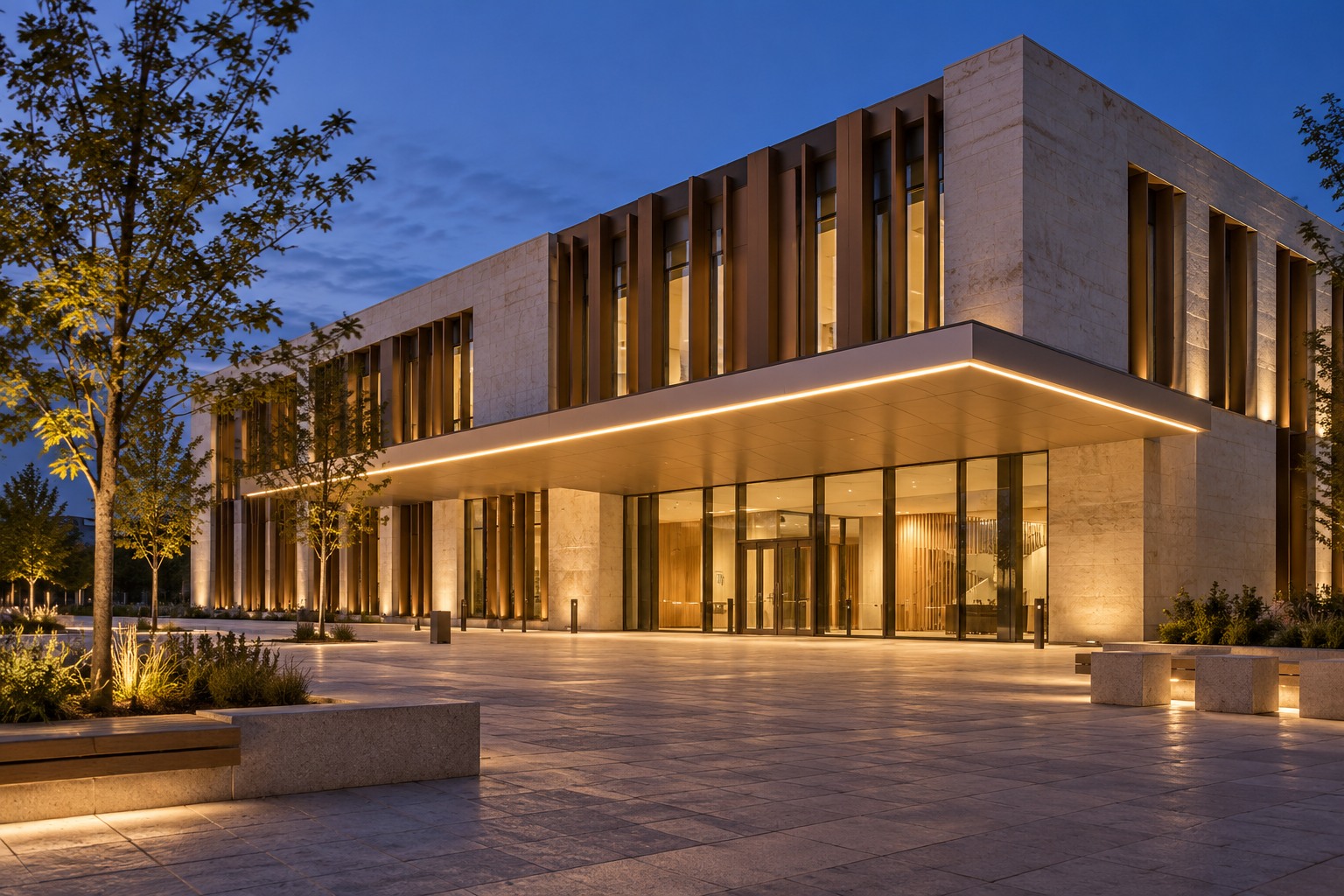
Start with the cover, with the power off
Arrange safe access and isolation through the responsible maintenance team. Take an overall photograph that locates the affected fitting, then a close view of the cover in neutral daylight. Include an adjacent fitting for context. Record whether the change is uniform, concentrated near an end cap or visible only in certain areas. Do not open a sealed luminaire simply to improve a photograph.
If the cover looks neutral when unlit but the wall looks warmer during operation, keep the investigation open. The LED source, control setting, optical components or a different wall finish may be involved. Compare the same operating scene and viewing position before deciding which component is responsible. A phone photograph alone cannot identify a material or establish the cause of a colour shift.
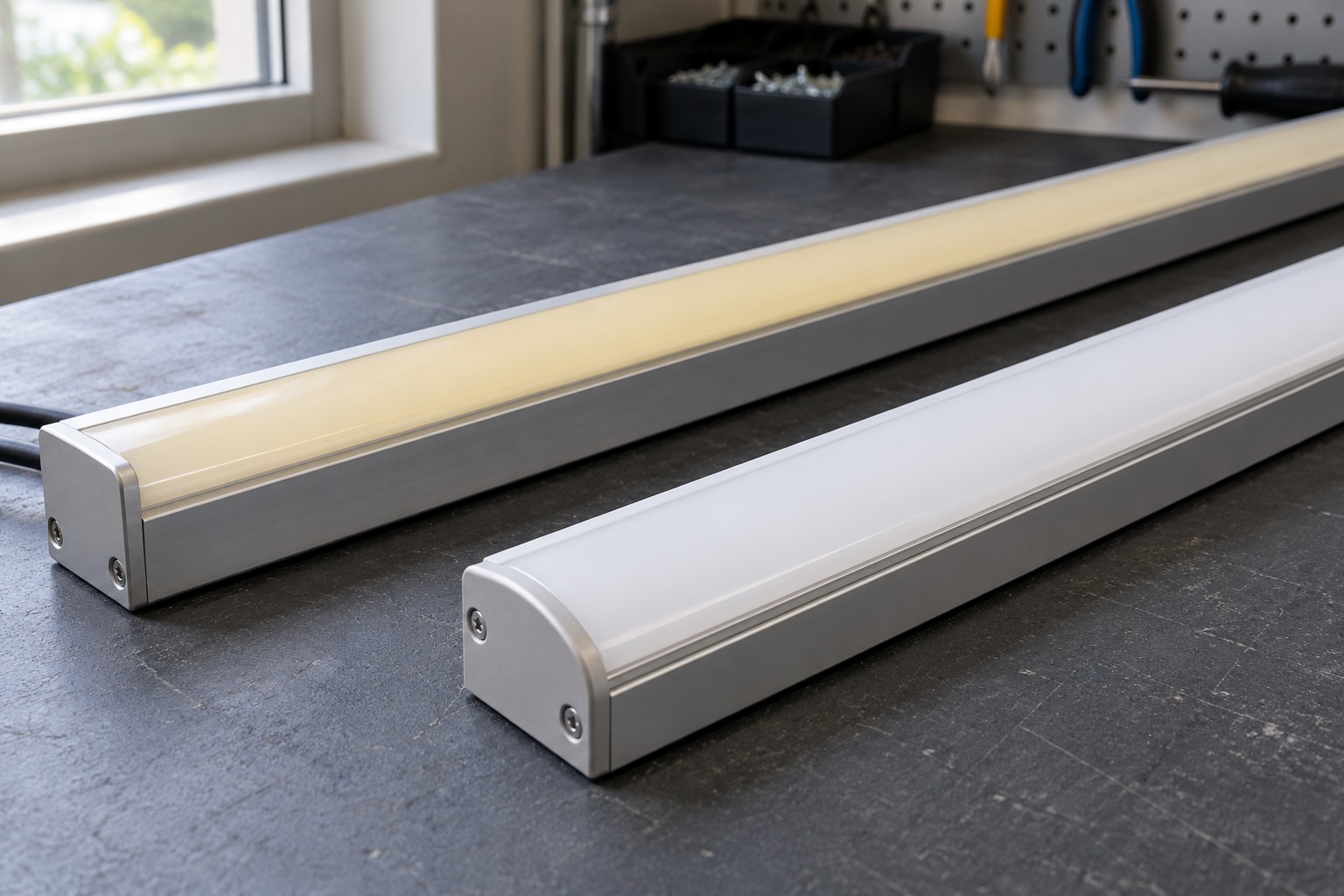
Separate surface deposits from a changed material
Check the manufacturer’s cleaning instructions before trying a cleaning product. A deposit on the outside may be removable; colour that remains within the material calls for a different review. Photograph a small, permitted cleaning trial under the same light before extending it across the installation. Record the cleaner, method and outcome so that the next person does not repeat an unsuccessful treatment.
Avoid improvised bleaching, abrasive polishing or solvent soaking of an installed cover. Those treatments may change its surface or its compatibility with the rest of the assembly. If cleaning reveals cracks, a loose cover, water inside or an electrical fault, stop treating the issue as a cosmetic complaint and ask the responsible technician and supplier to assess the fitting.
Use the installation history to narrow the question
For polycarbonate, UV exposure is one documented cause of yellowing. Covestro’s optical-materials guide, weathering section also explains that material grade and protection matter. This supports checking the actual polymer and its exposure history. It does not establish a universal outdoor lifespan for every polycarbonate diffuser, and a UV-stabilised description alone does not tell you how a complete fitting will perform.
Mark which fittings receive direct sun, which sit under a canopy and which run for different hours. Ask about operating-temperature records, recent cleaning, nearby construction and any material substitution. A pattern concentrated on one elevation is useful evidence, but it is a lead to investigate. Several conditions may differ between that elevation and the rest of the building.
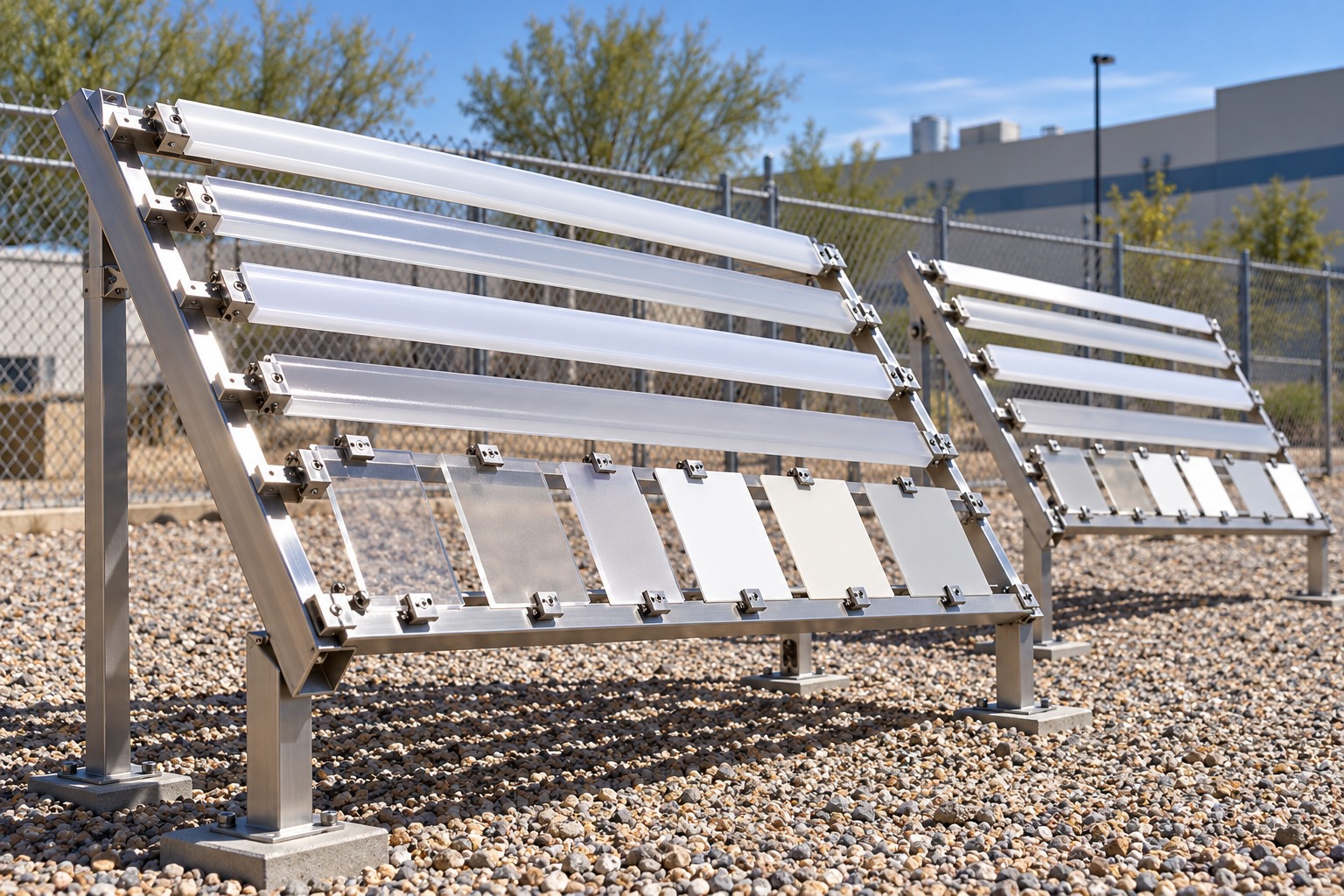
Ask for the material and the test conditions
“UV-resistant PC” is a starting description for a purchasing conversation. Ask which grade and protective treatment apply to the proposed cover, and whether the supporting report tested that material at a relevant thickness. A plaque, an extruded diffuser and a finished luminaire are different test objects. Keep the relationship between the tested specimen and the supplied component explicit.
|
Field |
What to confirm |
|---|---|
|
Material identity |
Grade, colour, UV treatment and the supplied component revision. |
|
Specimen and exposure |
Sample form and thickness, test method, light source or filter, temperature and moisture cycle, duration. |
|
Before and after |
Reported colour and light-transmission changes, visible damage and the measurement method. |
|
Acceptance and scope |
The agreed limit, actual result and which material or assembly the conclusion covers. |
A test-hour figure needs that context. Q-Lab’s explanation of weathering correlation says there is no simple general conversion from accelerated-test hours to years outdoors. Use a relevant test programme to compare evidence and identify limitations. Do not turn an isolated hour count into a promise for a sunny facade, a shaded walkway or a humid waterfront.

Decide what needs attention before ordering parts
The following triage is a suggested maintenance workflow, to be adapted to the product instructions. It keeps an observation separate from a diagnosis. “Amber tone remains after approved cleaning” is a useful record. “The resin is defective” needs more evidence. Keep a representative affected item available if the manufacturer needs to examine it.
|
Observation |
Next step |
|---|---|
|
Deposit changes after approved cleaning |
Record the improvement and confirm a suitable cleaning routine. |
|
Unlit cover remains discoloured |
Ask the supplier to review the cover material, history and replacement route. |
|
Cover looks neutral; operating light differs |
Review source, optics, scene and comparison conditions before assigning a cause. |
|
Cracking, looseness, water or electrical symptoms |
Refer the affected fitting for qualified assessment before further operation. |
Check the complete cover assembly
A replacement that fits the visible opening may still differ in clip geometry, end engagement, gasket compression or expansion allowance. It can also change how the light is distributed. Ask the original manufacturer whether the cover is serviceable, which revision is approved and what sealing or verification procedure follows replacement. Some products need a complete assembly rather than a field cover change.
Review one representative replacement before ordering the full quantity. Check the unlit appearance and the lit result from the intended viewing positions, using the approved operating scene. Record the component identity and the work performed. If you are considering a new luminaire configuration, the outdoor linear facade light range is a useful starting point for discussing dimensions, output and installation requirements.
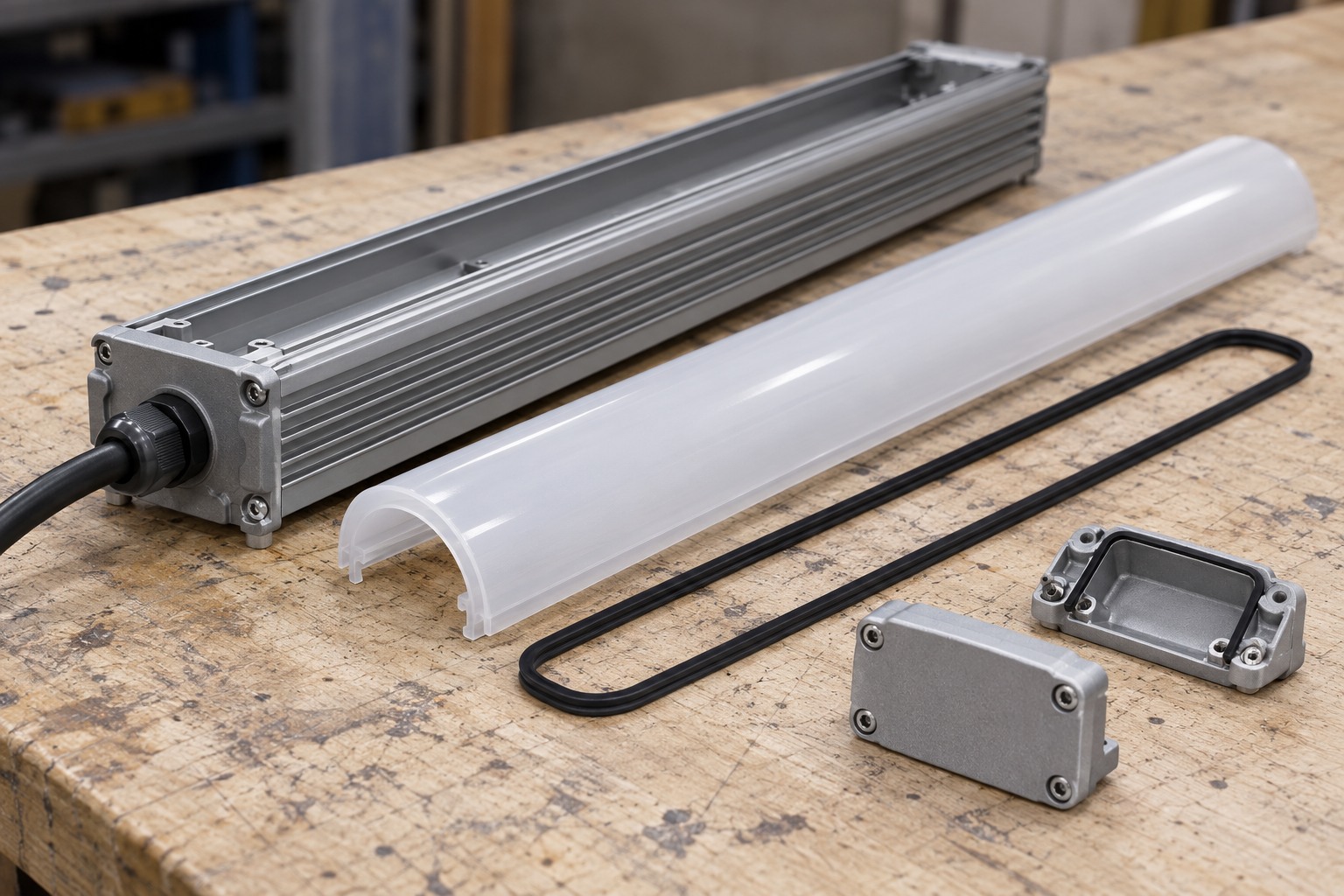
Prepare a short, useful enquiry
Start with the model or a clear label photograph, the number affected and the total installed quantity. Add the installation date if known, daytime and operating photographs, and a description of sunlight exposure and cleaning history. A cross-section or original drawing helps if a cover or mounting interface is under review. Mark unknown items as unknown instead of guessing.
A distributor handling several locations should give each location its own identifier. Keep photos, observations and supplied versions linked to that identifier. The enquiry then describes a traceable problem, and the manufacturer can explain which missing detail would change the replacement recommendation.
Questions about yellowing LED diffusers
Can a yellowed LED diffuser be cleaned?
Surface contamination may respond to a manufacturer-approved cleaning method. Discolouration within the polymer is a different condition. Avoid promising that a cleaner will restore aged material, and have cracking or looseness assessed separately.
Is every polycarbonate diffuser suitable outdoors?
Suitability depends on the actual grade, protection, temperature, exposure and assembly. Ask for evidence corresponding to the proposed component rather than relying on the word polycarbonate alone.
Does a warmer-looking light prove that the diffuser has yellowed?
No. Compare the cover unlit and check the operating scene, source and surrounding surfaces. A neutral-looking cover does not by itself prove that every optical component is unchanged.
Can I replace only the cover?
Ask the manufacturer whether that model is designed for cover replacement. Confirm the part revision, fit and sealing procedure before proceeding. Do not assume that a similar-looking extrusion is an approved replacement.
Discuss the affected configuration with LNJAMI
LNJAMI supplies outdoor architectural luminaires and offers project-based customization. For a diffuser or linear-light enquiry, send the model or label photograph, approximate quantity and a few clear site images through the project enquiry page. Include any existing component drawing or material record. That is enough to start a technical conversation; compatibility and the proposed supply scope can then be confirmed against the actual configuration.