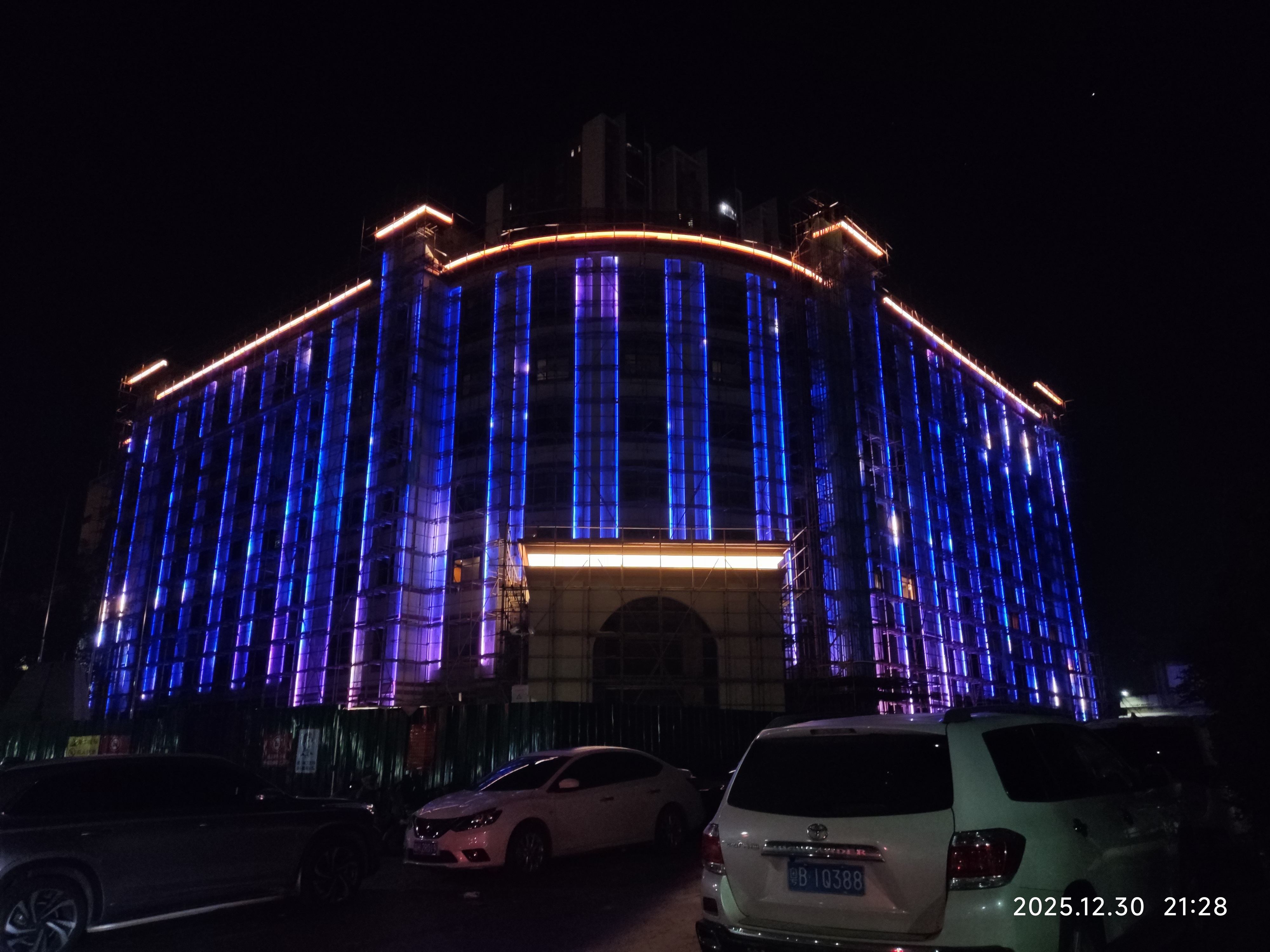
Selecting LED Wall Washer Lights for Outdoor Architectural Applications
Selecting LED wall washer lights for outdoor architectural applications is not simply about brightness or visual appearance. In real-world outdoor lighting projects, the original design intent must align with construction schedules, environmental exposure, and long-term performance requirements. Even small shortcomings in fixture selection—such as improper wattage, unsuitable beam angles, or insufficient waterproof ratings—can easily lead to installation delays, uneven facade illumination, or premature fixture failure.
Modern LED wall washer lights are available with IP65 to IP68 protection ratings and advanced control options such as DMX512 and DALI, specifically designed to address the challenges of outdoor architectural lighting applications. With flexible wattage selection, multiple beam angle options, and precise color control supporting up to 65,536 grayscale levels, LED wall washers enable designers and engineers to translate lighting concepts into reliable outdoor lighting installations.
When sourced from an experienced LED wall washer supplier, these fixtures help significantly bridge the gap between architectural vision and on-site execution, minimizing rework while ensuring consistent and uniform facade lighting performance over time.
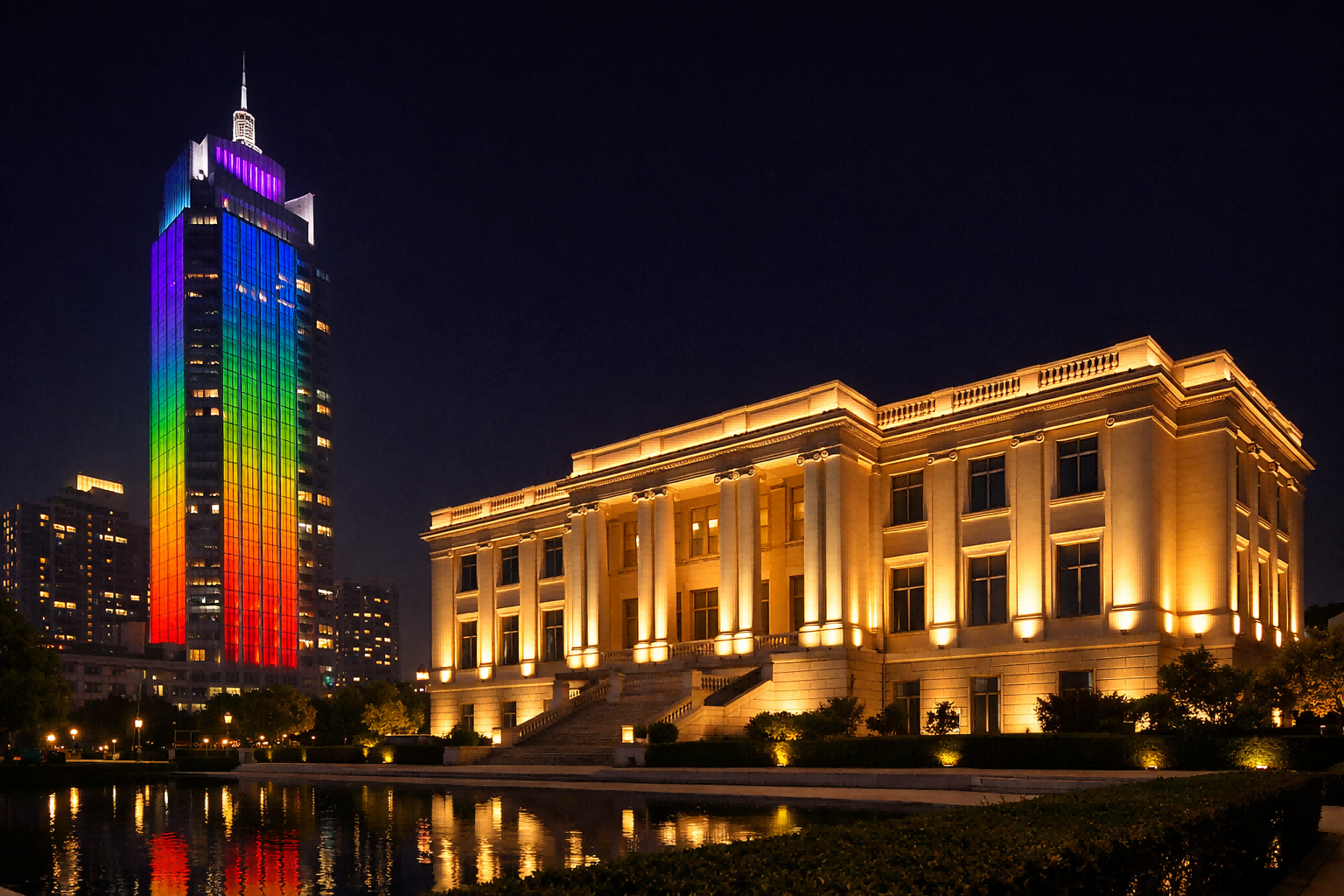
How Wattage, Beam Angle, and Color Options Affect Wall Washer Selection
Choosing the Right Wattage for Different Outdoor Facades
When selecting LED wall washer lights for outdoor applications, wattage selection is especially critical. Based on our many years of experience in outdoor lighting projects, lower-wattage fixtures are typically used for close-range facade lighting, architectural details on low-rise buildings, or applications that require softer, more comfortable illumination. In contrast, high-wattage LED wall washers are more commonly specified for high-rise buildings, wide architectural surfaces, or environments with high ambient light levels.
From a real-world application perspective, higher wattage does not necessarily produce better lighting results. Excessive output can lead to glare, uneven brightness distribution, and unnecessary energy consumption. In many facade lighting projects, a balanced light output—carefully matched to mounting distance and surface reflectivity—delivers more uniform, controllable, and visually comfortable facade illumination.
Selecting Beam Angles Based on Surface Coverage
Beam angle plays a crucial role in determining how light is distributed across architectural surfaces. Narrow beam angles are typically used to emphasize vertical elements, columns, or textured facade details, where precise control of intensity is required. On the other hand, provide even coverage across broad walls, plazas, or landscape features.
Choosing the correct beam angle is essential to avoid patchy illumination or unwanted hotspots. By carefully matching the beam spread to the mounting height and facade geometry, designers and engineers can achieve uniform light distribution and reduce the number of fixtures needed, ensuring both efficiency and visual consistency.
Single Color, RGB, or RGBW: Which Is Appropriate?
Color configuration directly influences both visual impact and system complexity. Single-color LED wall washers are often chosen for projects that require consistent, classic facade illumination, highlighting the architectural form and emphasizing the building’s inherent beauty. RGB and RGBW fixtures, on the other hand, provide dynamic color changes for landmarks, event spaces, or themed installations, adding vibrancy and making the architecture appear “alive” to viewers.
From practical experience, RGBW systems are preferred in long-term architectural applications because they offer flexibility without compromising white light quality. This balance is especially important for buildings that require both everyday illumination and occasional color effects, allowing designers to create engaging, adaptable, and visually compelling outdoor lighting environments.
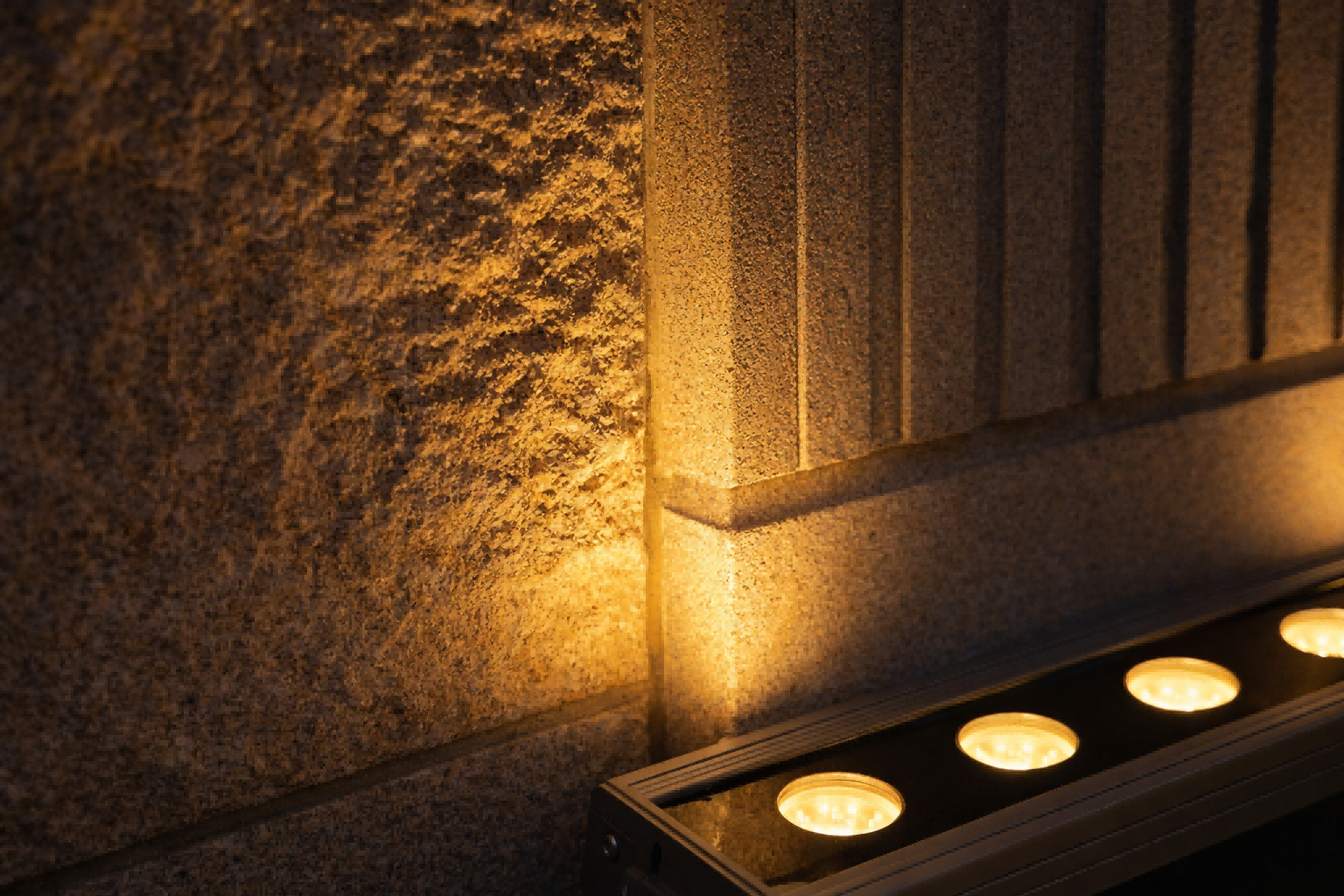
Why Waterproof Ratings Are Critical for Outdoor LED Wall Washers
Understanding Waterproof Ratings for Outdoor Installations
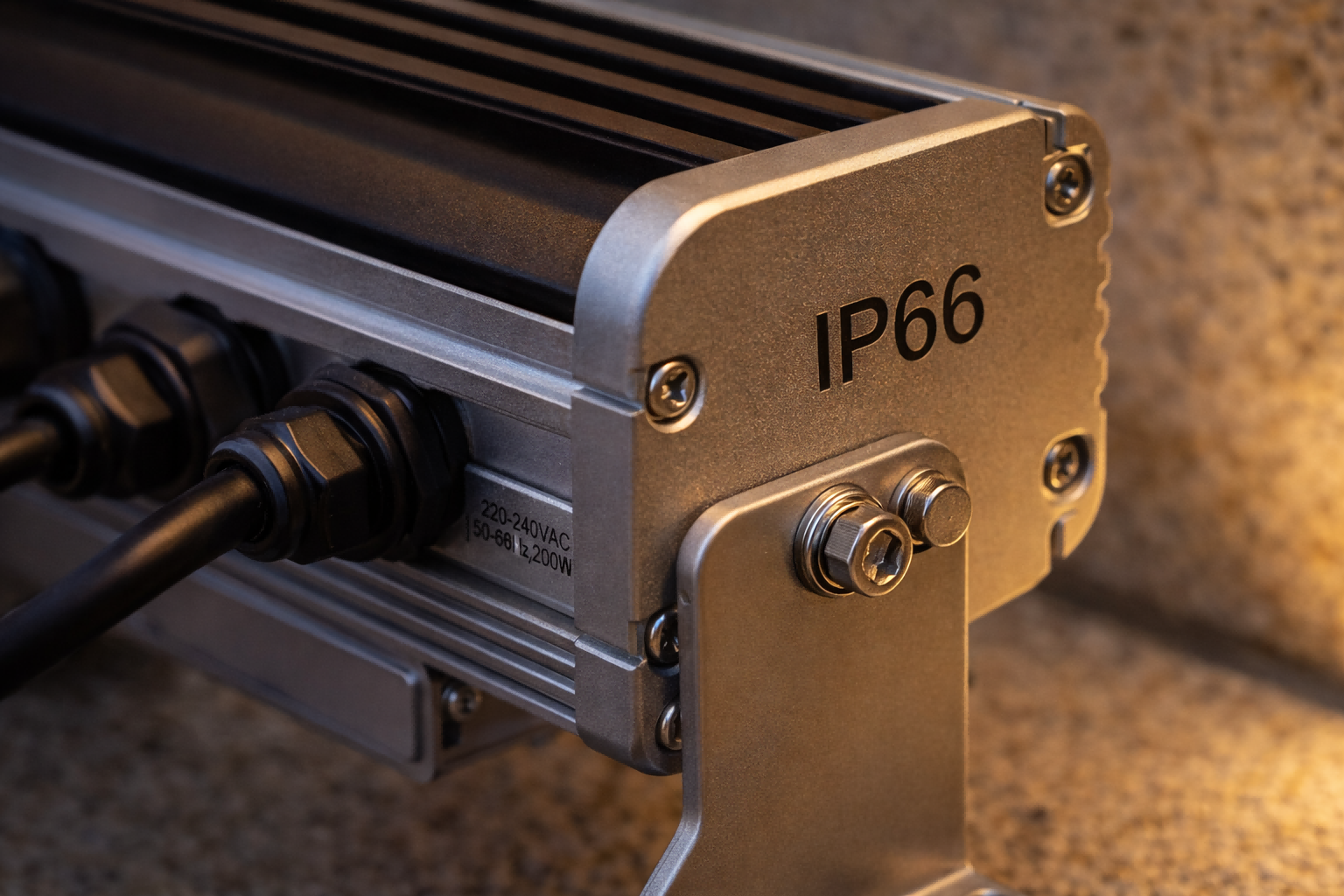
LED wall washers are commonly installed in various outdoor settings, where they are continuously exposed to rain, dust, and moisture. Selecting fixtures with the appropriate protection rating is therefore essential for long-term performance. Luminaires rated IP65 provide basic protection against water jets and dust ingress, making them suitable for general facade and landscape lighting applications. IP66-rated fixtures offer stronger protection against heavy rain and dust, ensuring reliable operation in harsher outdoor conditions. IP67-rated luminaires provide additional protection against short-term immersion, which is beneficial for areas with poor drainage or occasional flooding. Finally, IP68-rated fixtures are fully waterproof for prolonged submersion, making them ideal for flood-prone, coastal, or highly exposed environments.
In many facade lighting projects, IP65 or IP66-rated fixtures are sufficient when installation and sealing are carried out properly, providing reliable performance for standard outdoor conditions. IP67 becomes essential for ground-mounted, coastal, or flood-prone environments where occasional water exposure or temporary submersion is unavoidable. For the most extreme conditions, such as prolonged immersion or highly exposed locations, IP68-rated fixtures offer the highest level of protection and long-term reliability.
Material Quality and Long-Term Reliability
Beyond IP ratings, material quality plays a critical role in the durability and long-term reliability of outdoor LED wall washers. High-quality LED chips and optical lenses are essential for maintaining stable light transmission and color consistency over time, helping to prevent yellowing or deformation that could negatively affect the visual appearance of architectural facades.
Aluminum alloy housings are equally important, as they provide efficient heat dissipation and reduce thermal stress on both LEDs and drivers. Effective thermal management directly influences lumen maintenance, color stability, and overall service life in outdoor environments. In addition, surface treatment processes such as electrostatic powder coating enhance corrosion resistance, particularly in high-humidity or coastal conditions where exposure to moisture and salt can accelerate material degradation.
Using DMX512 Control for Precise Outdoor Facade Lighting
While wattage, beam angle, and waterproof ratings form the hardware foundation of a lighting system, the control protocol serves as the "nervous system" that dictates how the installation behaves. In modern architectural lighting, DMX512 (Digital Multiplex) has evolved from a theatrical standard to the backbone of outdoor facade illumination. It allows designers to move beyond static illumination, unlocking the full potential of LED wall washers to create fluid, dynamic, and interactive lighting environments that align with the building’s identity.
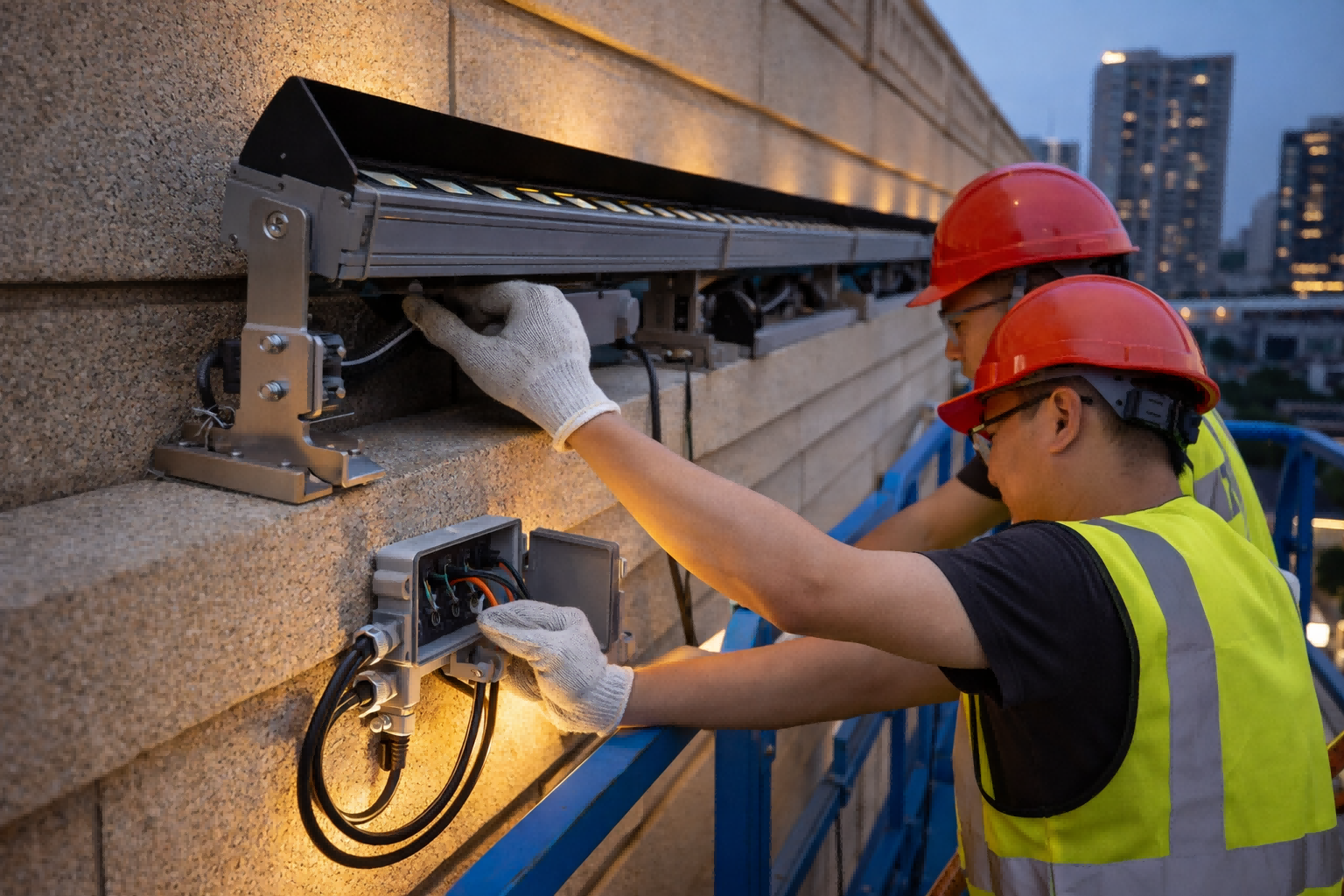
Why DMX512 Is the Standard for Architectural Color Control
In the realm of large-scale outdoor projects, DMX512 is favored for its robustness and universality. Unlike simple on/off switches or basic analog dimming, DMX512 offers digital precision, allowing for the individual addressability of fixtures—or even specific segments within a single linear wall washer. This granularity is what enables the smooth 65,536 grayscale transitions mentioned earlier, ensuring that fades between colors are seamless and free from visible "stepping" or flickering, which can ruin the visual integrity of a facade.
From a technical installation perspective, DMX512 utilizes a daisy-chain topology using shielded twisted pair cables, which is highly efficient for linear wall washer layouts. It supports long-distance signal transmission—critical for high-rise buildings where control rooms may be located far from the fixtures. Furthermore, because DMX is an open industry standard, it ensures interoperability. A project can utilize wall washers from one specialized supplier and controllers from another, provided both adhere to the standard protocol. This flexibility protects the client’s investment, ensuring that the system remains serviceable and upgradeable years after the initial construction is complete.
When DMX512 Is Essential—and When It Is Not
Despite its capabilities, DMX512 is not required for every project. Understanding when to implement it is a key part of value engineering and project management.
DMX512 is essential when the design intent involves dynamic color changing, pixel mapping (where the building facade acts as a low-resolution screen), or synchronized light shows integrated with music or events. It is also necessary for large-scale RGBW installations where precise white point tuning is required to match other light sources on the site. In these scenarios, the ability to remotely manage scenes and schedule playback is indispensable.
However, DMX512 may not be essential for projects requiring only static, single-color illumination—such as warm white (3000K) meant purely to accent heritage stone textures. In these cases, using a complex DMX system adds unnecessary cabling, programming costs, and potential points of failure. For simple dimming requirements on static white fixtures, 0-10V or DALI control systems often provide a more cost-effective and straightforward solution. Experienced lighting consultants and suppliers will always recommend the control protocol that best fits the specific operational needs of the facility, avoiding over-engineering while ensuring the desired visual impact is achieved.
Key Considerations When Selecting an LED Wall Washer Supplier
Assessing Manufacturing Capabilities and Quality Control
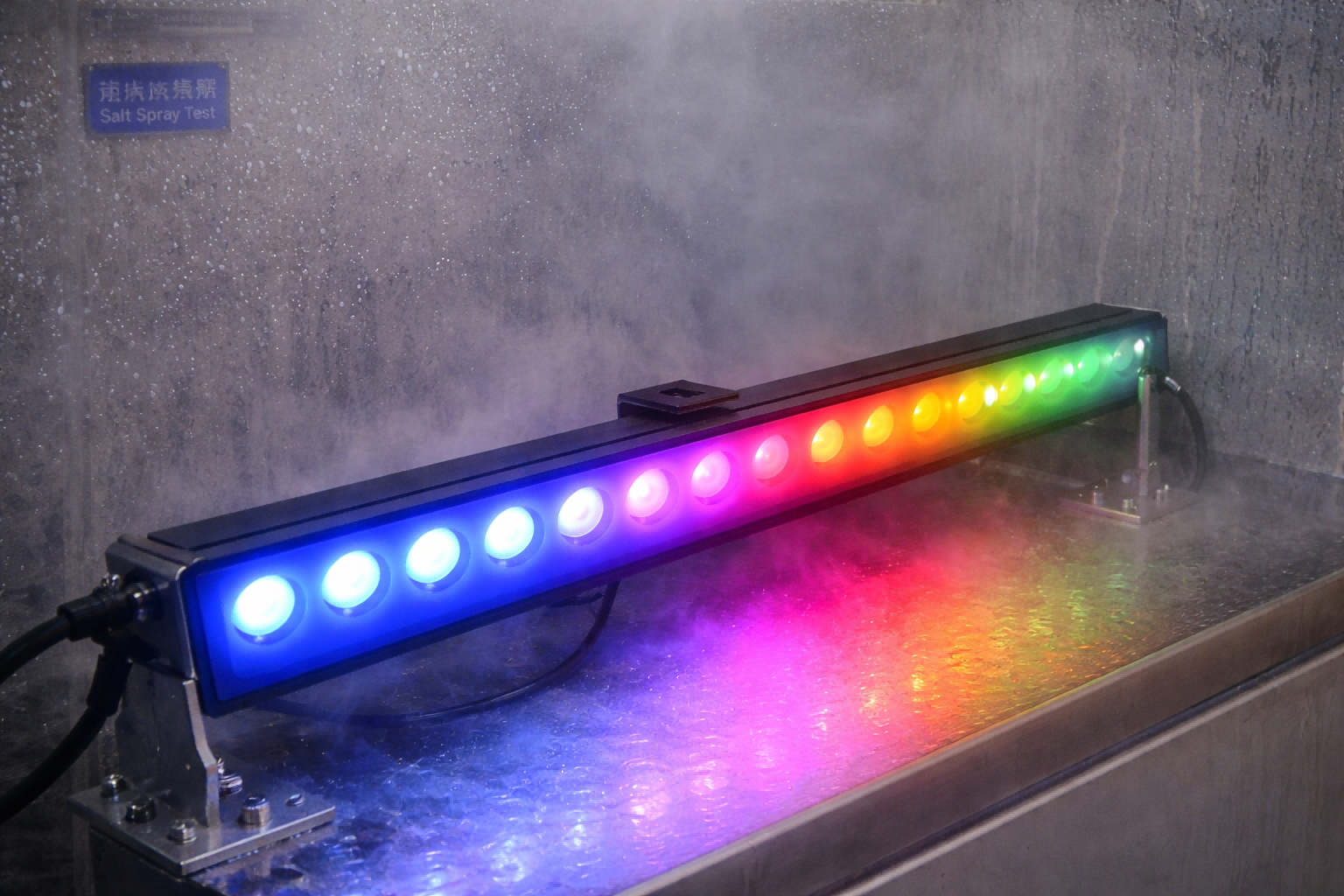
In the crowded LED market, the difference between a high-performance fixture and a potential failure often lies in the production process. A reliable supplier should demonstrate transparent quality control measures that go beyond basic functional testing. This includes rigorous aging tests—often running fixtures for 24 to 48 hours to weed out early mortality failures—as well as strict waterproofing tests and salt spray testing for corrosion resistance.
When evaluating a supplier, it is crucial to inquire about their component sourcing. Premium suppliers maintain strict consistency in LED binning (color matching) to ensure that a wall washer purchased today matches one purchased two years from now for repairs or expansion. Furthermore, manufacturers who control their own die-casting and assembly processes generally offer better consistency in thermal management and build quality than those who simply assemble third-party components.
For example, manufacturers like LNJAMI, with over a decade of focus on outdoor facade and landscape lighting, typically integrate quality control processes such as extended aging tests, strict IP verification, and consistent LED binning. This level of manufacturing discipline ensures that wall washer fixtures perform predictably across large-scale projects and over long operating cycles.
The Importance of Technical Support and Customization
Outdoor architectural projects rarely fit a "one size fits all" mold. Unique building geometries, difficult mounting locations, and specific cabling requirements often necessitate customized solutions. An experienced LED wall washer supplier should offer the flexibility to modify cable lengths, adjust bracket designs, or create custom glare shields to suit specific site conditions.
Beyond hardware, the level of technical support is a defining factor. A qualified supplier should be able to assist with DMX system diagrams, provide IES files for lighting simulations, and offer guidance on power supply loading. This pre-installation support is vital for preventing costly errors during the wiring and commissioning phases, bridging the gap between the design office and the installation team.
Warranty Terms and Long-Term Serviceability
Given the cost and difficulty of accessing fixtures installed on high-rise facades or bridges, the warranty offered by a supplier must be robust and realistic. It is not enough to simply look for a "3-year" or "5-year" label; project managers must understand the terms regarding lumen maintenance and color shift. A credible warranty acknowledges the harsh realities of outdoor environments and guarantees performance, not just that the light turns on.
Additionally, consider the supplier’s commitment to long-term serviceability. Reliable manufacturers design their products with maintenance in mind and commit to the availability of spare parts or compatible replacements for years after the project is completed. This foresight ensures that the architectural vision remains intact long after the initial ribbon-cutting.
Conclusion
Selecting the right LED wall washer for outdoor applications is rarely a single decision; it is a holistic process that balances aesthetic desires with harsh engineering realities. As outlined in this guide, the successful illumination of a facade requires more than just high lumen output. It demands a strategic alignment of precise optics (wattage and beam angle), robust protection (IP ratings and material quality), and intelligent control (DMX512).
By carefully matching these technical specifications to the site's unique conditions, designers can ensure that the light enhances the architecture rather than overwhelming it. Furthermore, prioritizing high-quality materials and partnering with a supplier who offers rigorous quality control and technical support is the surest way to mitigate risk. In the end, a well-chosen LED wall washer system does more than simply light up a building for the opening night; it ensures the installation remains a vibrant, reliable, and enduring visual statement for years to come.
Frequently Asked Questions
Q1: What wattage is suitable for outdoor LED wall washers?
Wattage depends on mounting distance, facade size, and ambient light. Low wattage suits close-range and low-rise facades, while higher wattage is used for tall buildings and large surfaces. Balanced output delivers better uniformity than excessive brightness.
Q2: How does beam angle affect wall washer lighting?
Beam angle controls light distribution. Narrow beams highlight columns and textures, while wide beams provide even coverage on large facades. Proper selection prevents hotspots and uneven illumination.
Q3: Should I choose single-color, RGB, or RGBW wall washers?
Single-color fixtures suit static architectural lighting. RGB enables color effects, while RGBW offers both dynamic color and high-quality white light, making it ideal for long-term facade projects.
Q4: What IP rating is recommended for outdoor wall washers?
IP65–IP66 is sufficient for most outdoor facades. IP67 is recommended for ground-mounted or flood-prone areas, while IP68 is used for extreme or submerged environments.
Q5: Why is DMX512 used in architectural wall washer lighting?
DMX512 provides precise dimming, smooth color transitions, and individual fixture control, making it ideal for large-scale and RGBW facade lighting systems.
Q6: Is DMX512 always necessary?
No. DMX512 is required for dynamic color effects. For static white lighting, simpler systems like 0–10V or DALI are often more cost-effective.